Multiple Seismic Waves [second version]

‘Multiple Seismic Waves [second version]’ [6th July 2019] by Matt The Unfathomable Artist, Carbon pencil on 160gsm A4 Gouache paper.  Digitally edited photograph.

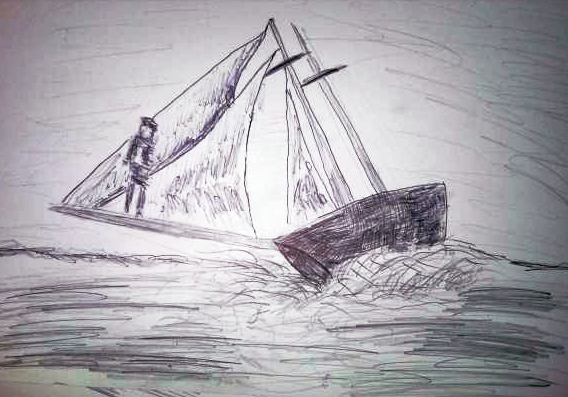
‘Multiple Seismic Waves [second version]’ [6th July 2019] by Matt The Unfathomable Artist is very much another art experiment with sound and seismic waves in mind.

Here is the first version I did in blue ink pen:

‘Multiple Seismic Waves [first version]’ [2016] by Matt The Unfathomable Artist, Blue ink on A4 paper, artwork whereabouts unknown.

The first version is currently ‘missing’.  I really don’t know where it is!

I might like to varnish some or all of my sketches.

My second version of the ‘Multiple Seismic Waves’ series includes varying frequency waves, as follows:

One full page seismic wave centrally placed.  Twenty three clearly visible smaller seismic waves.  Finally, there are also some lovely lightly penciled full page high amplitude, oscillation styled, long wavelength patterns too.

I love these artworks for all the conceptual ideas they contain.

Standard

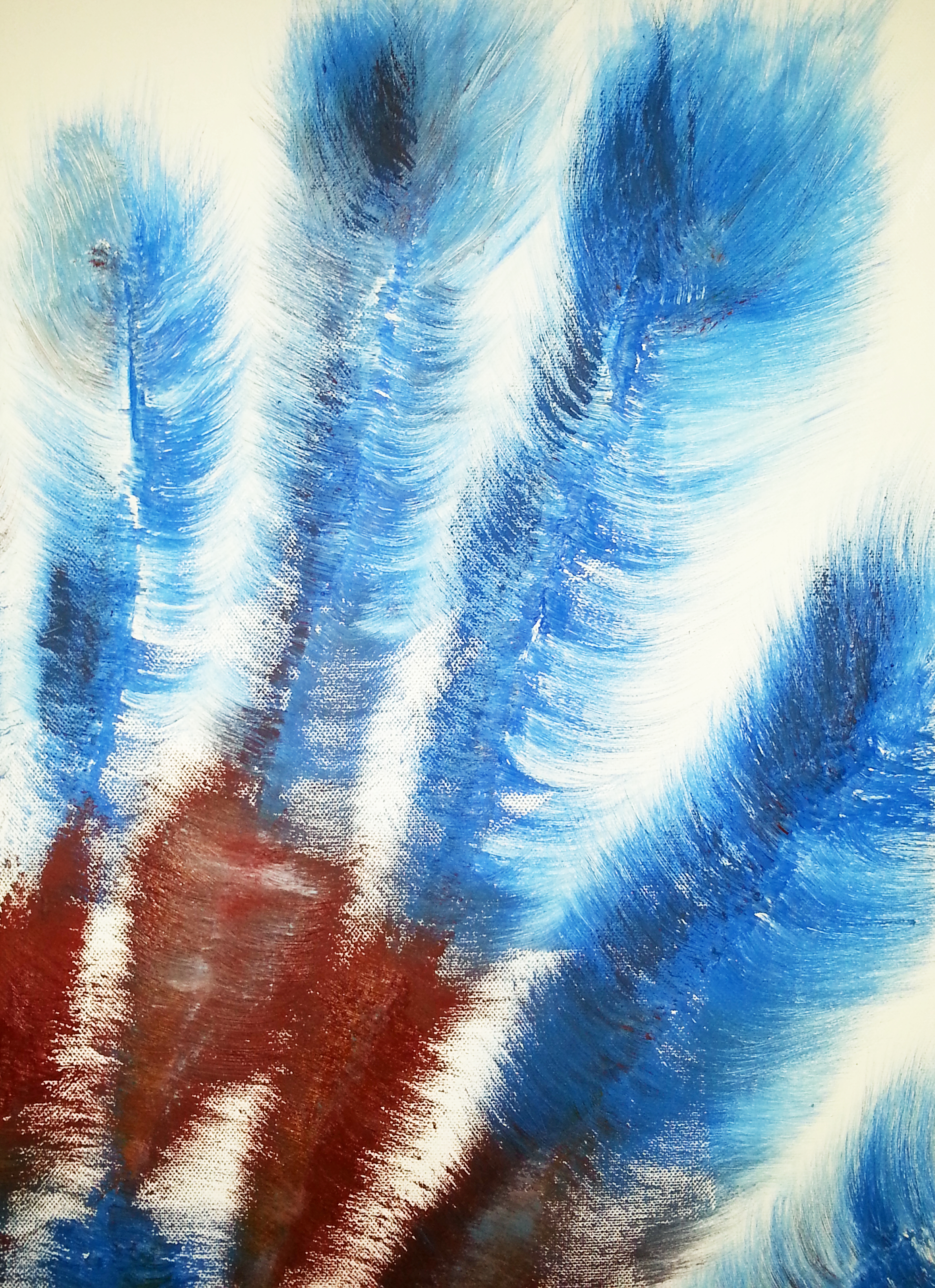
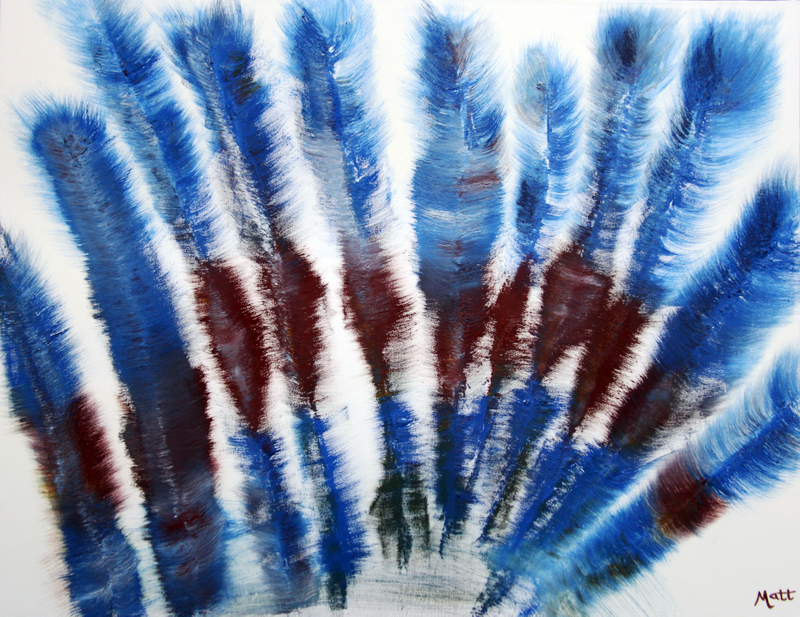
‘Symbolic Feathers’ completed July 2013

Detailed view 1 of ‘Symbolic Feathers’ [July 2013] by Matt The Unfathomable Artist, Oil on canvas, 36ins x 28ins. (Digitally edited photograph).

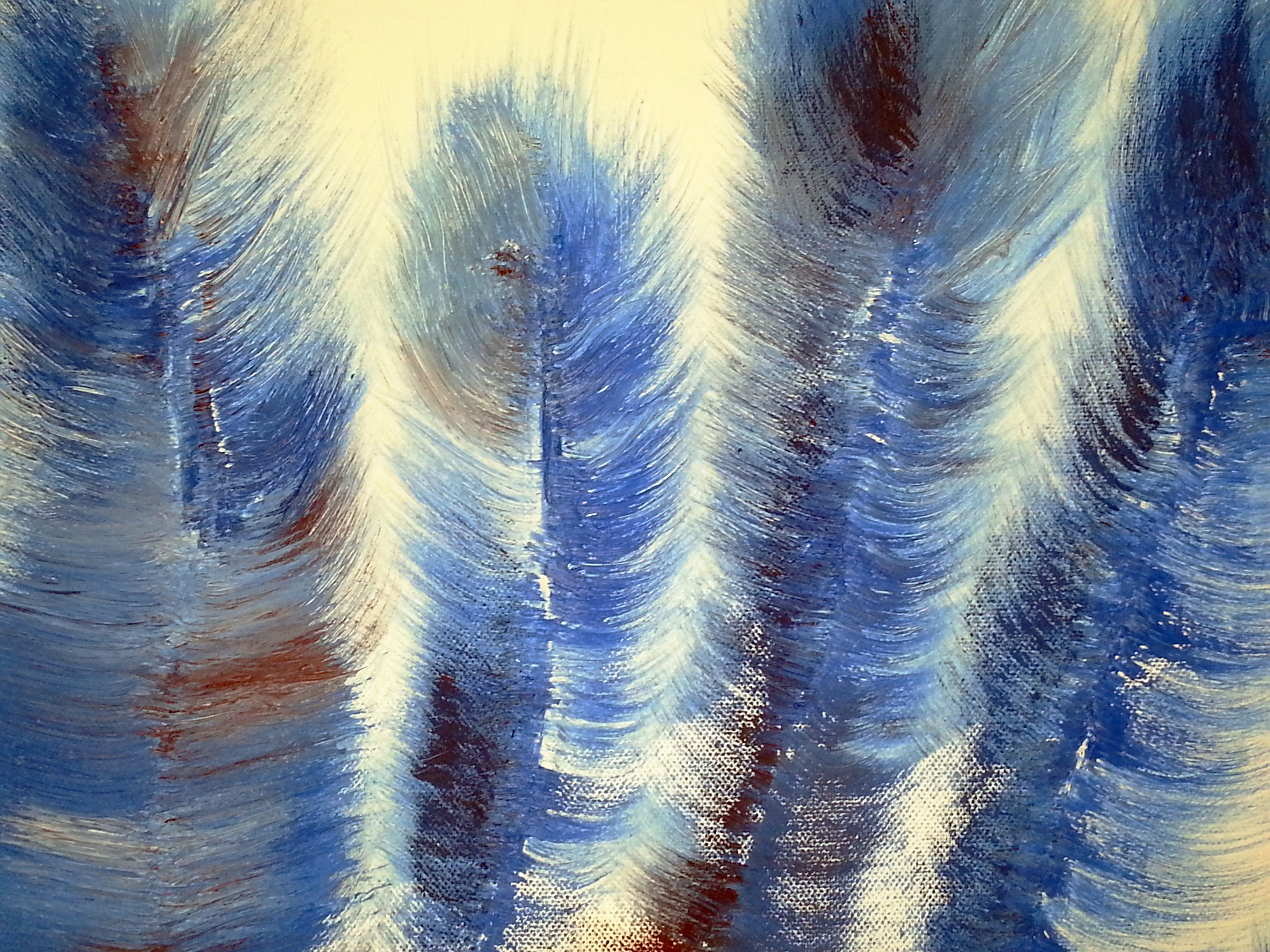
Detailed views 1 and 2 shown above and below respectively.

Detailed view 2 of ‘Symbolic Feathers’ [July 2013] by Matt The Unfathomable Artist, Oil on canvas, 36ins x 28ins. (Digitally edited photograph).

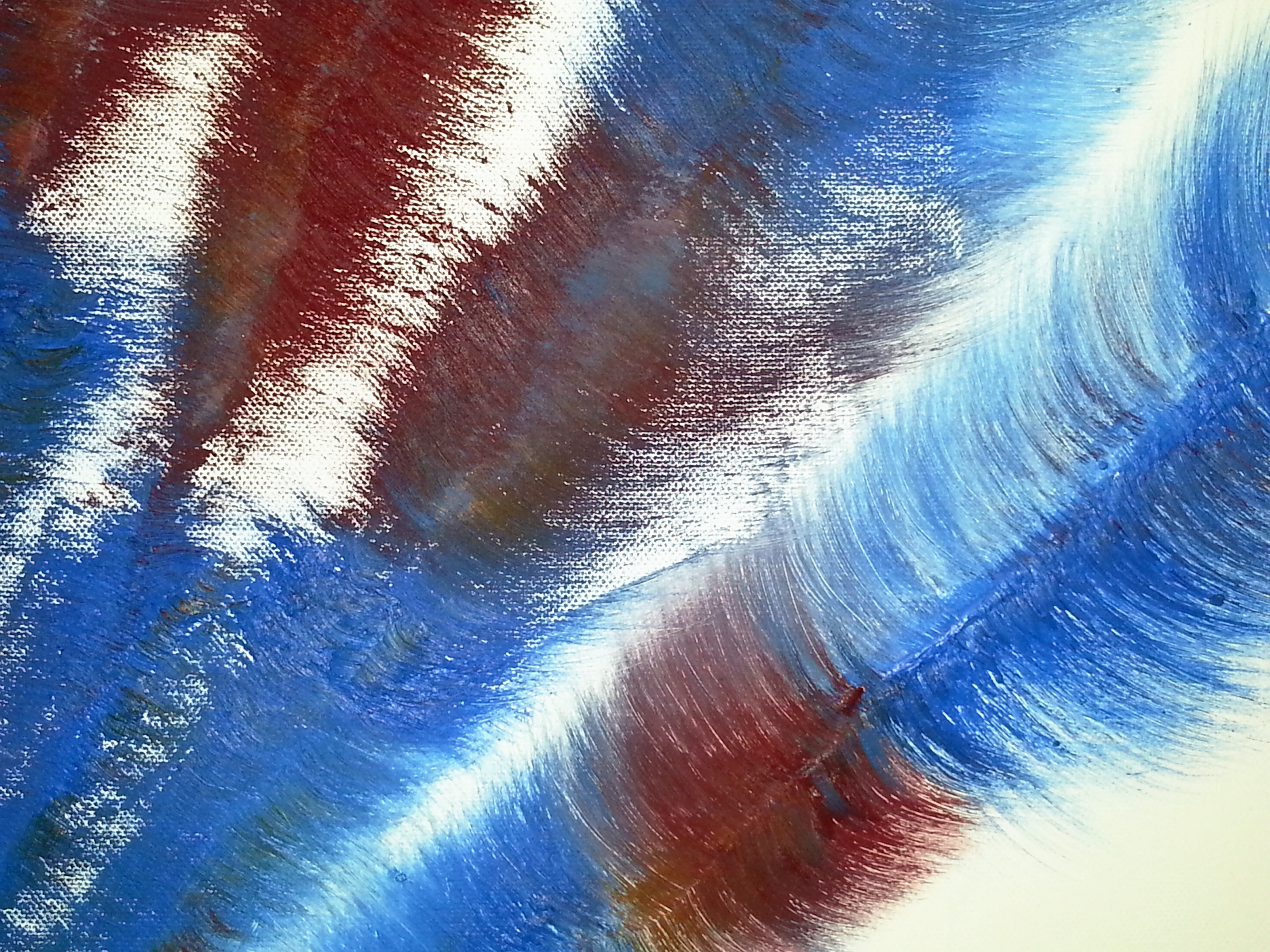
Detailed view 3 shown below.

Detailed view 3 of ‘Symbolic Feathers’ [July 2013] by Matt The Unfathomable Artist, Oil on canvas, 36ins x 28ins. (Digitally edited photograph).

The following photograph is the full canvas of ‘Symbolic Feathers’ by Matt The Unfathomable Artist, here:

‘Symbolic Feathers’ [July 2013] by Matt The Unfathomable Artist, Oil on canvas, 36ins x 28ins. (Digitally edited photograph).

Standard

Anna Hyatt Huntington – The Sculptress

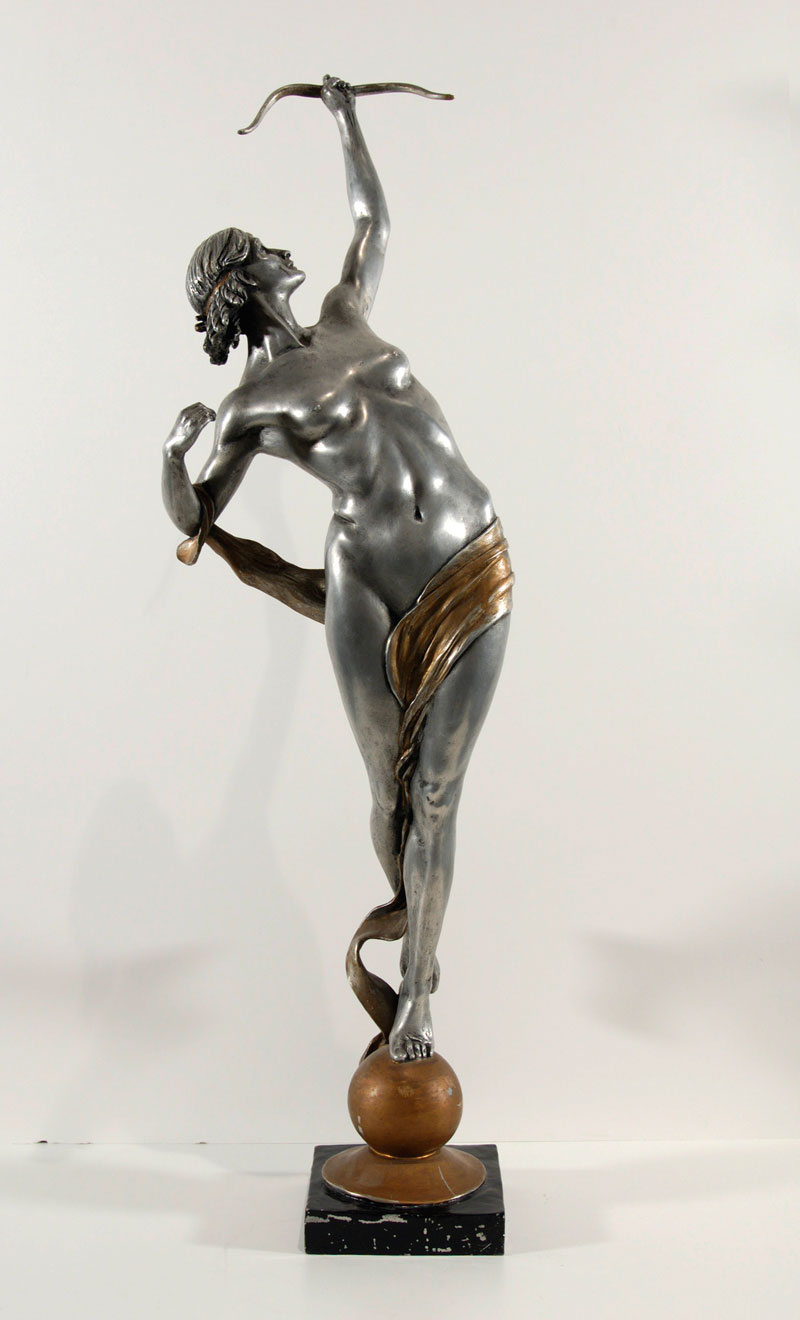
‘Diana’ [1932] by Anna Hyatt Huntington, Aluminum, gold plate and silver plate, 32 1/2 x 9 1/2 x 8 1/2 in.

Anna [Vaughn] Hyatt Huntington born 1876 shared her birthday of March 10th with her wealthy husband Archer Milton Huntington whom she married in 1923.

Relocating to New York City to enable her career to flourish in 1902, A.H. Huntington is one of the greatest representations of female empowerment within art.

Truly inspiring.

Her ‘Diana’ figure shown above was produced in varying sizes, cast materials and alternative compositions.  The New York Historical Society and NYC’s National Academy of Design have two larger versions of this cast.

The beauty of this sculpture is immediately eye-catching.

Okay, what does this sculpture reveal to us?

The bow points upwards signalling a contrary position to divinity.  Artemis, the Greek name of the latinised Diana, is posturing her own divine power.  An understanding of specific ancient texts regarding the usage of arrows in ancient culture as ‘signs’ is intimated in this piece.

Likely Anna Hyatt Huntington was aware of such understated references during her prior sculptural studies and research.

Art professionals know that Anna was particular about physiological designs in terms of historical, anatomical and cultural placement.  The ‘Diana’ figure has symbolised adoration of the female form for millenia.  From a military perspective the upward positioning of the bow could also represent ambition to further exceed in contested plans.

‘Here on Earth the answer is always a matter of the Height, the Breath and the Depth of things.’

The way Huntington has intended her Diana to pose alluringly beckons the viewer in a feminine way to support her cause.

The figure is both subjective and authoritive in design – a uniquely crafted balance.  This might help us to gain insight into Anna’s idea of marital harmony.  Anna is not forcing her artistic idea of ‘Diana’ upon you.

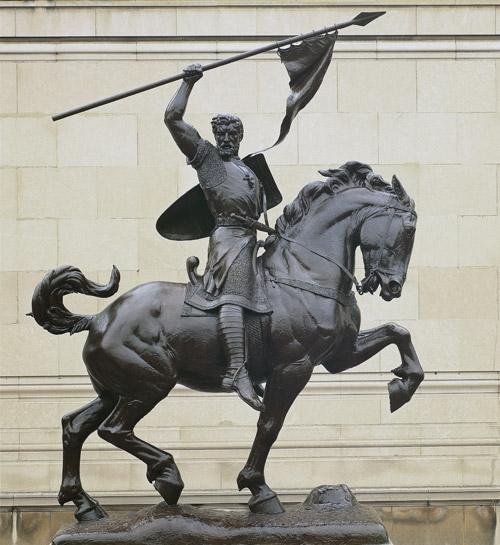
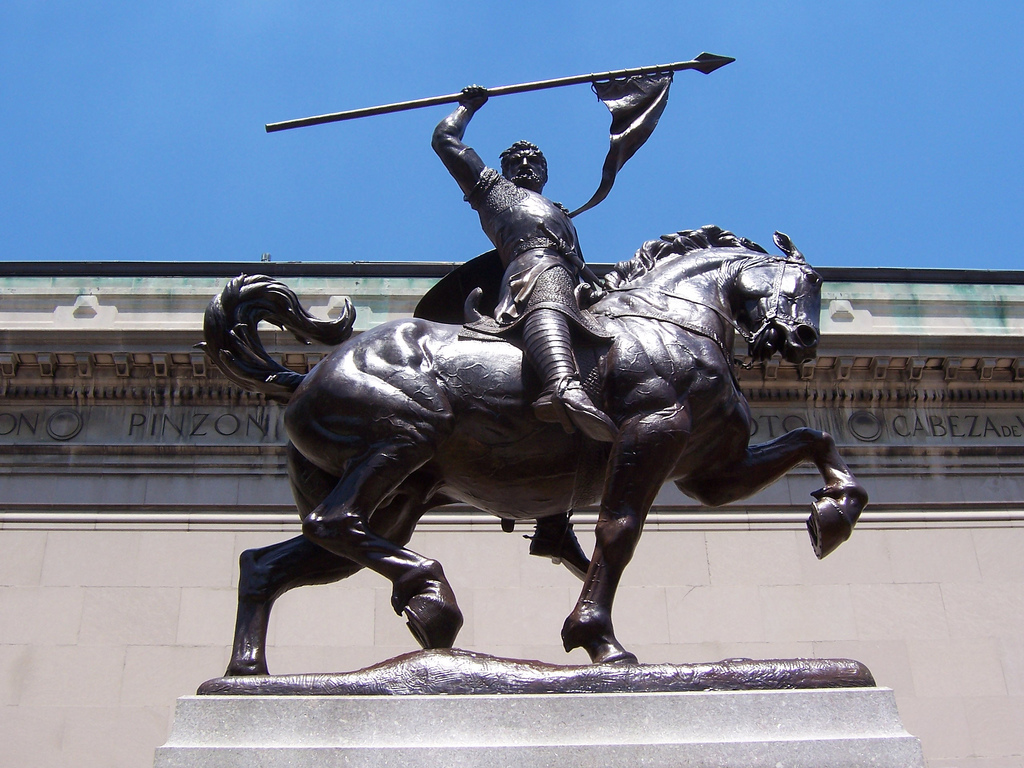
‘El Cid Campeador’ [1927] by Anna Hyatt Huntington, Bronze statue on stone at the New York Hispanic Society of America.  Photograph courtesy of the HSA – NYC.

Please click the photographs for further detailing:

‘El Cid Campeador’ by Anna Hyatt Huntington.
Photograph courtesy of http://xtremearttourists1.blogspot.co.uk/

‘El Cid Campeador’ in New York by Huntington, pictured twice above, is a highly useful study for fledgling sculptors to investigate.  If you’re studying art I would encourage you to do so.

Anna and her husband Archer enjoyed researching fine details.  Their vision of art is based upon facts, realism and visibly tangible elements.  Regardless of the subject matter Anna was always looking to create a faithfully unique sculpture of the subject wherever possible.

The process of learning about an intended commission preceded her clay studies as an integral part of the intellectual design long before the delivery or final unveiling.  Archer was a constant source of inspiration for Anna through his own scholarly interests.

Yet, Anna was already self-sufficient from her art career prior to their marriage.  From the 1910’s Anna earned a monumental amount of money per annum – $50,000.  This would be at least $1.2 million US dollars annually – adjusted for 2017!

‘The Torch Bearers’ [1954] by Anna Hyatt Huntington, Aluminium sculpture, 6m x 6m x 6.2m. At Ciudad Universitaria in Madrid, Spain. Photograph by JL De Diego.

There are versions of this Spanish sculptural installation by Anna called ‘The Torch Bearers’ (shown above) in Havana Cuba, South Carolina, New Jersey, Virginia and one each at Bridgeport & Redding in Connecticut.

‘The Torch Bearers’ is a truly moving piece of work, part-reminiscent of Michelangelo’s near-ineffable Sistine Chapel ceiling artwork.  If you can visit any of Anna’s intricate sculptures I’m sure you will enjoy the whole experience.

Anna Hyatt Huntington’s sculptures along with the ancient ‘Artemision Bronze’ at the National Archaeological Museum in Athens Greece can only be best appreciated visiting them in person.

As friends.

N.B. In keeping with todays article theme of female artistry please check out Marie Hammer’s art, hyperlink below.  Her husband, Rusty, writes the Xtreme Art Tourist blog aforementioned.

They both love art as much as Archer and Anna Huntington.  After reading about Archer’s Hispanic museum quest from his boyhood this takes some serious doing!

Marie’s website:

http://mariesegallery.blogspot.co.uk/

Standard

Twombly and Distant Voices

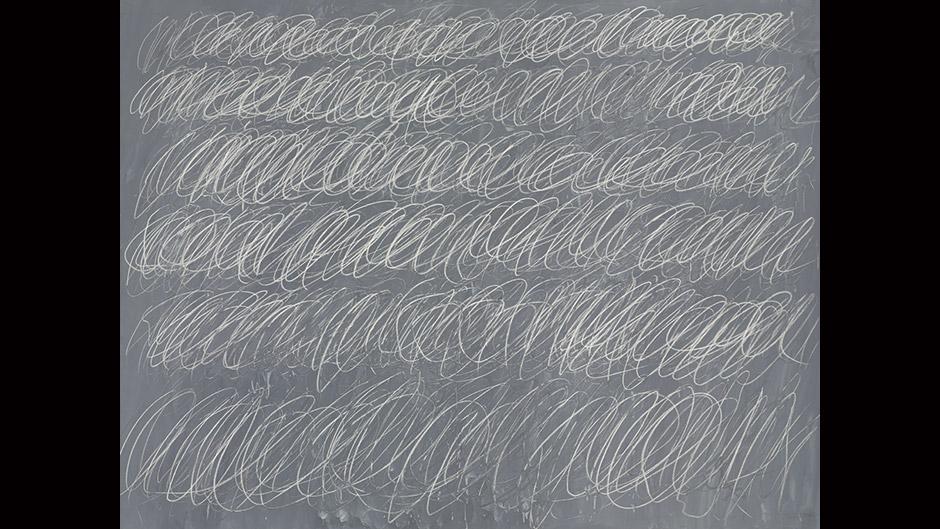
Cy Twombly – Untitled – inscribed NYC, [1968]. Oil based house paint and wax crayon on canvas – 68 x 90 in

The value of art can be truly awe-inspiring.

‘Seismic Waves [first version]’ [15th April 2016] by Matt The Unfathomable Artist, Blue ink on A4 paper, artwork whereabouts unknown.

Tracey Emin is also renowned for art that is timeless and of the moment.

Spontaneous of inspiration.

All artists will speak of their essence, primality or inner conscious feelings overtaking their work.  Becoming a sort of seismic needle I suppose.  Reacting to inputs, impulses and vibrations somewhere out there in the ether.

I’m not sure whether I’d read about the particular earthquake earlier on that day or not.  We all read about these things so often these days.  I was moved in a humanly caring way to produce this on paper with ink pen.

There are artists and people generally speaking that are so organised.  If I had a spacious art studio I probably would stack everything in perfect order.

Probably.

A collaboration of famous rock musicians, lyrically brilliant songwriters wrote “I put the pen to the paper ’cause it’s all a part of me.”

I’ve always loved those lyrics for all their honest genius.  Beyoncé recently referenced historical symbology to her musical performances.  Art is an inspiration.  Of self and others.

Someone a few years ago wrote:

I want to change the world by keeping it the same and I want to change the world by making it different.’.  They wrote this to their dear Nan.  Electronically so to speak.

Is 50 years really so much time to wait?

Depends on how you view Time.

Standard

Joseph Mallord William Turner

Would you like to go on a journey with me?  Please think for a moment where I might take you.

We can cross oceans of time.  The fabrics of space.  I will open up the Universe with my hands for you.  Inversely of understanding.  A design from the outside.  Pulling at the edges like a canvas stretched across beams.  Atomic order.  Nucleic.  Archaeological charcoals and elementals masking the span for all its measurement.

'Snow Storm - Steam-Boat off a Harbour’s Mouth' by Joseph Mallord William Turner - Exhibited 1842 - Oil paint on canvas - 914 mm x 1219 mm

‘Snow Storm – Steam-Boat off a Harbour’s Mouth’ by Joseph Mallord William Turner – Exhibited 1842 – Oil paint on canvas – 914 mm x 1219 mm

‘Snow Storm – Steam Boat off a Harbour’s Mouth’ by Joseph M W Turner is amongst my favourite of his works.  The human mind fills the void.  Forms its own imagination.  You perceive what you are able to comprehend.  Reality it is not.  A construct of perception as an idea.  The basis for an impressionistic viewpoint.

The above artwork by Turner is a cacophonic masterpiece.  You look at this and heard.. nothing.

Until now.

I merely lifted my canvas from its cardboard box to show him without commenting or referencing the title of my artwork – ‘Creative Mind’.  At that precise moment a professional creative told me and I quote his words pretty much verbatim here, ‘It makes my brain think all sorts of things’.. I knew it had achieved everything I wanted from the outset.  Perfectly.

Turner has immense influence to this day.  Everyone says this.  Let me give you an example.  If you would like to view Whitewall Galleries online (here in the UK) and look up Chris and Steve Rocks you will see this for sure.

As a side note in abstraction I also strongly recommend the work of Danielle O’Connor Akiyama.  With these recommendations I speak from personal interest in their quality.  This is not a reflection of other artists merely that their work was on show when I visited the gallery sometime ago.  Impressive and beautiful.

Turner’s masterpiece above shows layers of intricacy, a sheen of glazed light, depth of feeling and stormy chaos.  Truly iconic.

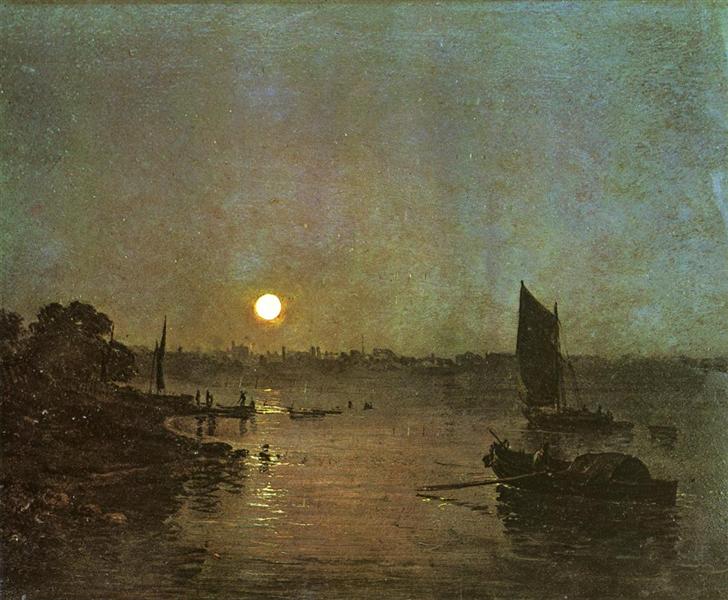
This brings us nicely to the value of his photographic realist paintings.  Consider viewing Turner’s next painting, immediately below, to Chopin’s Nocturne in E flat major Opus 9 No. 2 as I myself did.

'Moonlight, a Study at Millbank' by Joseph M W Turner - Exhibited 1797 - Oil on panel - 31.5 x 40.5 cm - on display at the Tate Gallery, London, UK

‘Moonlight, a Study at Millbank’ by Joseph M W Turner – Exhibited 1797 – Oil on panel – 31.5 x 40.5 cm –
on display at the Tate Gallery, London, UK

‘Moonlight, a Study at Millbank’ has such eerie reality that it pulls us in as if by one of the ships ropes about our midriff.  Our faces feel the cold-still nightly breeze.  We can hear light winds through the sails.  Quietness and a gentle drifting along of taut wood bound together strong for the working.

Two curious sayings I share now that I have read of my Great great Uncle artist Mr FMR aforementioned in my previous blog.  ’12 horses on the strength’ and that he was ‘the cat’s whiskers’ to his Mother and Father.  I really would like to paint these two expressions after the preceding works already waiting in the theatrical wings of my mind.

The latter expressionistic idea would not only be construe from Mr FMR’s sayings herewith.  You see at ‘middle’ school our class was given a project to complete.  I was thirteen years of age and chose to write about wildlife.  I enjoyed drawing the faces of big cat’s, exceedingly I practised.  Yet my drawing ability by my own admission is mostly immature during my earlier years.

Do you know the violinist who really cannot play or the singer who is yet able to fully master singing?  For a fact both always exist and some latterly of their age, renowned.  I am one and the other.

It’s quite the strangest thing that some artistic things I could accomplish in painting and drawing with ease whilst other subjects I struggle/d at almost impossibly.  Art is learning.  Nobody on earth ever picked up paints, crayons or pencil and drew with expertise immediately.  No one.  Ever.

Again I shall digress, oh Mr L.S. Lowry I love you so very much my dear fellow.  For two exemplary reasons that my heart chases after like horses toward their hurdles for riding.

Turner’s work appears effortless.  Clearly though, as shown below, Turner’s learnedness at professional draughtsmanship produces finely exquisite angles and perspectives beyond stark portrayal.  For sure there is art in architecture.

Lines meet curves, leans and masses of concrete order.

'Tintern Abbey: The Crossing and Chancel' (looking towards the East window) by J. M. W. Turner - 1794 - Graphite & Watercolour on paper - 35.9 cm × 25 cm

‘Tintern Abbey: The Crossing and Chancel’ (looking towards the East window) by J. M. W. Turner – 1794 – Graphite & Watercolour on paper – 35.9 cm × 25 cm

Turner is rightly regarded as a British exemplary of artistic influence.  His classical self portrait is to appear on the Bank of England’s £20 note from 2020 following a public selection process.  Perhaps I waited wisely for the right time to make deserved commentary about Turner.  Without doubt a pleasure to write this blog article and in eager readiness for sometime now.

Loudly whispers ‘Constable! Constable!’, Edgar Degas and Sir Edward Coley Burne-Jones, 1st Baronet – someone, somewhere, somehow please an encore!’

For some within art Time really has no limitation whatsoever.  God, the Dove or the Dragon are unable to conquer unto destruction nor death.

‘The Living Artwork Eternal That Breatheth Not.’

It’s the journey of life.

Standard

Art by Definition

‘Art is works of creative skill, intellect and/or phenomenal occurrence relative to the perception and/or imagination of creatures biological or otherwise.’

– Matt The Unfathomable Artist, Copyright © 1st December 2015.

By relativity I know there are still discoveries to be made from the papers of 1905 and 1921.  Scientific and worthwhile.

Mankind evolves, yes, by the very definition of the word itself.

Keep on climbing trees so as to see it.

This too is art from The Mind.

Standard

Banksy Is The Street Art Master.

'Keep Off Our Worms' - Banksy original graffiti artwork

‘Keep Off Our Worms’ (2014) – Banksy original spray paint artwork

In 2014 this original artwork, pictured above, appeared on a wall in Clacton-On-Sea, Essex, England one week prior to a UK Parliamentary by-election.

I see five grey looking pigeons and a bright-looking bird suspended upon a single ‘tight-rope’ perch.

What do you see?


'Laugh Now But One Day We'll Be in Charge' (2002) by Banksy - spray paint on canvas - 12in x 12in

‘Laugh Now, But One Day We’ll Be in Charge’ (2002) by Banksy – spray paint on canvas – 12in x 12in

I see a definitive quotation.  A statement referenced with a placard or a pinafore.

Is ‘Laugh Now, But One Day We’ll Be In Charge’, above, explaining animalistic human traits?  The fight for resources?  Or greed?

Should we imagine that brute force will gain authority over intellect?  Perhaps it touches upon equality, working conditions and slave labour?  How about the evolving cycle of Man vs Woman?  I’m not trying to provide a dominant argument here.

The beauty of a great artwork is personal opinion.  Provocation for thought and emotion.

The most recognisable street artist of our generation, Banksy, certainly makes international headlines time and again!  The exclamation felt quite natural to include.  ‘Read all about it, read all about it – Banksy has sprayed our walls and doors!’

People show strong appreciation when they know they are being loved.  Ideas challenged.  Behaviour scrutinised.

I personally chose the artwork images to display in this blog article.  Each original artwork has already been represented with worldwide coverage throughout the popular press.  Banksy creates street art that speaks influence and popularity.


'This'll Look Nice When It's Framed' by Banksy (2010, San Francisco)

‘This’ll Look Nice When It’s Framed’ by Banksy (2010, San Francisco, USA)

The above artwork – all photographs taken from the Banksy Website – appeared in the Mission District at Valencia and 20th Street, San Francisco, California, USA.

The artwork pensively references the historical viewpoint of ‘on-the-wall’ art pieces.


'Mobile Lovers' (2014) by Banksy

‘Mobile Lovers’ (2014) by Banksy

This depiction of a warm embrace, as pictured above, appeared on a doorway next to the Broad Plain Working With Young People club in April 2014.  It first sold for £403,000, which is a staggering price for any living artist to achieve.

With ‘Mobile Lovers’ Banksy is highlighting the disconcerting divide caused by our growing technological dependence offset against personable human interactions.  If unchecked this is a serious pandemic that is ‘sneaking up behind’ the human race in a multitude of ways.

It’s not difficult to observe people engrossed in their social media pages during get-togethers.  How can connecting be disconnecting at the same time?  What are the long-term effects?

Banksy uses his art and global appeal to help address this problem with a beautiful message.  Satirical and empathic, especially the choice of location – a youth centre.  A new technologically adept generation coming through.

Can modern relationships survive this technological minefield?

Much more than that, great artworks reverberate.  Their intrinsic value increases monetarily and intellectually from generation to generation.

Banksy is inspiring visionaries, a new stream of artists and The Public with his own carefully crafted style.  Challenging hard-line views with humour, stark remonstrations and perfectly executed art concepts.

Banksy is the ‘street art’ cool Andy Warhol of the people.

And we all know that there “Ain’t nobody cooler than that.” an artist said.

Standard

Pietro Annigoni Is Renaissance Man

If you love art then you really should enjoy getting to know the work of Pietro Annigoni.  Here is one of his wondrous self-portraits:
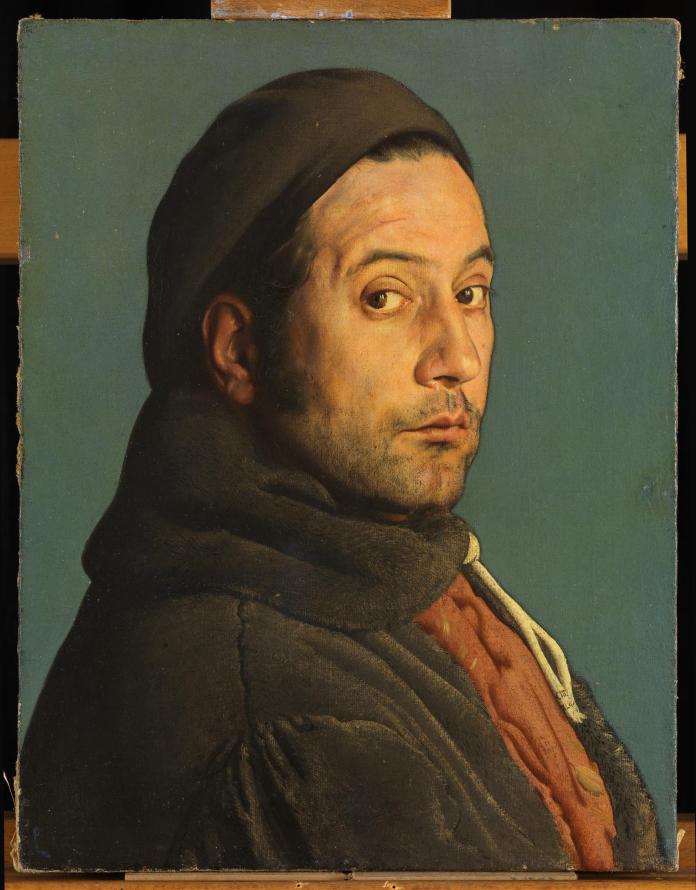
Self Portrait by Pietro Annigoni - 1946. Oil on Canvas - 45 cm x 35.5 cm.

Self Portrait by Pietro Annigoni – 1946.
Oil on Canvas – 45 cm x 35.5 cm.

This article is discussing the “Realists’ Realist” – Pietro Annigoni.  Pietro was born 7th June 1910 in Milan and died 28th October 1988 in Florence, Italy – his beloved home and country of birth.

A master artist who could teach anyone how to paint the original bona fide Renaissance method of art making.

And yet, following Pietro’s teaching you would require personal talent, skill, creativity and an incredible working perseverance to please this giant of 20th century Italian painting.

Without question if Pietro Annigoni had lived through the 15th and 16th centuries alongside Michelangelo and Da Vinci they would have welcomed him with open arms as their artistic equal.

Quite simply Annigoni is their relative modern-day artistic exemplar.

To add value to this past Master simile we only need mention artists such as Ben F. Long IV and Zsuszi Roboz to his media acclaim.  The former artist worked as an apprentice for nearing eight years under Annigoni’s expert direction.  The latter artist, another apprentice of Annigoni, died July 2012 at 82 years of age.  Roboz’ work heavily influenced by her love of music, dancing and literary interests.

Ben Long’s (Ben F. Long IV) own family has artistic flair running through their veins.  In perceiving the influence of Annigoni please take a look at Long’s ‘Mussaba’ oil on linen and also his ‘Self Portrait in Black’ of 2012.  From these portraits you can appreciate just how intricately Ben F. Long IV had learned from his ‘old school’ master teacher.

Bona fide art begets bona fide art by influence.

Please trust me earnestly when I say that artists know exactly the things we are doing.. explaining multiple ideas, intrinsically inspiring, making personal commentaries through art reverent to our hearts.

We would all accept that Van Gogh possessed the most pleasingly mild of personalities.  Contrasted starkly against such meekness his artistic ambition was much like Annigoni, Long and Roboz with its all consuming fire.

Within Annigoni’s eyes there is comprehensible determination and knowing.  His preparation and manner shows the controlled movements of a perfectionist at work.  Proudly professional with hints at personal delight for his learned craft.

Artisan carpenters’ that craft expensive woods, master architects that seemingly bend heavy stones to their will..  Annigoni mixed his painting pigments the Renaissance way.  Egg tempera deliciously blended to create the finest ingredients befitting a master worker.

Our eyes become the palate.
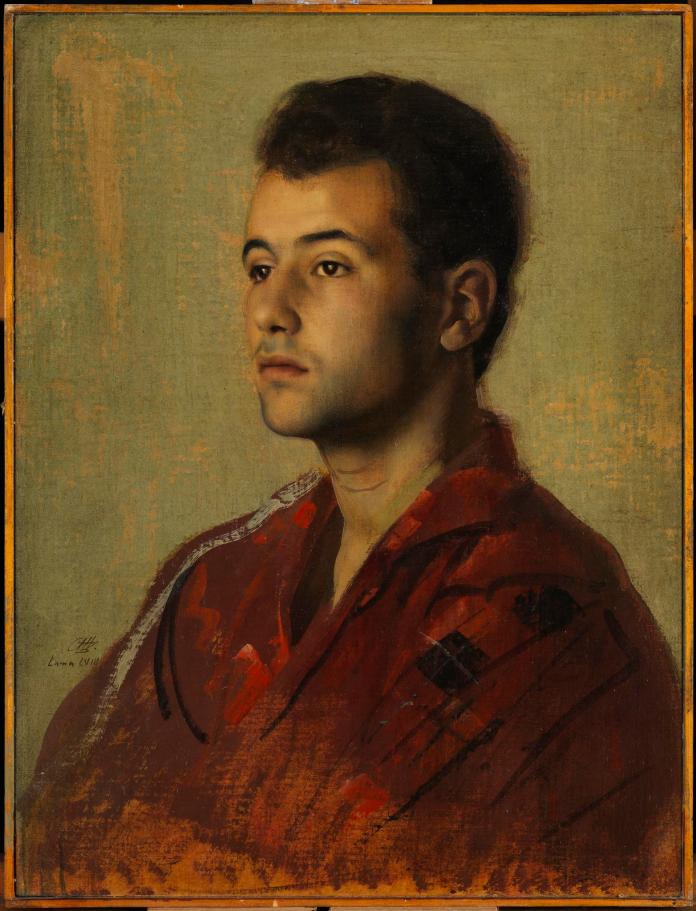
Portrait of Benedetto Annigon (1958)i, son of Pietro Annigoni.

Portrait of Benedetto Annigoni (1958), son of Pietro Annigoni.

Above we see the young Benedetto Annigoni who passed away December 2011, aged 72 years.  Astute and contemplative, expectant that his father was immensely serious about his work.  In celebration of this Benedetto is credited in the film of his father entitled ‘Annigoni: Portrait of an Artist’ (1995).
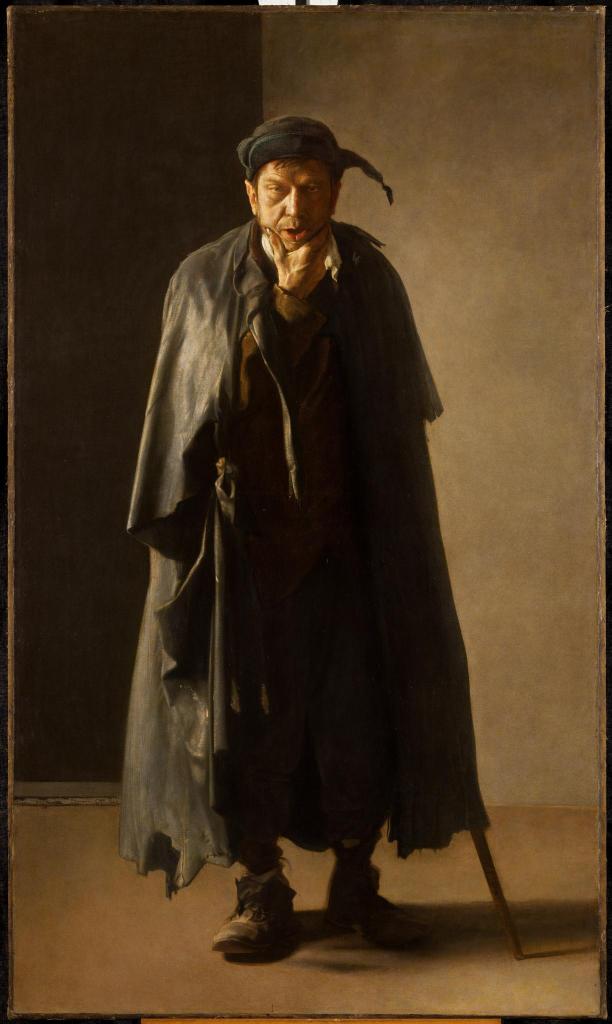
Portrait of Cinciarda (1945) by Pietro Annigoni. Oil tempera on panel - 180 cm x 100 cm.

Portrait of Cinciarda (1945) by Pietro Annigoni.
Oil tempera on panel – 180 cm x 100 cm.

The best commentary to be made about Pietro Annigoni’s ‘Cinciarda’ portrait shown immediately above is by the painter himself.  By way of translation Pietro said:

"...that nearly every day he climbed the stairs to my studio, and after ringing the 
bell and stood there, waiting, in the same pose in which I portrait. We were 
immediately after the [war], and this character, so humanly tragic, hit me for the 
symbolic meanings that [he] could take on. He came out of the battered conflict and 
'Cinciarda', miserable, there on the edge of the stairs, seemed to express the 
uncertainty of our future. "

A master Artist will reach into your soul.  A master Artist invites you to ask pertinent questions about the human condition and life itself.  To move you with unrestrained artistic brevity.

To ask whether Pietro Annigoni accomplishes this is tantamount to asking whether an Italian Pope prays.

Annigoni understood much about the world around him with his keen intellect.  His truly honest portraits of John F Kennedy and a work entitled ‘La Strega’ demonstrate sheer excellence of perception.

Similarly Annigoni’s Princess Margaret and Queen Elizabeth II portraits (commissioned 1957 and 1954-55 respectively) provided glamour to the British monarchy during a burgeoning Hollywood era of media fervour.  Certainly in terms of the printing press and a growing televisual audience of international proportion.

I encourage you to look at all of these paintings by Pietro for their intellectually artistic qualities.

Pietro Annigoni Is Renaissance Man.. Personified.

[Images courtesy of the Museo Pietro Annigoni in Florence, Italy.]

Standard

‘Spirit Heal’ Chorus – First Verse

Find peace within ourselves. This is photographic composition #2 and verse 2 of my song 'Spirit Heal'.

A video posted by Matt (@duannishenmi) on

https://drive.google.com/open?id=0B_1g4lrULQoBSHhnWWFVRGNULXM


Standard