Art by Definition

‘Art is works of creative skill, intellect and/or phenomenal occurrence relative to the perception and/or imagination of creatures biological or otherwise.’

– Matt The Unfathomable Artist, Copyright © 1st December 2015.

By relativity I know there are still discoveries to be made from the papers of 1905 and 1921.  Scientific and worthwhile.

Mankind evolves, yes, by the very definition of the word itself.

Keep on climbing trees so as to see it.

This too is art from The Mind.

Standard

Banksy Is The Street Art Master.

'Keep Off Our Worms' - Banksy original graffiti artwork

‘Keep Off Our Worms’ (2014) – Banksy original spray paint artwork

In 2014 this original artwork, pictured above, appeared on a wall in Clacton-On-Sea, Essex, England one week prior to a UK Parliamentary by-election.

I see five grey looking pigeons and a bright-looking bird suspended upon a single ‘tight-rope’ perch.

What do you see?


'Laugh Now But One Day We'll Be in Charge' (2002) by Banksy - spray paint on canvas - 12in x 12in

‘Laugh Now, But One Day We’ll Be in Charge’ (2002) by Banksy – spray paint on canvas – 12in x 12in

I see a definitive quotation.  A statement referenced with a placard or a pinafore.

Is ‘Laugh Now, But One Day We’ll Be In Charge’, above, explaining animalistic human traits?  The fight for resources?  Or greed?

Should we imagine that brute force will gain authority over intellect?  Perhaps it touches upon equality, working conditions and slave labour?  How about the evolving cycle of Man vs Woman?  I’m not trying to provide a dominant argument here.

The beauty of a great artwork is personal opinion.  Provocation for thought and emotion.

The most recognisable street artist of our generation, Banksy, certainly makes international headlines time and again!  The exclamation felt quite natural to include.  ‘Read all about it, read all about it – Banksy has sprayed our walls and doors!’

People show strong appreciation when they know they are being loved.  Ideas challenged.  Behaviour scrutinised.

I personally chose the artwork images to display in this blog article.  Each original artwork has already been represented with worldwide coverage throughout the popular press.  Banksy creates street art that speaks influence and popularity.


'This'll Look Nice When It's Framed' by Banksy (2010, San Francisco)

‘This’ll Look Nice When It’s Framed’ by Banksy (2010, San Francisco, USA)

The above artwork – all photographs taken from the Banksy Website – appeared in the Mission District at Valencia and 20th Street, San Francisco, California, USA.

The artwork pensively references the historical viewpoint of ‘on-the-wall’ art pieces.


'Mobile Lovers' (2014) by Banksy

‘Mobile Lovers’ (2014) by Banksy

This depiction of a warm embrace, as pictured above, appeared on a doorway next to the Broad Plain Working With Young People club in April 2014.  It first sold for £403,000, which is a staggering price for any living artist to achieve.

With ‘Mobile Lovers’ Banksy is highlighting the disconcerting divide caused by our growing technological dependence offset against personable human interactions.  If unchecked this is a serious pandemic that is ‘sneaking up behind’ the human race in a multitude of ways.

It’s not difficult to observe people engrossed in their social media pages during get-togethers.  How can connecting be disconnecting at the same time?  What are the long-term effects?

Banksy uses his art and global appeal to help address this problem with a beautiful message.  Satirical and empathic, especially the choice of location – a youth centre.  A new technologically adept generation coming through.

Can modern relationships survive this technological minefield?

Much more than that, great artworks reverberate.  Their intrinsic value increases monetarily and intellectually from generation to generation.

Banksy is inspiring visionaries, a new stream of artists and The Public with his own carefully crafted style.  Challenging hard-line views with humour, stark remonstrations and perfectly executed art concepts.

Banksy is the ‘street art’ cool Andy Warhol of the people.

And we all know that there “Ain’t nobody cooler than that.” an artist said.

Standard

Pietro Annigoni Is Renaissance Man

If you love art then you really should enjoy getting to know the work of Pietro Annigoni.  Here is one of his wondrous self-portraits:

Self Portrait by Pietro Annigoni - 1946. Oil on Canvas - 45 cm x 35.5 cm.

Self Portrait by Pietro Annigoni – 1946.
Oil on Canvas – 45 cm x 35.5 cm.

This article is discussing the “Realists’ Realist” – Pietro Annigoni.  Pietro was born 7th June 1910 in Milan and died 28th October 1988 in Florence, Italy – his beloved home and country of birth.

A master artist who could teach anyone how to paint the original bona fide Renaissance method of art making.

And yet, following Pietro’s teaching you would require personal talent, skill, creativity and an incredible working perseverance to please this giant of 20th century Italian painting.

Without question if Pietro Annigoni had lived through the 15th and 16th centuries alongside Michelangelo and Da Vinci they would have welcomed him with open arms as their artistic equal.

Quite simply Annigoni is their relative modern-day artistic exemplar.

To add value to this past Master simile we only need mention artists such as Ben F. Long IV and Zsuszi Roboz to his media acclaim.  The former artist worked as an apprentice for nearing eight years under Annigoni’s expert direction.  The latter artist, another apprentice of Annigoni, died July 2012 at 82 years of age.  Roboz’ work heavily influenced by her love of music, dancing and literary interests.

Ben Long’s (Ben F. Long IV) own family has artistic flair running through their veins.  In perceiving the influence of Annigoni please take a look at Long’s ‘Mussaba’ oil on linen and also his ‘Self Portrait in Black’ of 2012.  From these portraits you can appreciate just how intricately Ben F. Long IV had learned from his ‘old school’ master teacher.

Bona fide art begets bona fide art by influence.

Please trust me earnestly when I say that artists know exactly the things we are doing.. explaining multiple ideas, intrinsically inspiring, making personal commentaries through art reverent to our hearts.

We would all accept that Van Gogh possessed the most pleasingly mild of personalities.  Contrasted starkly against such meekness his artistic ambition was much like Annigoni, Long and Roboz with its all consuming fire.

Within Annigoni’s eyes there is comprehensible determination and knowing.  His preparation and manner shows the controlled movements of a perfectionist at work.  Proudly professional with hints at personal delight for his learned craft.

Artisan carpenters’ that craft expensive woods, master architects that seemingly bend heavy stones to their will..  Annigoni mixed his painting pigments the Renaissance way.  Egg tempera deliciously blended to create the finest ingredients befitting a master worker.

Our eyes become the palate.

Portrait of Benedetto Annigon (1958)i, son of Pietro Annigoni.

Portrait of Benedetto Annigoni (1958), son of Pietro Annigoni.

Above we see the young Benedetto Annigoni who passed away December 2011, aged 72 years.  Astute and contemplative, expectant that his father was immensely serious about his work.  In celebration of this Benedetto is credited in the film of his father entitled ‘Annigoni: Portrait of an Artist’ (1995).

Portrait of Cinciarda (1945) by Pietro Annigoni. Oil tempera on panel - 180 cm x 100 cm.

Portrait of Cinciarda (1945) by Pietro Annigoni.
Oil tempera on panel – 180 cm x 100 cm.

The best commentary to be made about Pietro Annigoni’s ‘Cinciarda’ portrait shown immediately above is by the painter himself.  By way of translation Pietro said:

"...that nearly every day he climbed the stairs to my studio, and after ringing the 
bell and stood there, waiting, in the same pose in which I portrait. We were 
immediately after the [war], and this character, so humanly tragic, hit me for the 
symbolic meanings that [he] could take on. He came out of the battered conflict and 
'Cinciarda', miserable, there on the edge of the stairs, seemed to express the 
uncertainty of our future. "

A master Artist will reach into your soul.  A master Artist invites you to ask pertinent questions about the human condition and life itself.  To move you with unrestrained artistic brevity.

To ask whether Pietro Annigoni accomplishes this is tantamount to asking whether an Italian Pope prays.

Annigoni understood much about the world around him with his keen intellect.  His truly honest portraits of John F Kennedy and a work entitled ‘La Strega’ demonstrate sheer excellence of perception.

Similarly Annigoni’s Princess Margaret and Queen Elizabeth II portraits (commissioned 1957 and 1954-55 respectively) provided glamour to the British monarchy during a burgeoning Hollywood era of media fervour.  Certainly in terms of the printing press and a growing televisual audience of international proportion.

I encourage you to look at all of these paintings by Pietro for their intellectually artistic qualities.

Pietro Annigoni Is Renaissance Man.. Personified.

[Images courtesy of the Museo Pietro Annigoni in Florence, Italy.]

Standard

‘Spirit Heal’ Chorus – First Verse

Find peace within ourselves. This is photographic composition #2 and verse 2 of my song 'Spirit Heal'.

A video posted by Matt (@duannishenmi) on

https://drive.google.com/open?id=0B_1g4lrULQoBSHhnWWFVRGNULXM


Standard

‘Yellowish-Amber Glare’

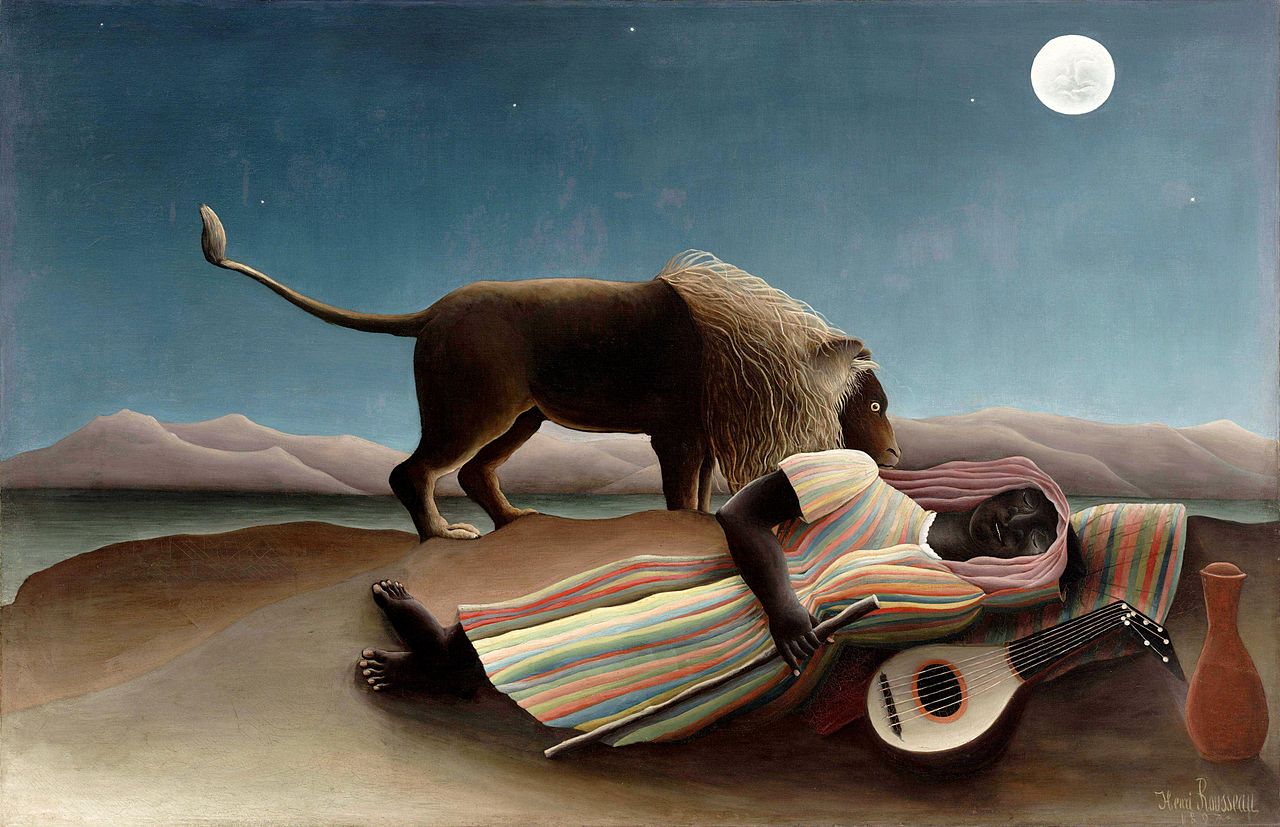
'The Sleeping Gypsy' 1897 by Henri Rousseau - oil on canvas - 51.0 inches × 79.0 inches

‘The Sleeping Gypsy’ 1897 by Henri Rousseau – oil on canvas – 51.0 inches × 79.0 inches

‘Yellowish-Amber Glare’ by Matt, The Unfathomable Artist

“Look into his eyes, the yellowish-amber stare, blackness from the glare cuts through like Samurai for glinting shine without a care.  Elephant-eyed for fear now grown lest not be spared.  Walks away waiting starving awakened hibernated bear.  Trumpeted chilled sounds through bones with frights that scare.  Patience ‘gainst the mighty grey-skinned bulk, ivory tusks laid bare as world with double heart in anger sulk at loss with all its greedy poaching took.

Those same yellowish-amber eyes at approaching thunders rumble, amok that skin as muddy muck, his roaring teeth that grip neck to slaughter just, eve’ that mighty Buffalo, Eland and Sambar deer unto death and humbled wayward stock.

The speed of cheetahs outrun him not when vehement kill in stalking ground a determined heart to stop.  Attack his cubs and meat is cauldron pot in fire-belly kiln vigorous hot.  Nightly lightening as two steely diamonds blink above-below the Earth in wide eyed scanning know.  Remember halted hyena sought, smashed its back to the dust as a patterned blanket throw.  Severed female in defended pity plight, thus charge five hyenas robust of muscled might that rips dog as bread to dip in spite.  Leopards their vicious claws, track thy will, quiet slow, for wieldy rushing advancing low, tickling flanks before heavy crushing canines final blow.

Lifeless forms in mouth do lull and broken arrowed bow.  Made dead afore the jaw its cranially crooked bone fused to jagged bone less skin doth show.

Vibrating arachnid waits as ever beating heart in patience slow.

Blue eyes white fur as crown that shimmers snow, in fear lack of those whitened swords prancing untroubled seeds to sew.  Cricket takes step back for deaths escape from fangs poised without a sound, as cursed on land it chirpy crow.  Bird songs with stars twinkle spectacular dancing gown in tweeting twirling all around, Atmospheric Jewel from Venus to Mars that minded-meld eager takes-in of dear beheld.

Those early years cast of tree-lined jungle depths.  Days, Weeks, Months and Years the maturity of branches sighing moans, just as wind through Autumnal leaves delighted blows.  Hooves kick.  Cajole.  Near drown and never-ending Earthly mock.

Who really knoweth raging angst hiding as decades pass in the Viper’s venom grasp?

Truly it be unrequited said, ‘Love is my name, A cradle in thy riverbed.'”

‘Yellowish-Amber Glare’ by Matt The Unfathomable Artist – Copyright © December 2015.

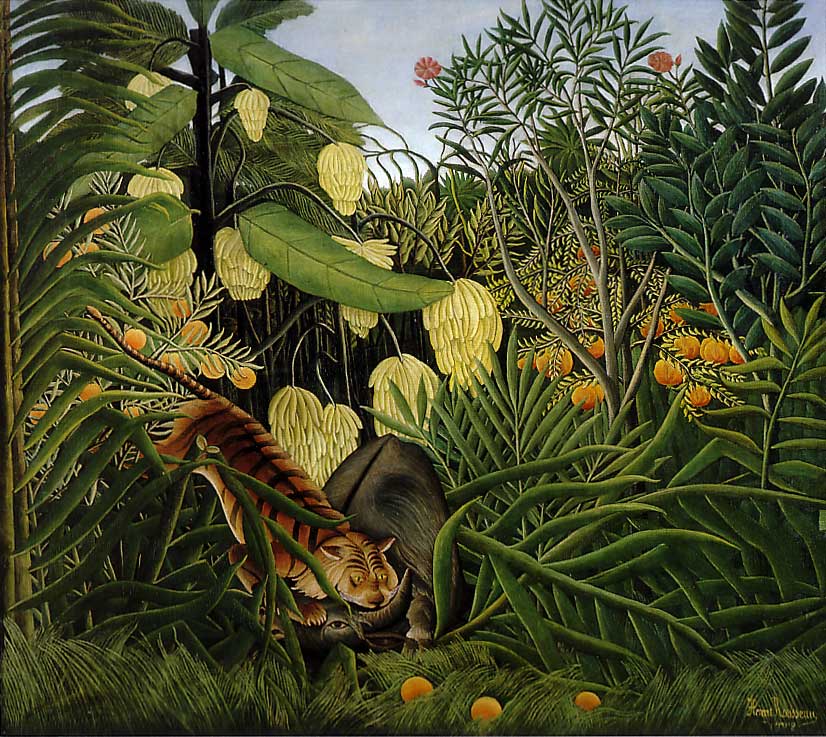
'Fight Between a Tiger and a Buffalo' 1908 by Henri Rousseau - oil on canvas - 66.9 inches × 74.6 inches

‘Fight Between a Tiger and a Buffalo’ 1908 by Henri Rousseau – oil on canvas – 66.9 inches × 74.6 inches


Tiger in a Tropical Storm (Surprised), 1891 by Henri Rousseau - oil on canvas - 51 1⁄8 inches × 63 3⁄4 inches.

‘Tiger in a Tropical Storm (Surprised)’, 1891 by Henri Rousseau – oil on canvas – 51 1⁄8 in × 63 3⁄4 in


Standard

Atlas Dares to Move Jupiter and Hercules Fights a Lion

'Hercules Fight With The Nemean Lion' by Peter Paul Rubens

‘Hercules Fight With The Nemean Lion’ by Peter Paul Rubens


Standard

Mahmoud Said, That’s Who.

Untitled 1938, Oil on Board by Mahmoud Said

Untitled 1938 by Mahmoud Said, oil on board – 11.22 inches x 19.60 inches

Born in Alexandria, Egypt (1897-1964) the son of Muhammad Said Pasha who himself was a Prime Minister of Egypt, Mahmoud Said devoted his life to art.  Following on from his law school degree for his career as a judge, Mahmoud continued to perfect his art skills during the 1920’s.  Into his 50’s Mahmoud’s pursuit of creative painting enveloped his very being.

Absolutely unequivocally I would love to own a Mahmoud Said painting.

The untitled painting 1938, above, is a masterpiece.  All his works are masterpieces.  The pathway to winning is the completing of the craft.

“Would you love your child less that they babbled from their beginning to talk?  Or that they stumbled to walk?”  With effort and toil you grow seed.  Nurture.  Guide.  Protect.  Watch them grow.  Blossom fruits and ripen.

The white donkey painted above is repeated by Mahmoud in at least one other composition of his work.  An interesting choice.  Here it is side-profiled and central.  As gloriously painted in its own rare beauty as the regal women and the girl foremost in modesty portrayed.  A fine custom of the peoples.

Mahmoud uses canvas texture and brush work to make paintings come alive.

Every accomplished artist uses their skill in ways that Mahmoud magnificently displays.  I admit that what pleases me about my own work is how light dances throughout the day on my completed canvases.  I laugh to myself with glee whenever I see this effect occurring.  Mostly with landscapes and impressionist scenes.

Textures within Mahmoud’s paintings must be seen to be believed.  Here, we see with digital replication as best we can.  Where technological resolution advances are highly desirable. 

'A Girl Sitting On The Floor' (1950) by Mahmoud Said, signed and dated 'M.SAID 1950' - 24 inches x 19¾ inches

‘A Girl Sitting On The Floor’ (1950) by Mahmoud Said,
signed and dated ‘M.SAID 1950’ –
24 inches x 19¾ inches

With ‘A Girl Sitting On The Floor’ shown above I cannot help think of two-tone Van Gogh backgrounds and Rothko abstracts.  Really, to my mind, this is as interesting as the ‘Mona Lisa’ by Da Vinci for expression.

Perhaps the woman has found childbirth difficult?  Maybe she is tired or sad?  I think she has been working very hard.  Does this elude to her situation?  Please kindly inspect the handling of the yellow wall for its quality.  Goodness me, incredible.

'Sunset On The Nile At Luxor' (1945) - Oil on Canvas, signed and dated 'M. SAID 1945', Mahmoud Said - 25 1/8 inches x 31 3/8 inches

‘Sunset On The Nile At Luxor’ (1945) by Mahmoud Said – oil on canvas, signed and dated ‘M. SAID 1945’ – 25 1/8 inches x 31 3/8 inches

Mahmoud Said – time and again – he incorporates stylistic genius in his compositions.  ‘Sunset On the Nile At Luxor’ is exceptional.  Flowing water, heavily laden boats, a majestic figure and hints at the sun’s light.

Today is art happiness to me having new acquaintance with this exhilarating artwork.  Albeit of digital construct.

Artistic commentaries have poured from my soul in this year of 2015.  I’ve shared my poems new and old, creative stories of fiction contrived, lyrics and sayings renewed alive.  Oil painting on canvas has been difficult for me this year.  A troublesome year for paint art to arrive into my spirit.

The energy required for good art painting is all consuming and almost exclusive within me.  Trying to articulate this the best way.  Sometimes energy ascends to many places as needed.  This takes concerted effort and thought.  Art is everywhere.

It’s the reason I’ve purposed this year for writings rather than painting.

Mahmoud Said’s all encompassing desire to create great art should be inspiring to all artists.  A treasure to behold generation after generation.

The world is often stormy and this year it has been exceeding so.  As I conclude this blog article I think I know the next painting that I shall post.  Hopefully without too much commentary.

Please continue your journey with me.

Standard

Mesopotamian Art

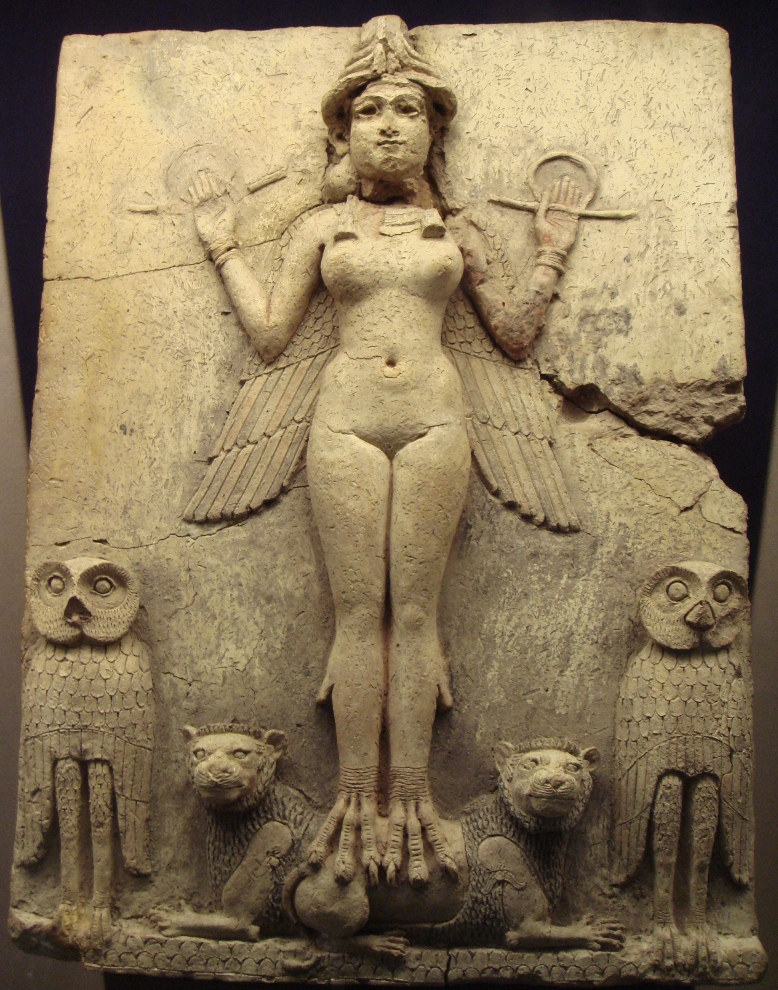
The Burney Relief of Ishtar. Ancient Babylonian c1800 BC

The Burney Relief of Ishtar. Ancient Babylonian c1800 BC

Have you seen those magnificent 20th Century movies animating legends of old?

I’m hopeful that this incredible work of art, The Burney Relief, might bring to mind actresses whose feet are depicted with talons for gripping prey.

The eyes of a tiger.  Potions.  Magical conjurors.  Flying carpets.  Wise ones.  Glorious garb with colours pretty.  Head coverings to protect from the scorching sun.  Flights of winged creatures looking down upon men and their perfectly made daughters.  Giants sitting at their tables to be served.

Mesopotamian art holds such a strong place in my heart.  The weightiness of books I’ve read.  The number of words consumed as bread for eating.  Films numerous that never tire with age.

Mesopotamian art oh how much you are loved for all your works of brilliance.  Like history described as a man holographically computerised with knowledge abundant moving from glass to glass explaining Earth’s history.  To discuss ancient art without including Mesopotamia, where would we begin?

These cultural artifacts are our World Heritage.

Ur, Assyria and Persia storing up their ancient treasures.  Do you enjoy secrets?  Some are buried waiting patiently yet to find.  We can peer into their sophisticated cultures through visible representations of their world, their ancient thinking, cuneiform writings, cylinders and scrolls.

Ancient Middle-Eastern and Egyptian architecture reaching out into the Americas thousands of years ago.  Crossing seas and straits.  Trade and industry bringing a wonderful harmony or discordance whenever diplomacy does lack.

Through the nature of art there is the living with fine trees and carved rock to make geometric its face.  One hundred chisels.  Each worker skilled in the craft of their art.  All the grassy fabrics of the earth beautified.  Stones precious and polished to shine.  Cut to slow down light that we might take in its rays.  Light bounces in all directions and is moved into focus for a highlighting.

Who has not heard about the legend of Gilgamesh?  How many movies are there yet still to make?

Never will there be a tiring throughout all these days.

Standard

An interview with TITUS AGBARA

Family & Beyond by Titus Agbara Medium: oil on canvas Size: 60inches x80inches

‘Family & Beyond’ by Titus Agbara
Medium: Oil on Canvas
Size: 60 inches x 80 inches

Before you read my commentary about Titus Agbara and our fun Q&A session I’d like readers to imagine a very different kind of tranquility and frame of mind.  I say this so that you may happily place yourself within Titus Agbara’s world.

People from Africa have the purest sense of language.  A few years ago I was speaking to two African men who had travelled to the UK quite some years previous to live here.  Their beaming faces clearly stood out to me along with the beautiful way they spoke.  We shared some amusing stories prompting one of the African men to move his left leg slowly in front of him and then slowly behind him, standing on his right leg as he did so.

Whilst I watched him merrily rocking I asked him why he was moving his leg like this.  With a huge smile he replied full of joy, ‘I am laughing, this is how we laugh.  With our feet.’

That same African man was speaking to me like a man whose spirit was flying high in the clouds whilst yet perfect in his full soberness.  That moment by definition is Natural Art.  A culmination of specific people and their cultural style communicated to me through this one man.

Travel to Greece and you will see Greek friends naturally hugging each other with ease and an assured gracefulness.  You already know the peoples inclined to bowing, those to handshaking and the peoples kissing from cheek to cheek.  Natural Art tells us about people and their culture.

The photograph below is a beautifully classic diptych by Titus Agbara defining his artistic style:

'Still At Peace' by Titus Agbara Medium: oil on canvas Size: 40 inches x 60 inches

‘Still At Peace’ by Titus Agbara
Medium: Oil on Canvas
Size: 40 inches x 60 inches

Titus works almost entirely with palette knives requiring the artisan skill and steadiness of surgeons who are themselves masters at their work.  Titus’ style, as discussed in a previous blog about Morgan Weistling [My Morgan Weistling Blog Writeup] demonstrates a strong story-telling acumen within his art.  Whereas Weistling prefers a romantic style, Titus is pragmatic and practical in depicting many of his life scenes.

Few paint artists are able to mix colours as masterfully as Titus Agbara and his American colleague aforementioned.

True, some paint artists choose to have a simplistic art palette in terms of colour and this also works well in producing fantastic art.  Realist Landscapers and Life Scene artists invariably enjoy a superfluous array of colours and hue definitions.  At his most frugal Monet was distressed at the limitation of his palette colours.  He preferred the variety of colours that his success and wealth soon brought to him – literally by the couriers of his day.

This is why I make reasonable comparisons and continue this by asking you to please take a look at Thomas Eakin’s magnificent painting ‘The Gross Clinic’ here:

The Gross Clinic [1875] by Thomas Eakins Oil on Canvas 240cm by 200cm

‘The Gross Clinic’ [1875] by Thomas Eakins
Oil on Canvas
240cm by 200cm

As regards Thomas Eakins it is at this high standard of colour mixing excellence and pragmatic pictorial documentation of modern life scenes with which I compare Titus Agbara.

Great art speaks for itself and is commensurate to the sale price of art works – now and for the future.  Ambitious artists like Titus will actively ensure their work is well-known internationally.

Art dealers are most interested in artistic quality, fame, influence and popularity.  With this criteria in mind Titus’ impressive resume reads as a testimony to his life within the art world.

'As Our Mother Told Us' by Titus Agbara Medium: Oil on Canvas Size: 40 inches x 30 inches

‘As Our Mother Told Us’ by Titus Agbara
Medium: Oil on Canvas
Size: 40 inches x 30 inches

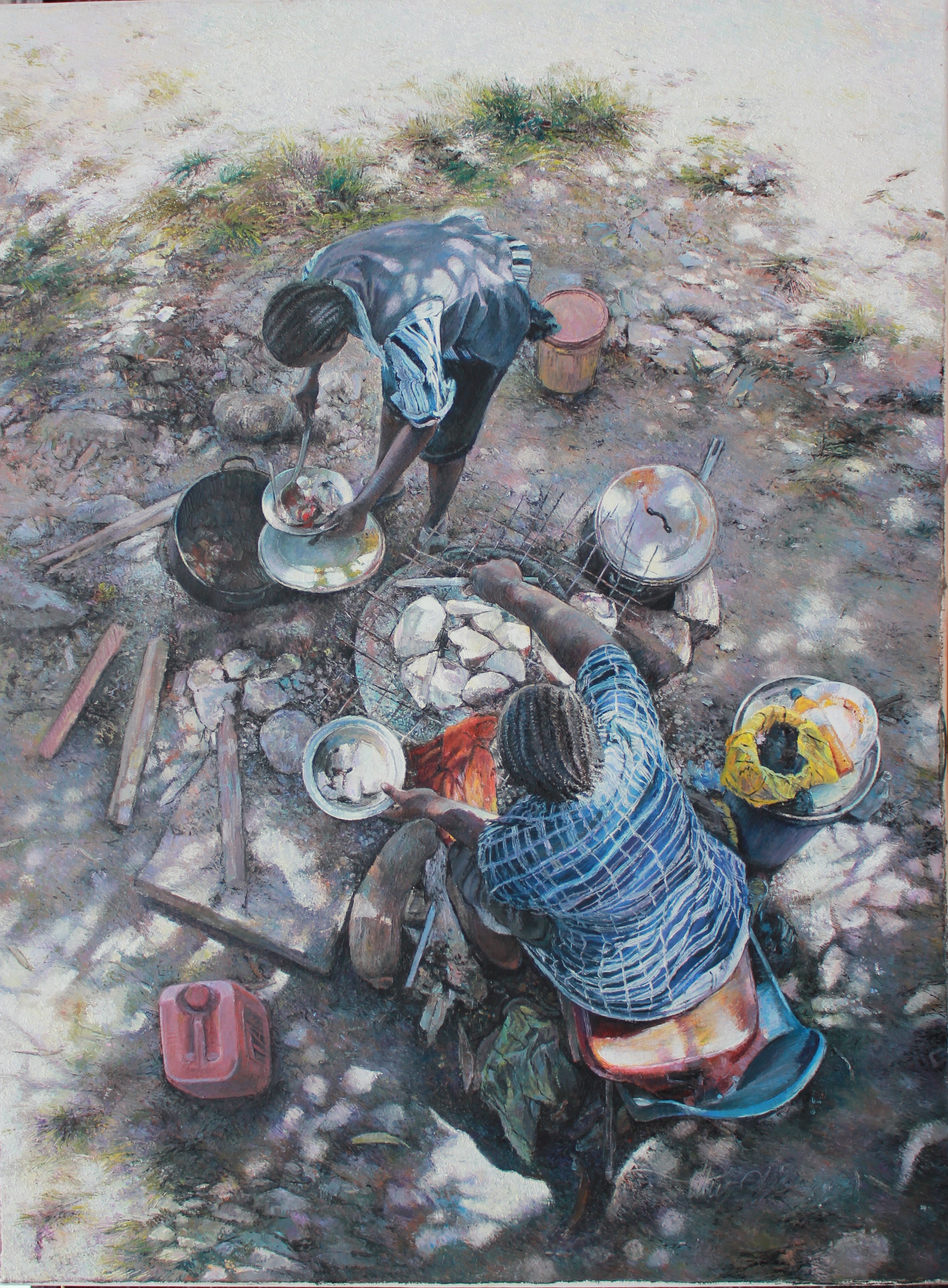
Below Titus depicts a traditional African family cooking scene from a uniquely unusual angle and perspective.  The art world always needs painters who have the courage to paint exactly what they see for all its natural beauty:
'Inspirational Appetite' by Titus Agbara Medium: Oil on Canvas Size: 40 inches x 30 inches

‘Inspirational Appetite’ by Titus Agbara
Medium: Oil on Canvas
Size: 40 inches x 30 inches

With depictions of serene beauty through his artistic flair let’s see what Titus Agbara has to say about his art shall we?

A Q&A with Titus Agbara:

Matt The Unfathomable Artist [Matt, TUA] – How long do you typically work on a painting?

Titus Agbara – “I think I could finish a painting for one month depending on how often I work on it.  When I am into serious painting, yes, then I have to make sure I paint on a daily basis.  I try to see if I can finish a painting within the space of three months.”

Speaking of his last two paintings ‘As Our Mother Told Us’ and ‘Inspirational Appetite:

Titus – “Yes, the two last works, each of them take me three months to finish.”

Matt TUA – “Is this because of drying times?” [during the painting process]

Titus – “No, its not the drying time because actually I don’t want my painting to dry on time before I finish it.”

As an artist myself I believe this reveals something about good technique and his insistence on a workable art process.  Wet-on-wet oil application allows Titus to change aspects of his painting whilst it is in progress.

Referring to his work on Sky Arts ‘Portrait Artist of the Year 2014’, a nationally televised art show for the UK and Ireland which requires art competitors to complete a portrait painting within four hours:

Titus – “To complete a painting in four hours, yes, that’s why I had to work fast and make sure, but actually I do take my time.  I feel a little relaxed when I’m around my studio.”

Matt TUA – “Yes, I don’t think there is a right or a wrong for any particular artist because that shows how proficient an artist is.  To do the complex scene that you did on Landscape Artist of the Year 2015…”

Actually shown here, please take a look – Titus Agbara Time Lapse Video]

“…I was literally, I mean, I couldn’t believe how you could manage to do that in four hours.  I really was very impressed.  It was how much definition there was in it within four hours [that] is astonishing.  I’m not surprised with the fees you are able to command with your work.  It does come down to how accomplished an artist is.”

Titus mentions his Facebook page.  You can see this here: Titus Agbara on Facebook].

Just imagine the dedication required to spend three months on a single painting with the modern speed of life!  His commentary is in complete agreement with my own specified time frame to complete a painting.  Usually I give myself three months to complete a new canvas dependent upon its size and complexity.

Matt TUA – “Do you see yourself working in television within an art capacity Titus?  They have panels for judges and artists alike.  Is that something you would actively seek?”

Titus – “Yes, it’s something I’d like to do.  I’ll never like a situation where it’s just about my talent and that’s just for me alone.  Well yes, I like to see young ones coming up.”

Matt TUA – “Yes, somebody with your experience and incredible CV dating back to the 90’s, you’ve got that, if you like, art pedigree.  Your CV puts you in that position where people, execs, would be looking for that sort of experience.”

Matt TUA – “What advice would you give to new artists?  You know, someone just starting out?”

Titus – “My advice for someone who is just starting out is the basic change.  First of all you should apply to the principles of art and its element.  Paint yourself with it, to which you learn about the experience.  Its up to you how to identify yourself.  Then start to look into yourself in whichever way you want to express yourself.  Where you are starting from before you go to a particular place in life.”

Matt TUA – “I absolutely agree.  That is the perfect answer really, I couldn’t have answered that better.  Like you say, find out how you go about art making itself from a technique point of view and practice.  Then look inside the person.  Find out what they have to offer, what their style of art is and what they’ve got to say.  I was thinking, do you have any self portraits?”

Titus – “Yes, for the Portrait of the Artist 2014 I had to submit a Self Portrait and that was my second portrait that I had done for myself.”

Matt TUA – “Do you have a favourite artist Titus?  Someone from the past or present, someone who has most influenced your work?”

Titus – “I have stuck to one artist from my youthful age and that has been Monet.  I’ve got some of his books.  For artists of our time, yeah, I only get to look at your,.. [Titus is new to my art whereas I’ve known Titus’ work for sometime] ..to see how you paint and look at how you have done your own paint but for my initial starting age, yes, I think it was Monet’s painting that really inspired me a lot.”

[When professional artists look at their colleagues paintings we first look at the art itself just as everyone admires to do so.  Then we become interested in knowing how they went about making their painting from a technical perspective.

For instance, the fact that I know Titus prefers to use his palette knives for delicate objects within his paintings truly amazes me.]

Matt TUA – “Well I’ve got to be honest I think Monet is probably a favourite for many of us and yes he is one of my favourites too without a doubt.  Well, this is how you have developed such an extremely good portfolio and why you are able to sell your paintings at a premium price really in the competitive art market.  So that is a good testimony to you and it certainly shows in your work.  Well I hope you have enjoyed having a chat with me.  I wish you every continued success with your art and hopefully we can keep in touch.”

Titus – “Thank you very much Matthew.”

Matt The Unfathomable Artist – “Thank you Titus, much appreciated.”

Standard

Golf – An Untitled Poem

The Autumn Banquet dated 16th Century.

The Autumn Banquet dated 16th Century.

A poem I wrote about Golf circa 2006, untitled:

“He spins, he turns sweet sounding ball against the breeze

Oft times it goes where so he please

The flag is proud and stands for now

An eagle spreads its wings, man takes a bow

A nine, a seven, a three or two

Sunk in hole within shots, a few

The green grass swallows them in curves and rough

One $mil today – Who said Golf’s so tough?”

‘Golf, the untitled poem’ by Matt, The Unfathomable Artist – Copyright © circa 2006

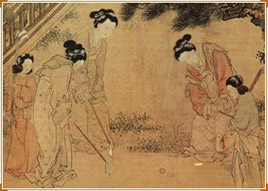
Beautiful Ladies Playing Chui Wan

Beautiful Ladies Playing Chui Wan by Du Jin [dated c1465-1487]


Standard