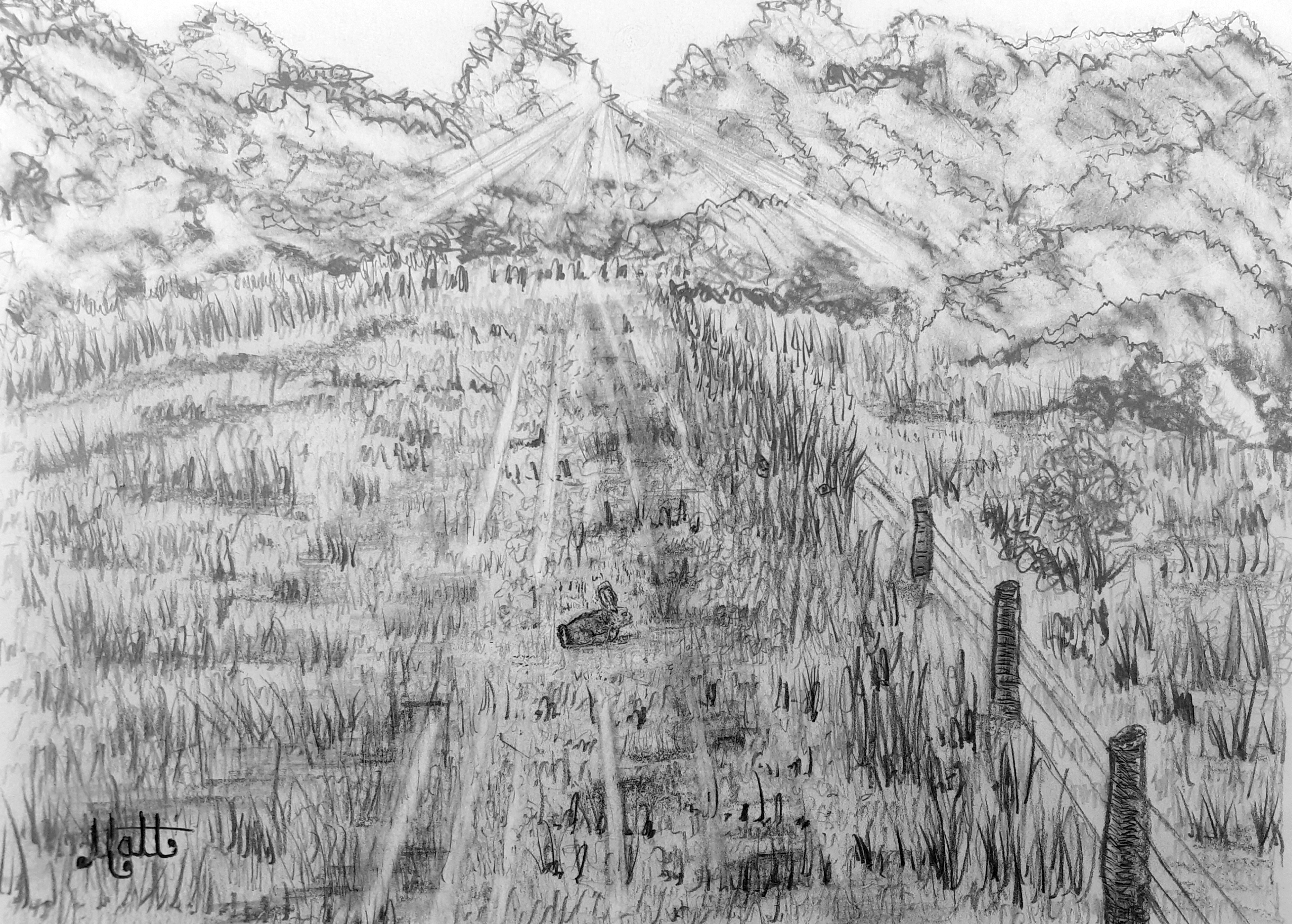
“Rabbit in Meadow Sunset”

“Rabbit in Meadow Sunset” [17th June 2021] by Matt The Unfathomable Artist, sketch with 3H HB 3B pencils signed in black ink on A4 250gsm Artist’s paper.

“Rabbit in Meadow Sunset” [17th June 2021] by Matt The Unfathomable Artist is my most recent Meadow Conservation series of sketched artworks. Featuring the fields of my local nature reserve.

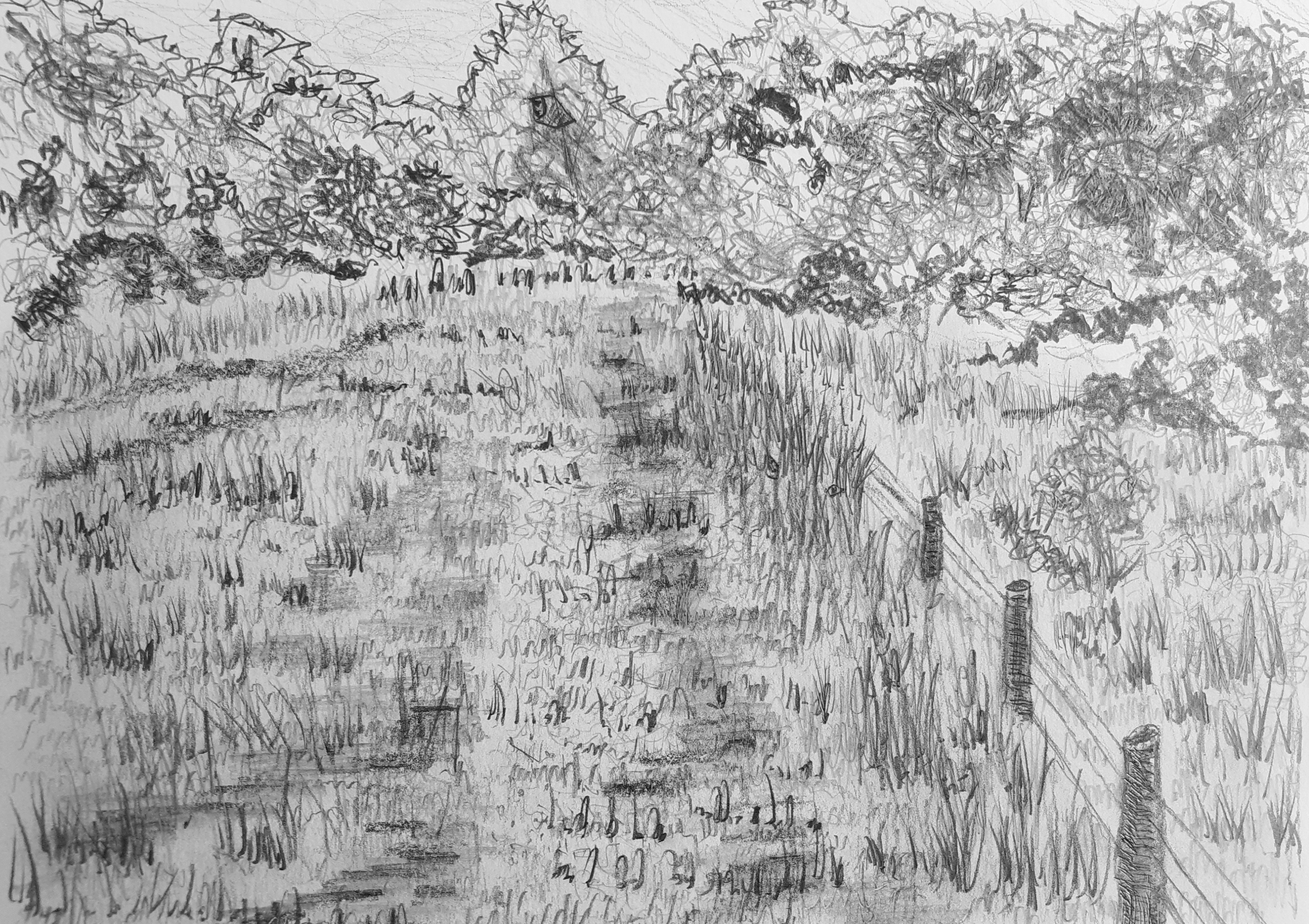
It originally looked like this:

earlier draft version of “Rabbit in Meadow Sunset”

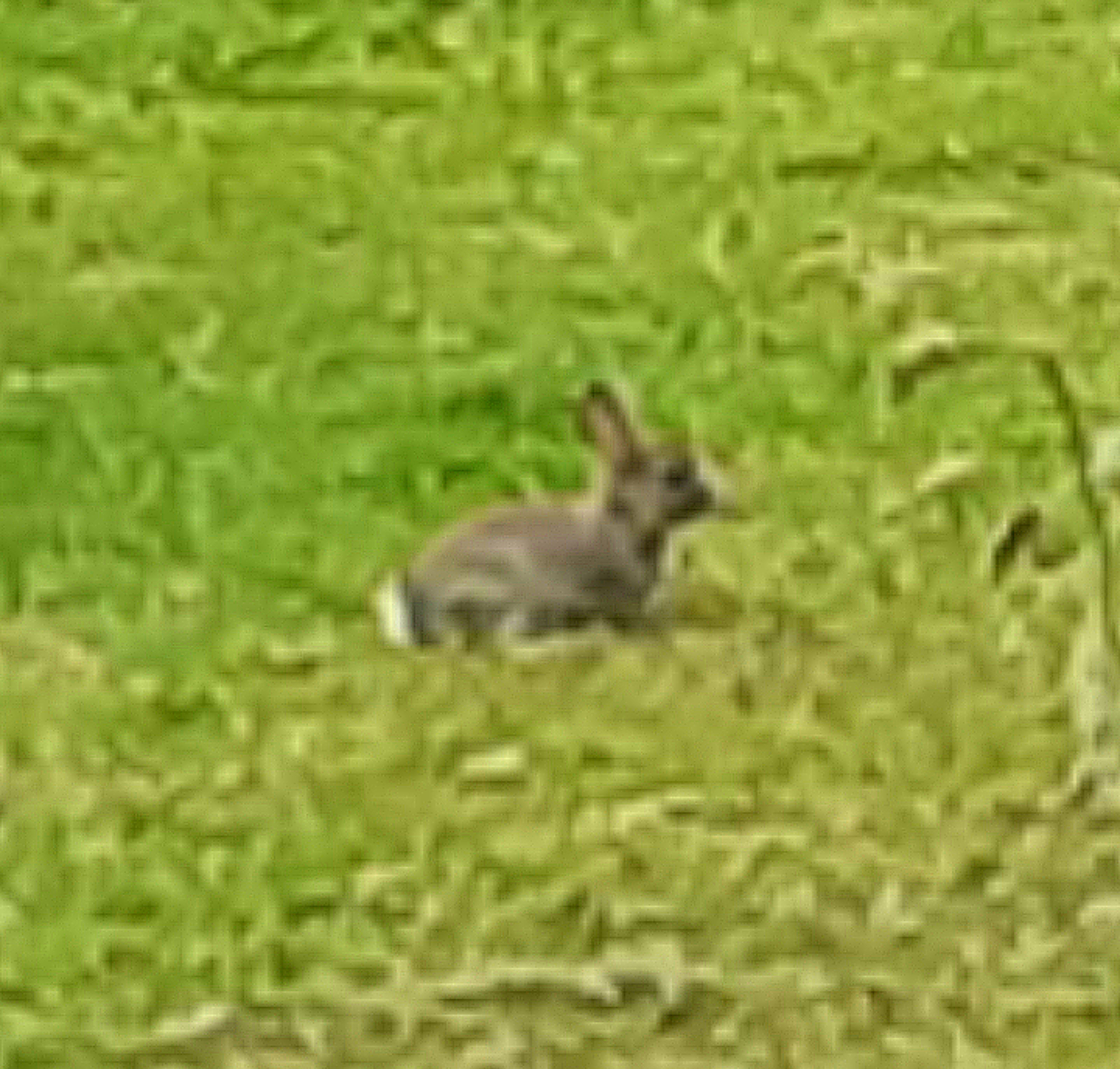
However, having subsequently photographed an adorable baby rabbit on one of my walks that day I decided to include the rabbit in my sketch.

I believed that for my Meadow Conservation series of artworks, the first draft was too eerie for the beauty I wished to highlight in the field. On the paper, the final version is slightly greater in contrast than in the first image above.

I think it looks even better when you actually see it for yourself, as the dark highlights are closer in values to the first draft on the paper.

Here is the cute lil baby rabbit.. it.. is.. really really.. a joyous little creature:

DIstant photograph of a baby rabbit on a field near Ridge Willow [June 2021]

Through my appreciation of past masters I am seeing the inspiration of Picasso, Van Gogh, and in this rabbit, Edvard Munch in my work. The style of my drawing the rabbit’s expression was completely chance, through over-sketching work on the paper.

Not until I zoomed in on the baby rabbit’s head did I see an unintended facial expression.

Immediately I thought, Munch of inspiration. I also chose to keep the ‘eyes in the grass’ just above right of the rabbit. A small dog went chasing the rabbits away, so perhaps this is why I inadvertently drew the rabbit showing ghastly surprise.

The reason I kept this expression in my artwork is to kind of picture the effect manmade negative climate change and habitat destruction is having on wildlife.

I might sketch this lovely baby rabbit again, to show its qualities in a non-stylistic, realist way.

Standard

Chess in Art

“Passing” [7th June 2021] by Matt The Unfathomable Artist, sketch with 3H HB 3B pencils signed in black ink on A4 250gsm Artist’s paper.

This artwork title, “Passing” [7th June 2021] by Matt The Unfathomable Artist, is a literal translation of an early board game called ‘Senet’ popular in ancient Egypt from at least c2600BCE – 3100BCE.

I have known to play the game of chess from an early age, due to my Dad having a great interest in chess throughout his life. Reading books, owning chess computers, playing over the board at chess clubs et al. My Dad was secretary at county and local club level.

I myself captained a local chess club playing home and away events, won a club classical over-the-board Swiss Tournament and made runner-up in a club classical over the board annual All Play All competition.

Here is my Swiss Tournament winner’s trophy in 2003 (without showing my personal name inscribed on the trophy for anonymity):

My Swiss Tournament 2003 Winner’s trophy won at a Chess Club over the board annual competition.

Every chess player appreciates that to receive a competition trophy is a very happy achievement. Even more so knowing some of my opponents had competed successfully at county level. One of my opponents from this 2003 tournament had previously drew a chess Grandmaster (GM) in an over-the-board simultaneous competition!

The reason I created this artwork shown above is for my love of chess, the beauty of the game and its place in art history.

Here is the spiritually symbolic ancient Egyptian board game of Senet being played by Queen Nefertari [https://en.wikipedia.org/wiki/Nefertari]:

Nefertari (1295–1255 BC) playing the ancient Egyptian game ‘Senet’ [photography of the wall relief by The Yorck Project – 2002)

As an artwork it’s particularly interesting to note Queen Nefertari is seated upon a square chequered drapered chair. Clearly we also see Senet pieces displayed in-game on the table board, not unlike modern chess pieces!!

This communicates to us the thinking abilities of ancient human beings, culturally, spiritually and intellectually. Whilst our sciences and some religious ideas might differ through centuries of new learning, human intelligence is really a preservation of society, our individual life course and personal/collective decisions.

“J’adoube”

Standard

“The Observant Squirrel” – sketch

“The Observant Squirrel” [11th June 2021] by Matt The Unfathomable Artist, sketch with 3H HB 3B pencils signed in black ink on A4 250gsm Artist’s paper.

This dear squirrel is composed from a video still photograph, curiously eating whilst observing me. The squirrel preferred a quiet supper it would seem.

Squirrels, otters, wolverines, honey badgers and raccoons all have distinctly comical personalities. Seconds after you see dear squirrel in this sketch, it drops the stick it was chewing upon and then, lightning quickly turning its head, looks directly at me.

As if to say ‘excuse me, sir, I am very busy doing squirrel things.’.

Naturally hilarious.

Standard

“Buzzards Wood Hollow” – sketch

“Buzzards Wood Hollow” [9th June 2021] by Matt The Unfathomable Artist, sketch with 3H HB 3B pencils signed in black ink on A4 250gsm Artist’s paper.

I photographed a few compositions of the entrance to Buzzards Wood via the central hollow from Meadow Three. This opening is directly opposite to Ridge Willow and Wrens Wood. There are three additional entranceways into Buzzards Wood.

There are four pathways within and immediately surrounding Buzzards Wood. Whenever I’m writing regarding Buzzards Wood I’m usually referring to the Nature Reserve area. However, Buzzards Wood technically also encompasses the wood to the rear (bow, north) beyond the Nature Reserve itself, in my opinion.

Buzzards fly regularly over the meadows, woods, and towards the north, where there is a local fishing pond. The post at the lower right of my sketch actually used to be a wooden bench. I rather hope it is restored as a bench as this is a great sitting place, centrally in Meadow Three.

Further along to this bench is a ‘watervole ground stone’. Rabbits do seem to enjoy using the flat stone surface as a convenient toilet, haha. A ‘rabbit ground stone’ can be viewed inside Buzzards Wood at the pathway crossroads, nicely covered by the shade of trees to enjoy. Rabbits frequent all three meadows, the private land to the west and all around the 29 acre lake to the south.

Another ‘ground stone’ meets with you to the left as one enters Meadow Three from Meadow One, walking up a small number of steps.

My sketch style in this article strongly reminds me of the beautifully artistic childrens animations I used to watch as a boy.

In keeping with that theme I included fanciful eyes and faces, Picasso-esque, to add fun to some of these series of artworks.

Standard

“the Rabbits of Ridge Willow – sketch one”

the Rabbits of Ridge Willow – sketch one” [28th April 2021] by Matt The Unfathomable Artist, 3H HB 3B pencils, signed in black ink on A4 250gsm Artist's paper
“the Rabbits of Ridge Willow – sketch one” [28th April 2021] by Matt The Unfathomable Artist, 3H HB 3B pencils, signed in black ink on A4 250gsm Artist’s paper.

“the Rabbits of Ridge Willow – sketch one” really is a very quick simple sketch from a photograph of a rabbit at Ridge Willow. 

I was stood still watching it lift up from its grass cover to chew some hay.

The first sketch session details were drawn ‘plein air’ in half an hour whilst I sat just in front of Ridge Willow, by their nearby burrow. 

This artwork is purely fun. Discovering there were rabbits actually living on Ridge Willow is a delight of nature.

Standard

The Art Career of Denise Wyllie

‘Being Together’ Estandos Juntos Series by Denise Wyllie, Woodcut, 63 x 45cm.

I like to select artists for this blog whom uniquely represent the art world.

‘Being Together’ shown above is a woodcut from the Estandos Juntos Series [the Spanish translation of the artwork] by Denise Wyllie which featured at “The Master’s” exhibition, hosted by the Royal Society of Painter-Printmakers in November 2019 at The Bankside in London.

Denise Wyllie’s artworks appeal to the fine art and interior design markets alike.

Her ‘Estandos Juntos Series’ of gender inspired prints explores the relationship between men and women.  Closeness, disparity, fear, acceptance, race, dominance, reluctance, submission et al.  At least that’s how I see this Series of works.

There is no doubting a feminine style to Denise Wyllie’s floral works.  Her literary commentary is itself ‘a cat among the misogynistic pigeons’.  At this moment I can picture every female reader cheering Denise on.  Men too, as without thorns how does one protect the rose?

Are female artists under-represented in museums?  Is this something you would agree is true?

Primarily through the latter 19th century we see international art establishments readily accepting women into the upper echelon of art.  Often from well-to-do connected backgrounds.

My own past blog articles featuring female artists include: [please click their names to visit the links]

Sonia Mehra Chawla

Tamara de Lempicka

Louisa Beresford, Marchioness of Waterford

Mary Stevenson Cassatt

Élisabeth Louise Vigée Le Brun

Artemisia Gentileschi

Anna Hyatt Huntington

Aelita Andre

Käthe Kollwitz

Berthe Morisot

Thankfully the 21st century is creating new working opportunities for women regardless of class, background, beliefs/non-belief, race or origin.  Technology is the ethical driving force within art, through increased marketing accessibility and popular cultural movements supporting equality.

Let’s take a good look at Denise Wyllie’s floral landscape and treescape works:

‘Into The Renaissance Rose Garden’ by Denise Wyllie, Screenprint, 50 by 70 cm, Edition number 10.

Denise has immersed herself within the David Austin Rose Gardens in Shropshire and blossom trees of Kyoto, Japan over the years.  Artists have an innate desire to draw near to their subject matters to disentangle meaning, grasp new definitions and disseminate thoughts.

‘Into The Renaissance Rose Garden’ by Denise Wyllie is a pretty play on perspectives.  It’s one of those artworks made specifically to bring joy.  Reminding us of springtime blossom whilst fairy flowers wistfully dance the breeze.  Children are probably running around making blissful noises getting caked in mud.

‘Into The Renaissance Rose Garden’ is a stunning composition.

For some years now I’ve recorded birds tweeting at my local nature reserve.  There is a wealth of natural beauty to discover and realise.  Listen as twilight water birds make soft conversational sounds to one another.

Kyoto: Travelling in the snow original Wyllie's screenprint Find Art, Buy Art, Museum Art Gallery, Royal Academy Of Arts, Contemporary Artwork, Abstract Expressionism, Kyoto, Printmaking

‘Kyoto: Travelling in the snow original’ by Denise Wyllie, Screenprint.

If you have ever seen timeless Japanese artworks such as ‘Magpies and Hare’ by Cui Bai [please click the link to view], you will appreciate Denise captures the absolute essence of Japanese silkscreen printing in her works.

‘Kyoto: Travelling in the snow original’ by Denise Wyllie is the apotheosis of the Japanese style.  Sinewy curving branches, hints of delicate leaves, windswept movement.  Bring a colour contrast to the mix and this wintry landscape comes alive with clever outer-edge and far-ground detailing.

A carefully constructed artwork like this cannot be fully visualised without first displaying the piece upon your wall.

‘Tree Spirits 3’ by Denise Wyllie, signed Giclee Fine Art print on Hahnemuhle 310gsm paper.

And then just as you thought there would be no darkness to Denise Wyllie’s work, we have ‘Tree Spirits 3’.

Eerily beautiful isn’t it?

Her career experience, ability and crafted brilliance is magnified throughout her art making.  Complex layers excite our visual senses.. eyes and mind.

Please kindly view the artworks for sale here at: Denise Wyllie & Clare O Hagan to find your own favourite art pieces from their vast inventory.

Standard

Seismic Sound Wave Masterpieces

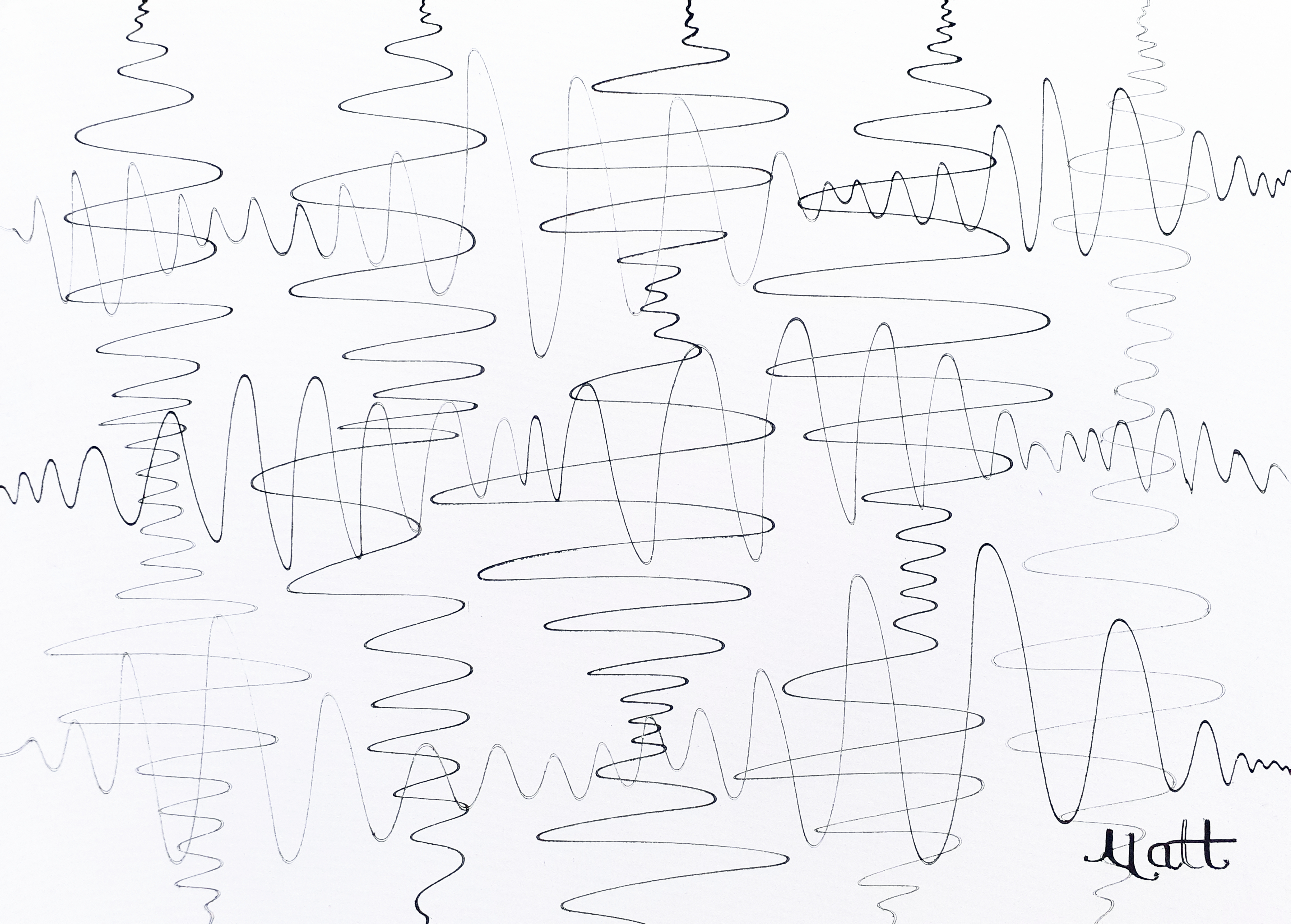
‘Twenty One Particular Seismic Waves’ [12th August 2020] by Matt The Unfathomable Artist, dip nib pen using original iron gall ink recipe on A3 [180 gsm] Artist’s paper.

Without your physically seeing these artworks it’s not easy for me to explain the quality I feel I’ve produced through my iron gall ink pieces.  I’m immensely delighted whenever I view these works myself.

Dip nib pen calligraphy with its magnificent arty fine lines is providing me with pUrE ArT HaPpINeSs.

Twenty One Particular Seismic Waves‘ [12th August 2020] is inspired by Andy Warhol’s iconic screenprinting Pop Art brand works.

Twenty one individual vertical seismic waves each with their own flavour of uniqueness, see above.

‘Five Vertical Three Horizontal Sound Waves #1’ [12th August 2020] by Matt The Unfathomable Artist, dip nib pen using original iron gall ink recipe on A3 [180 gsm] Artist’s paper.

A spirally kind of perfection in ‘Five Vertical Three Horizontal Sound Waves #1’ shown above.  The fifth vertical [from the left] is actually the first, as I worked the paper from right to left.  The lowest placed soundwave is first of the horizontal waves.  Varying pressure regularly upon the paper to create focal points of interest.

Speed of nib pen movement is fairly consistent throughout all eight of these soundwaves.

For this piece I made the lines especially wavy to replicate a green monochrome electronic oscillator display I’d seen my Dad working with decades ago.  He kept this overtly under the stairs for sometime.  I remember thinking many times it was such a cool piece of equipment.

I switched the confounded thing on every now and again purely for the joy of its perplexing display.  There are famous movies, books and television series having fed my incredible boyhood imagination regarding the potential pretend-play of this oscillator.

‘Triple Seismic Waves #5’ [May 2020] by Matt The Unfathomable Artist, dip nib pen using original iron gall ink recipe on A3 [180 gsm] Artist’s paper.

I produced ‘Triple Seismic Waves #5‘ a few months ago in May 2020.  Due to storing this to dry, I didn’t sign it at the time, whilst working on other pieces.  Going through my archive of artworks, upon its rediscovery I promptly signed it for its beauty this day of the 12th August 2020.

I love the noticeably rhythmic changes in seismic wavelengths across this piece.  In reproductive simile of seismographic lines I generally work the ink quite rapidly.  There is a pleasure all of its own for every artist working specific movements.

Standard

Sonia Mehra Chawla presents ‘Entanglements of Time and Tide’

‘Entanglements of Time & Tide [No.1]’ by Sonia Merha Chawla.

North Sea reflections reveal the art of science in new exhibition by internationally renowned Indian artist Sonia Mehra Chawla

Living artworks, historical scientific material, video, and new commissions in print follow intensive residencies in Scotland and mark artist’s debut solo exhibition in the United Kingdom.

The worlds of art, science and technology are set to collide at Edinburgh Printmakers this April.

Celebrated Indian artist and researcher Sonia Mehra Chawla presents Entanglements of Time and Tide, a new exhibition exploring entanglements of ecology industry, culture, politics and
aesthetics.
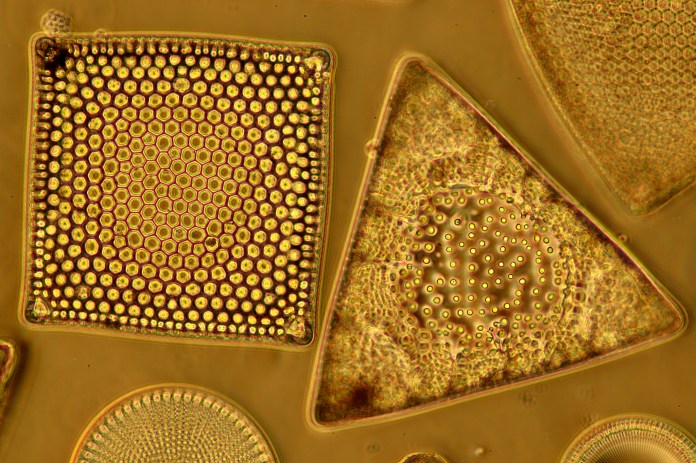
‘Entanglements of Time & Tide [No.5]’ by Sonia Merha Chawla.

Mehra Chawla’s artistic practice explores notions of selfhood, nature, ecology, sustainability and
conservation. For Entanglements of Time and Tide she spent two years on three intensive residencies at the Marine Scotland Laboratory in Aberdeen, the ASCUS Laboratory at Summerhall and Edinburgh Printmakers.

The result is an all encompassing exhibition featuring new commissions in print, video, living artworks of micro-biological organisms and representations of historical scientific material.

Part of the Edinburgh International Science Festival and part of Year of Coasts and Waters 2020 programme, Entanglements of Time and Tide explores how we can make our future more liveable.

Reflecting on the human impact on our environment and in particular effects on microorganisms by capital-intensive heavy industry and anthropogenic activities, the exhibition is in two parts.
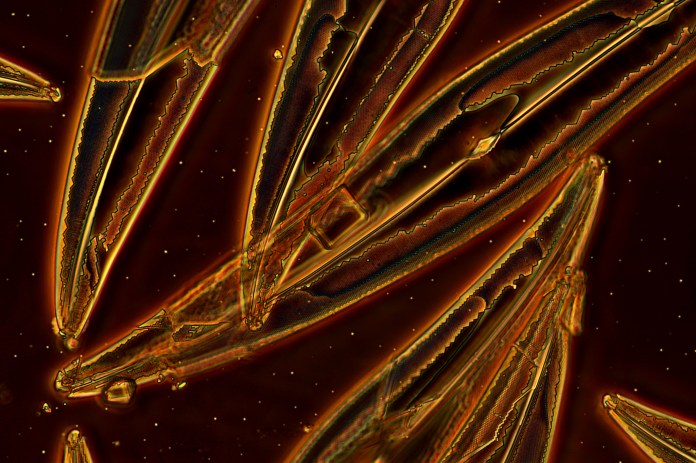
‘Entanglements of Time & Tide [No.6]’ by Sonia Merha Chawla.

Part I looks at the mysterious and enigmatic life of planktons providing several entry points to understanding larger global issues associated with the world’s oceans. Part II explores the impact of technological obsolescence, the drive to consumption and the impacts of the waste created by these technofossils.

Speaking ahead of the exhibition opening Sonia Mehra Chawla said:

“Polluted, overfished, abused and threatened by extractive forces, the largest living space on Earth is rapidly declining. Human-induced environmental change threatens multi-species endurance, livability and continuity. We are all interconnected by shared ecologies and entanglements with our other than human kin makes life probable. Can humans and other species continue to inhabit the earth together in collaboration?
‘Entanglements of Time & Tide [No.4]’ by Sonia Merha Chawla.

We live in a time of many urgencies and I feel we require cross disciplinary curiosity of what constitutes life on this planet and what our place is in this universe. This exhibition has been created to act as a starting point for these conversations between artists and scientists, those in industry and the wider community.”

Running parallel to Entanglements of Time and Tide in Gallery 2 is Speculative Bubbles: Jess Ramm, a new show from Glasgow based printmaker Jessica Ramm.

With the aid of a children’s chemistry set and a selection of household chemicals, Ramm presents a series of prints, that evidence everyday magic, produced on a residency at Edinburgh Printmakers in 2019.

Ramm’s chemical and physical experiments propose alternative ways of navigating humanity’s symbiotic relationship with the material environment while paying particular attention to the extravagance of human aspiration.

Listings Information

Entanglements of Time & Tide: Sonia Mehra Chawla

Edinburgh Printmakers, Gallery 1, Castle Mills, 1 Dundee Street, ​Edinburgh EH3 9FP
+44 (0) 131 557 2479

Tuesday – Sunday 10am – 5pm

04 April to 05 July 2020 (Science festival 4th – 19th April)

http://www.edinburghprintmakers.co.uk/

Speculative Bubbles: Jess Ramm
Gallery 2, Castle Mills
Tuesday – Sunday 10am – 5pm
04 April to 11 July 2020 (Science festival 4th – 19th April)
http://www.edinburghprintmakers.co.uk/

+++++++++++++++++++++++++++++++++++++++++++++++++

Sonia Merha Chawla

Sonia Mehra Chawla is an artist based in New Delhi, India. She received her BFA in 2001 and MFA in 2004–2005 from Delhi University’s College of Art, New Delhi. Chawla has an interdisciplinary practice as an artist, photographer and researcher. Her artistic practice explores notions of selfhood, nature, ecology, sustainability, and conservation.

Mehra Chawla’s practice is process oriented and research based, with a focus on specific locations and micro histories. Through her artistic projects, she examines how local places contribute to global changes, what drives those changes, how these contributions change over time, how and where scale matters, what are the interactions between macro-structures and micro-agencies, and how efforts at mitigation and adaptation can be locally initiated and adopted.

Through her practice, Mehra Chawla explores, dissects, re-examines and re-envisions spaces that exist at the intersections of art and science, social and natural realms, self and the other, focusing on the important dimensions of human engagement with and within nature, ranging from the built-environment to the ‘wilderness’, and human and non-human narratives and interrelations in the Anthropocene. The artist lives and works in New Delhi, India.

www.soniamehrachawla.in

Standard

Inspired by Trees with Mall Galleries

‘Cold Autumn Walk on the Downs’ by David Brammeld RBA, Acrylic, 41cm x 51cm.

Inspired by Trees

The Royal Society of British Artists 303rd Annual Exhibition features a forest full of trees.

20 to 29 February 2020, 10am to 5pm
Mall Galleries, The Mall, London SW1
Admission £5, 50% off with Art Fund pass, Free for Friends of Mall Galleries and under 25’s

Mall Galleries is happy to offer my Readers Free Entry for Two to the exhibition when quoting this publication at the gallery desk (normal price £10)

Visitors to the Mall Galleries will shortly be able to experience a ‘forest experience’ as the Royal Society of British Artists highlights the potent inspiration trees provide for artists in its annual exhibition opening 20 February. Two clusters of tree images showcase a wide variety of styles, locations and moods, in highlighted sections of the show which overall features more than 500 works on myriad subjects. Trees captivate artists and fascinate the viewer with their life-force, symbolism and extraordinary architectural variety and beauty.

Some works featured are portraits of individual trees, such as Mark Welland’s Reach For The Sky II, which is part of a series commemorating a 300 year old oak tree finally felled by storm Katie in 2016; some scenes of woodlands, trees on the horizon or trees in the garden offering shelter on a sunny day.

‘Reach For The Sky II’ by Mark Welland, Mixed media, 21cm x 21cm.

Urban life also features. Melissa Scott-Miller RBA RP NEAC, known for depicting London’s streets says of the capital’s trees: “In London the trees are often restricted by the buildings and paving slabs, but they have still kept going, their branches making beautiful patterns and shapes, the lichen on the bark has spread on to the rooftops and brickwork, in summer the canopy of leaves produce areas of shade, and they are a haven for wildlife, birds, squirrels even domestic cats, the changes of colour and shape they display through the seasons lift the spirits, trees are essential to city living!”

Beautiful urban landscape by Melissa Scott-Miller RBA RP NEAC

Environmental themes emerge strongly. While many of these paintings of tree suggest at themes of longevity, ideas of mortality and of the fragility of the environment are never far away. Gary Cook’s watercolour 1058: Melbury Beacon No8 stands as a record of the 1,058 UK species associated with ash trees, ranging from beetles to birds, lichens to mammals. Some of these species are written into the background. All will be affected when we lose up to 90% of the UK’s 70 million ash trees from dieback disease. Of the 1,058 species 40 of them live only on ash trees. The Centre Barred Sallow moth is one of those 40. Research is ongoing into replanting these trees with ash bred with tolerance to the infection.

‘1058: Melbury Beacon No. 8’ by Gary Cook, Watercolour & charcoal, 28 x 39 cm.

Cheryl Culer PPPS RBA suggests we should all try our hand at drawing trees: “Trees are great to draw and as long as they get thinner as they go up and the branches get skinnier as they reach out, then even the simplest scribble can be a tree.“

Alongside the exhibition, member artists will be demonstrating their techniques and there are a number of opportunities to join in; including a free drawing session where you will be serenaded by Classical Harpist Eleanor Dunsdon.
Visit www.malllgalleries.org.uk for a full list of the events taking place.

The Royal Society of British Artists (RBA)  is dedicated to promoting the highest standards of skill, concept and draughtsmanship in painting, sculpture, printmaking and drawing.

The exhibition is sourced from member artists and through open submission, to bring together works of the highest standard in an eclectic mix of style and media. Most works are for sale, with prices starting from £140.

We are happy to offer your Readers Free Entry for Two to the exhibition when quoting your publication at the gallery desk (normal price £10)

Royal Society of British Artists 303rd Annual Exhibition 2020
20 to 29 February, 10am to 5pm
Mall Galleries, The Mall, London SW1
www.mallgalleries.org.uk

Header image: David Brammeld RBA Cold Autumn Walk on the Downs
Copyright © 2020 Mall Galleries, All rights reserved.

Our mailing address is:

Mall Galleries

Federation of British Artists
17 Carlton House Terrace

WestminsterLondon SW1Y 5BD

United Kingdom

Add us to your address book

Standard

Tamara de Lempicka

I hope you enjoy this excellent video courtesy of LearnfromMasters on Youtube, entitled:

Tamara de Lempicka: A collection of 154 Paintings (HD) *UPDATE’

I’ve wrote some words to best describe Lempicka’s artworks:

Stylish, art deco, stylistic, animate, illustrative, pastoral, simplistic, complex, daring, risque, evocative, provocative, sensual, fashionista, influential, prima-madonnarial, cubism, perspectives, distortion, natural, religiosity and surrealist.

Standard