Ridge Willow Corner

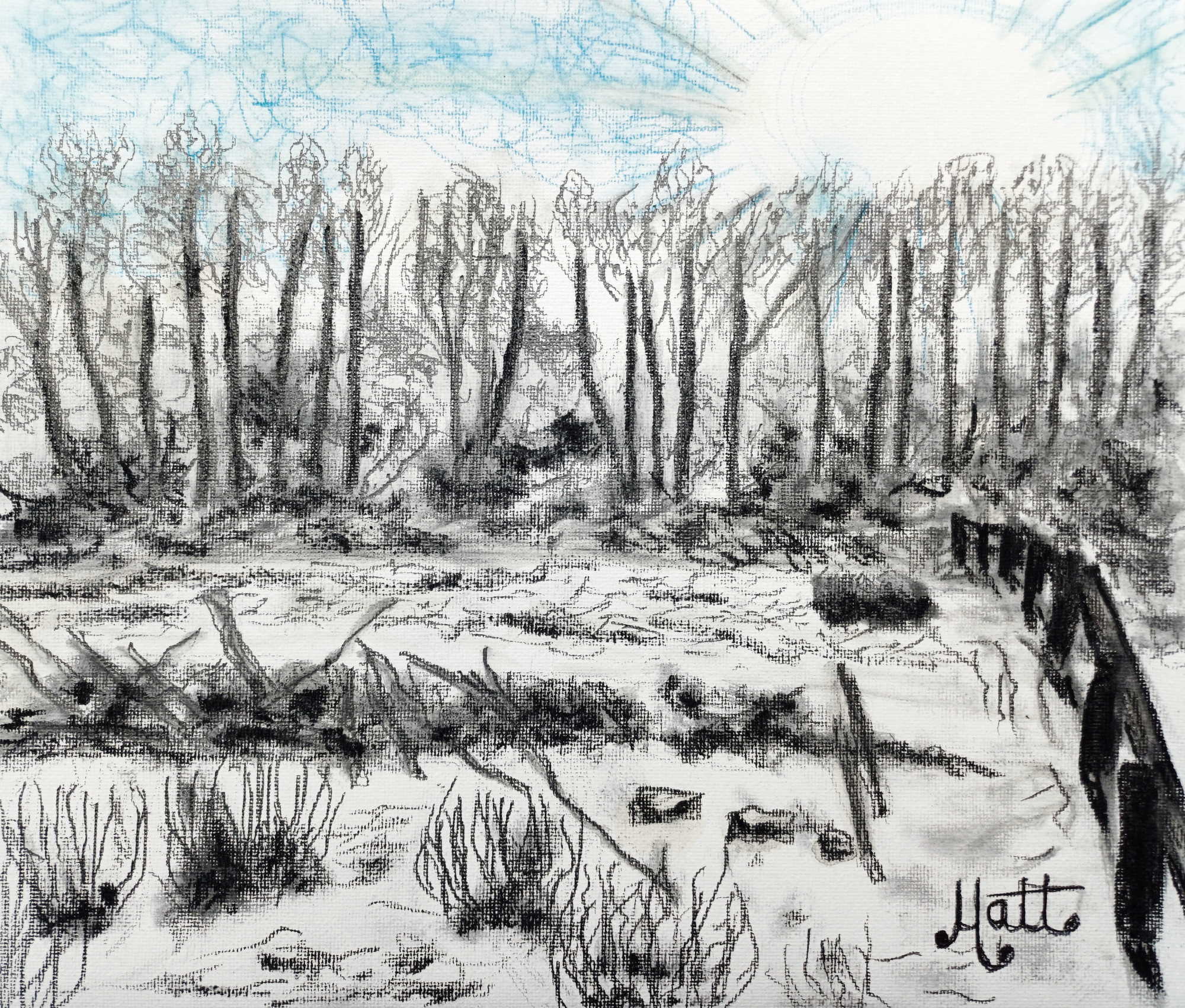
“Ridge Willow Corner“ [4th February 2024] by Matt The Unfathomable Artist, sketch with B, HB, 2B, 5B, 6B, charcoal, charcoal stick and blue/yellow colour pencils on 280gsm 250mm x 300mm gesso primed canvas pad, online Instagram image 2000 x 1702 pixels.

“Ridge Willow Corner“ was sketched in just under 56 minutes including signing over two drafts.

42 minutes 44 seconds for the first draft then 12 minutes 44 seconds for the second/final draft. My original photograph is taken on 28th February 2021 facing south, with Ridge Willow in the middle of the composition, logs piled and strewn.

Afterwards I viewed everything satisfactorily except the wooden posts to the right. Only though for technical reasons as compared to my photograph (see below). That said, the strong contrast of the wooden posts in charcoal is a noteworthy feature of the whole quickly sketched piece.

The idea is to be fast and impressionistic. In this I can honestly say the picture was a very difficult composition with much detail and angular perspectives to consider artistically. Likely its one of those vistas that requires a study to evaluate professionally prior to the perfected artwork.

Interestingly Van Gogh is noted for calling some of his finest masterpieces ‘failures’.

Now, as I look at this piece I see possible influence from Vincent Van Gogh in the despondent looking wooden posts heavily featuring charcoal. As if they are persons carrying a burden of hardship and toil. Complete chance although I have viewed Van Gogh and Picasso works this past week.

By the way I blunted several pencils during this work. One 6B pencil broke like the axe that near-splices a log all the way through, possibly whilst sharpening!

“Are the obstacles lines in the sand that can be moved?”

Let’s take a look at the photograph composition:
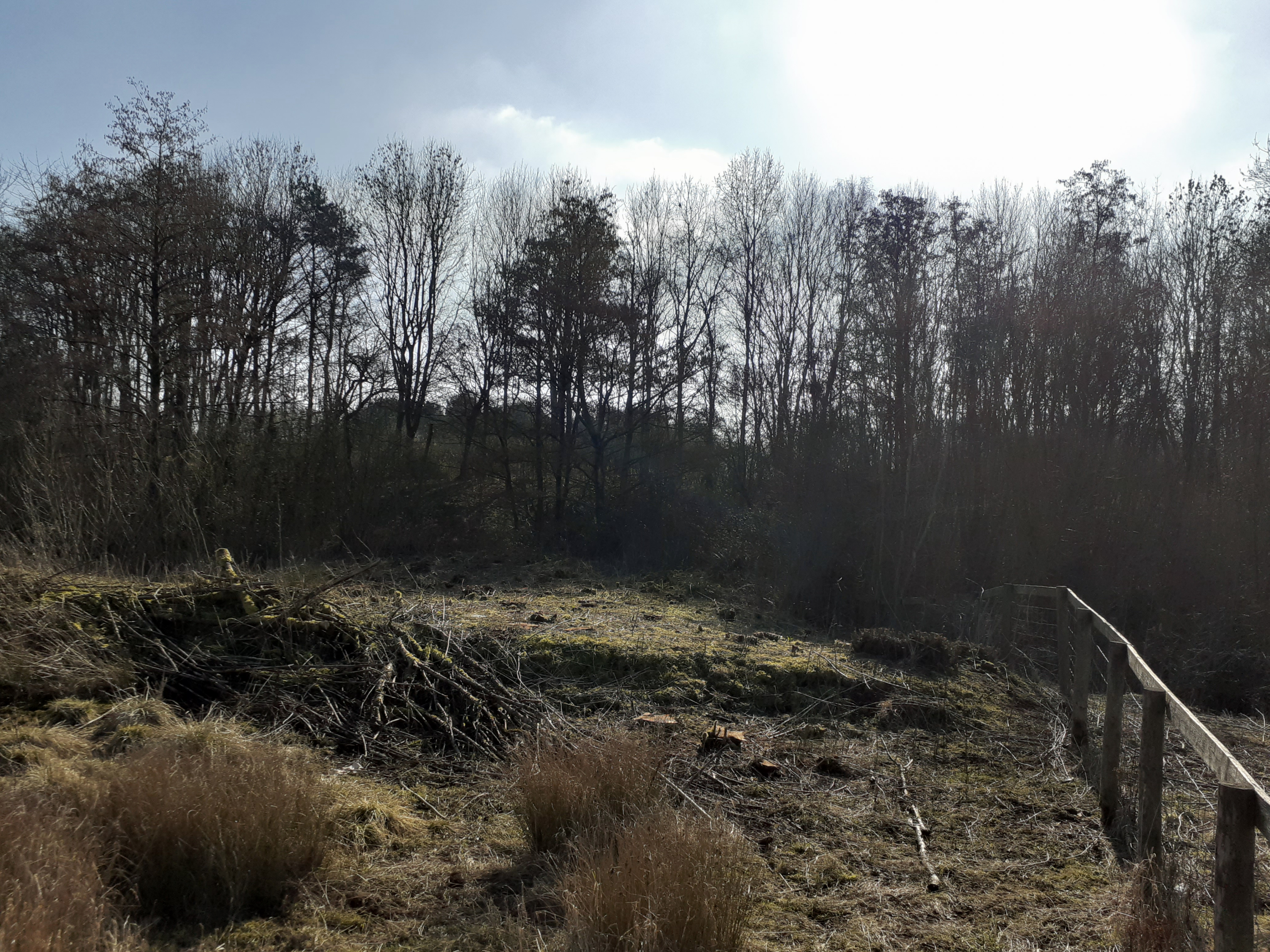
“Ridge Willow Corner – photograph“ [28th February 2021 at 1313hrs] by Matt The Unfathomable Artist.

With the photograph you can see why I chose to make the sunshine so bright. Actually this is careful use of the white canvas space. I did add yellow pencil at the outer edges (of the sun) to highlight this dazzling effect.

It’s baffling to me as I view my sketch for real as to why it took me so long haha! Then I remind myself that the time flew like a falcon. Glancing periodically at the stopwatch ‘clock’ à la rabbit of Alice in Wonderland fame.

Hope you enjoy :]
Standard

Boundaries of Human Nature – Bosch

My last Blog invited Readers to be ready for some delicious fruit bowls.  However I must write this article first as I think it will lead very nicely into the aforesaid subject material.  Yes, yes I will explain in due course the thoughts that are floating around in my head as I write.

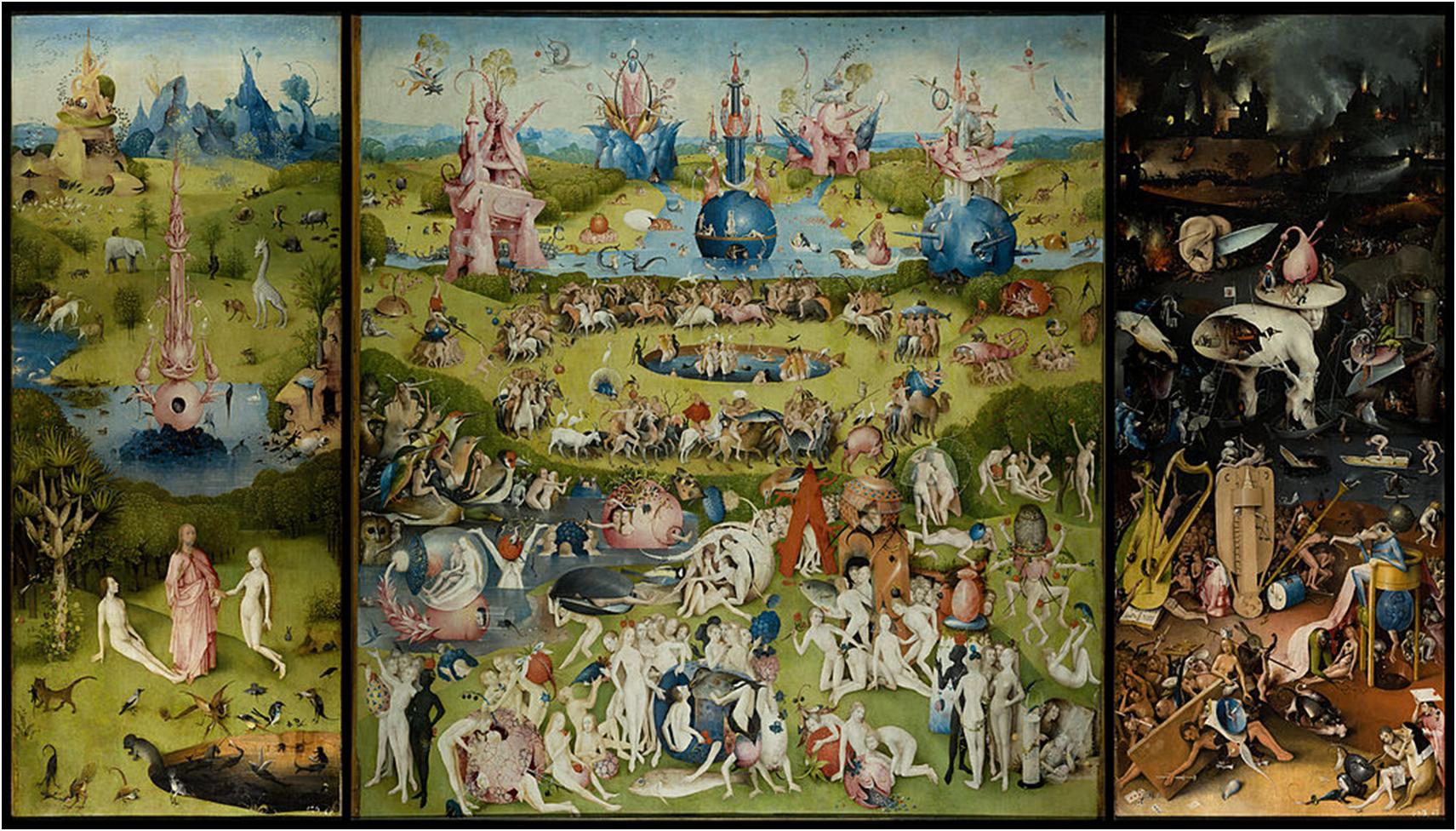
Hieronymous Bosch painted this triptych [of three interconnecting pieces], above, circa late 15th Century.  It is known as ‘The Garden of Earthly Delights’.  As titles go it’s pretty fantastic and rather apt wouldn’t you say?

As an online Art Blogger I find it almost too extraordinary that ‘The Garden of Earthly Delights’ was painted, using oils, during an art period where we see countless examples of staid portraiture and reverent religious depictions.  Okay so Michelangelo had some nude paintings censored from time to time, yet on the whole most famous artists might fear the public reaction from wantonly erotic art works such as this by Bosch.

Looking from left to right this artwork is clearly a story of temptation, natural human boundaries, moral chastity and corruption resulting in potentially degenerative consequences.

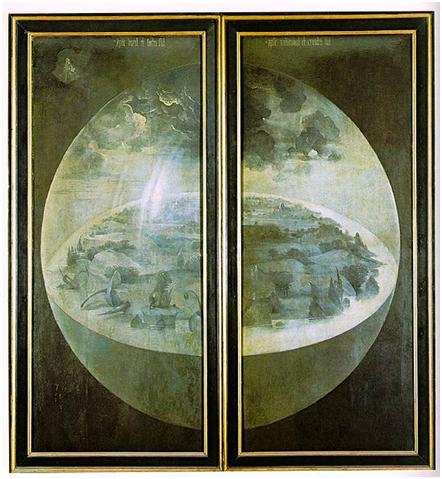
Bosch [signed bolch] creates a busy scene for us to decipher and attempt to understand.  Without doubt Bosch is spiritually learned and aware of hidden thought processes that might incline minds towards potentially malevolent interactions.  The artist is taking a world view as can be seen from the outer wings of his artwork here:

One cannot help but imagine those spherical glass scenes once very popular for being gently shook to create falling snow over a winter landscape whilst being held in the palm of our hand.  Bosch is inviting us to look at the effect upon this world scene by opening up his painted oak doors to the inner garden we subsequently see.

‘Hey, this is the beginning, the middle and its end’. Powerful allegory.

‘The Secret Garden’ and ‘The Lion, the Witch and the Wardrobe’ folded up as one.

Pastel tones and a cartoonish animated style make for an interesting masterpiece.  Especially when we consider that Bosch is able to mix his art style dependent upon the flavour required, his art Client or commission.  Most artists find their personal artistic style and stay with it.  Bosch was malleable to suit the desired concept or current art trend of his era.  It seems impossible that someone like Bosch would be anything other than prudish or reserved.

Continuing on from my previous Blog about Dali, it’s apparent that some artists border on the melancholy.  Whilst dark images or tales of woe may be necessary at times I certainly would not make it my subject material for too long.  I appreciate that some artists specialise in death, mutilation and the sadly grotesque.

Should every artist bring something uplifting to the artistic table?  Hopefully, even if dealing with macabre scenes.

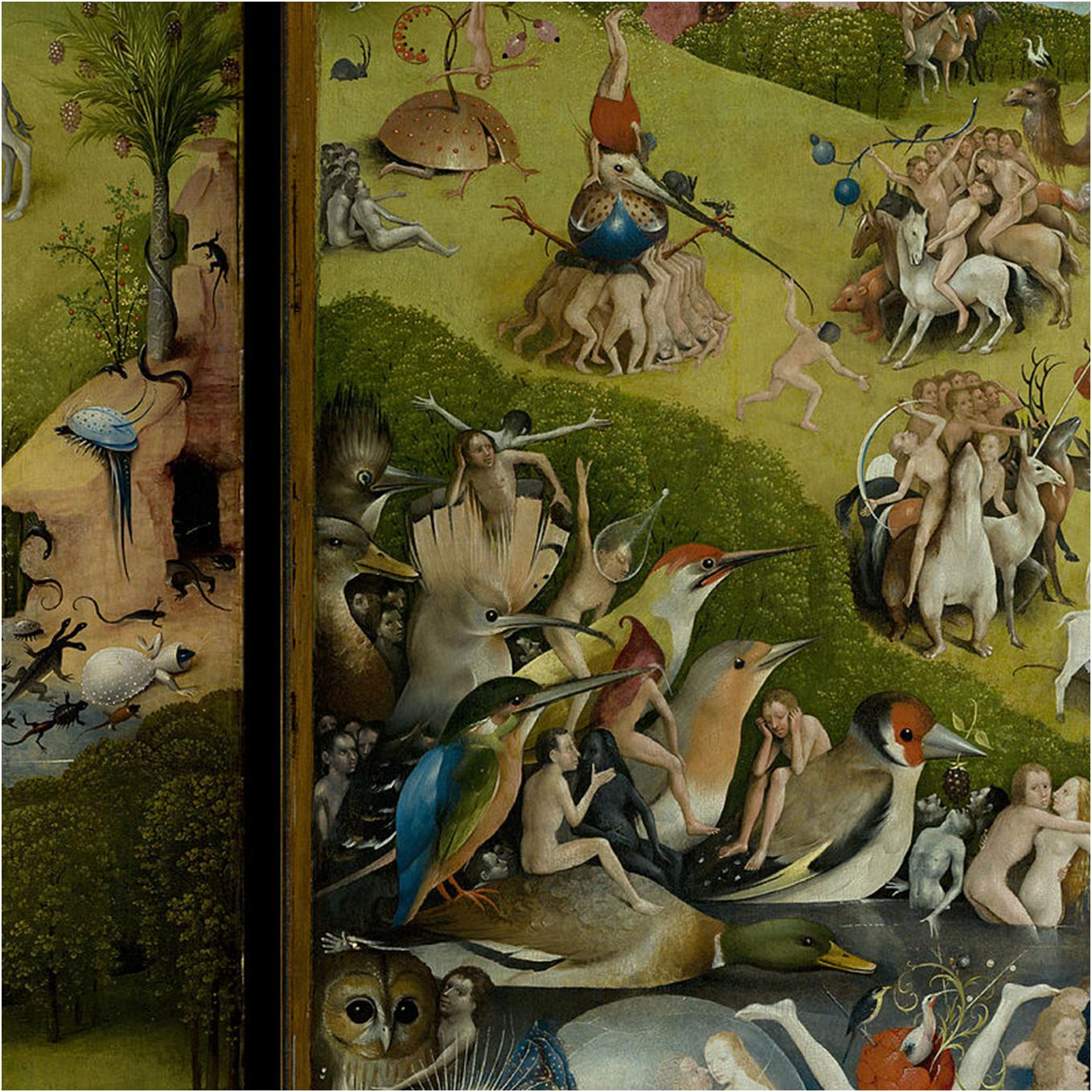
This is where I believe Bosch has good balance in his work.  Despite the seriousness of this particular artwork it also uplifts our mood.  Happy colours and joyful merriment here:

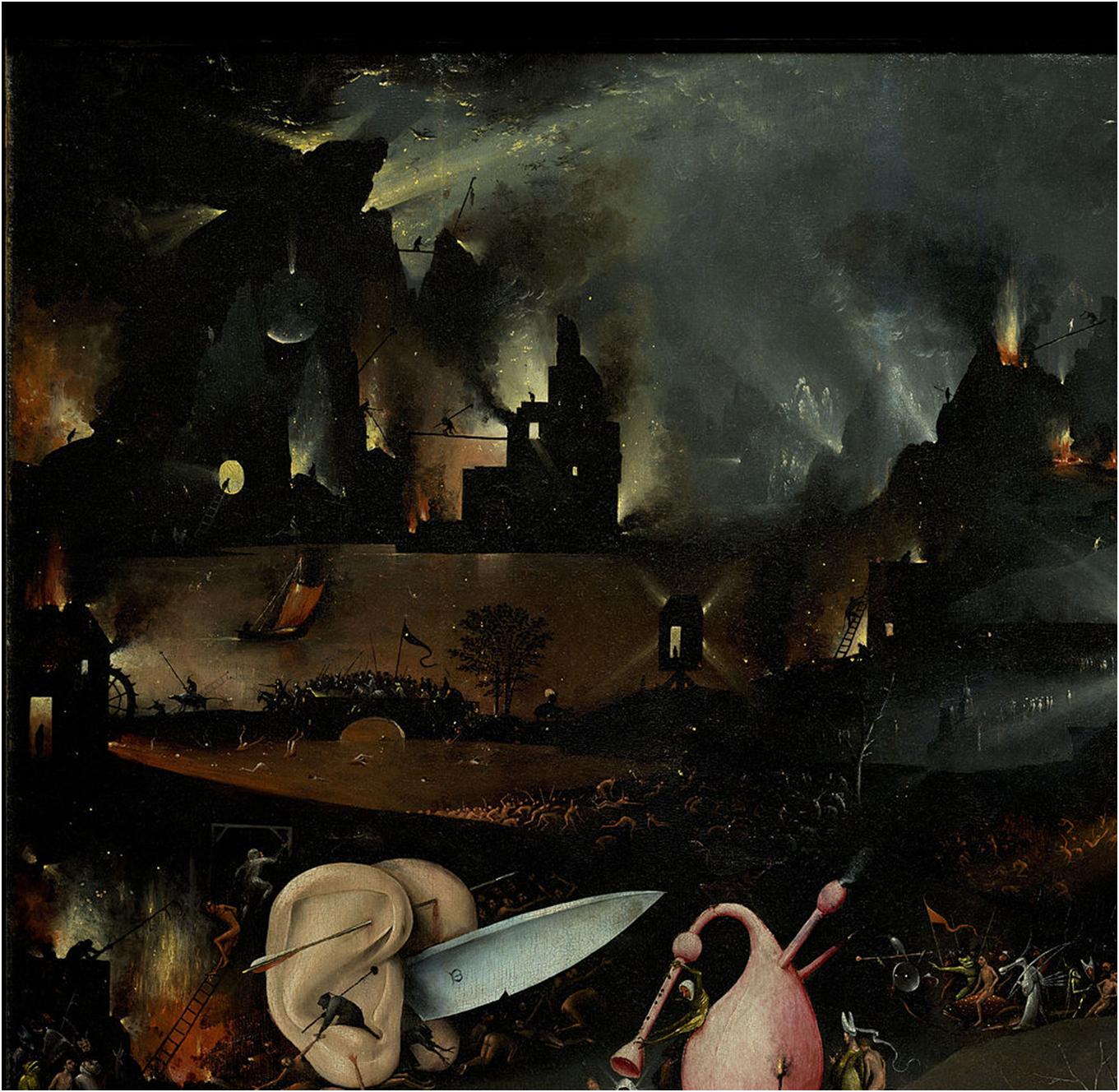
Darker conceptualisations here.  Not least some incredible handling of natural light:

It’s reasonable to suppose that Bosch was no stranger to that which blighted Van Gogh.  Take a good look at this image immediately above and then check out the philosophically grinning Cheshire Cat from Lewis Carroll’s Alice in Wonderland to see if you can find any interconnection.  Each work creatively brilliant of its own originality.  Paint and ink.

All this reminds me of a story by George Orwell and his compunction over ‘Shooting an Elephant’ that was clearly roguishly dangerous.  I digress.  Or perhaps I should say tigress?

Standard