A Dodecahedron

It greatly interests me the things people say, so I’d like to share some sayings.

You are the most human of human beings I have ever met.

Nobody talks like that now‘ – ‘I’d find it decidedly boring to be a dodecahedron conforming to a triangular world‘.

It’s not an insistence to be different, it’s a liking and a personal happiness.

A certain man said ‘I want to change the world by keeping it the same and change the world by making it different.’.

I do love sayings.

Shall we move onto discussing art?  Besides, everything written is by reason.  Or are we all not art personified to this day?

Honestly said, my painting experience compared with past art Masters is least in terms of practical years and technical study.

Lest everything is gained from one another even as I have gained merrily so likewise.

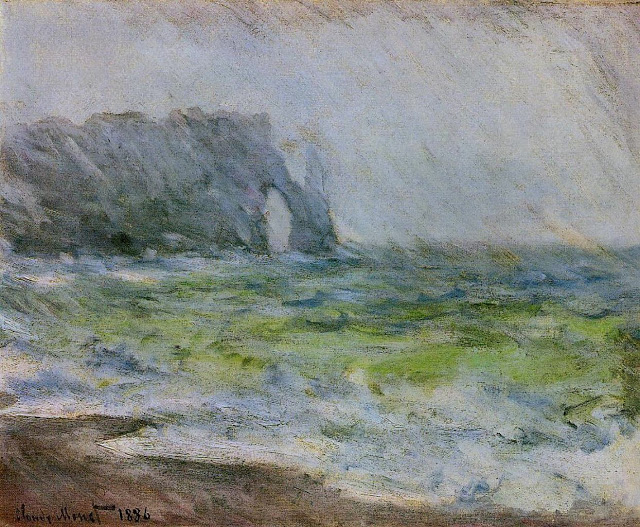
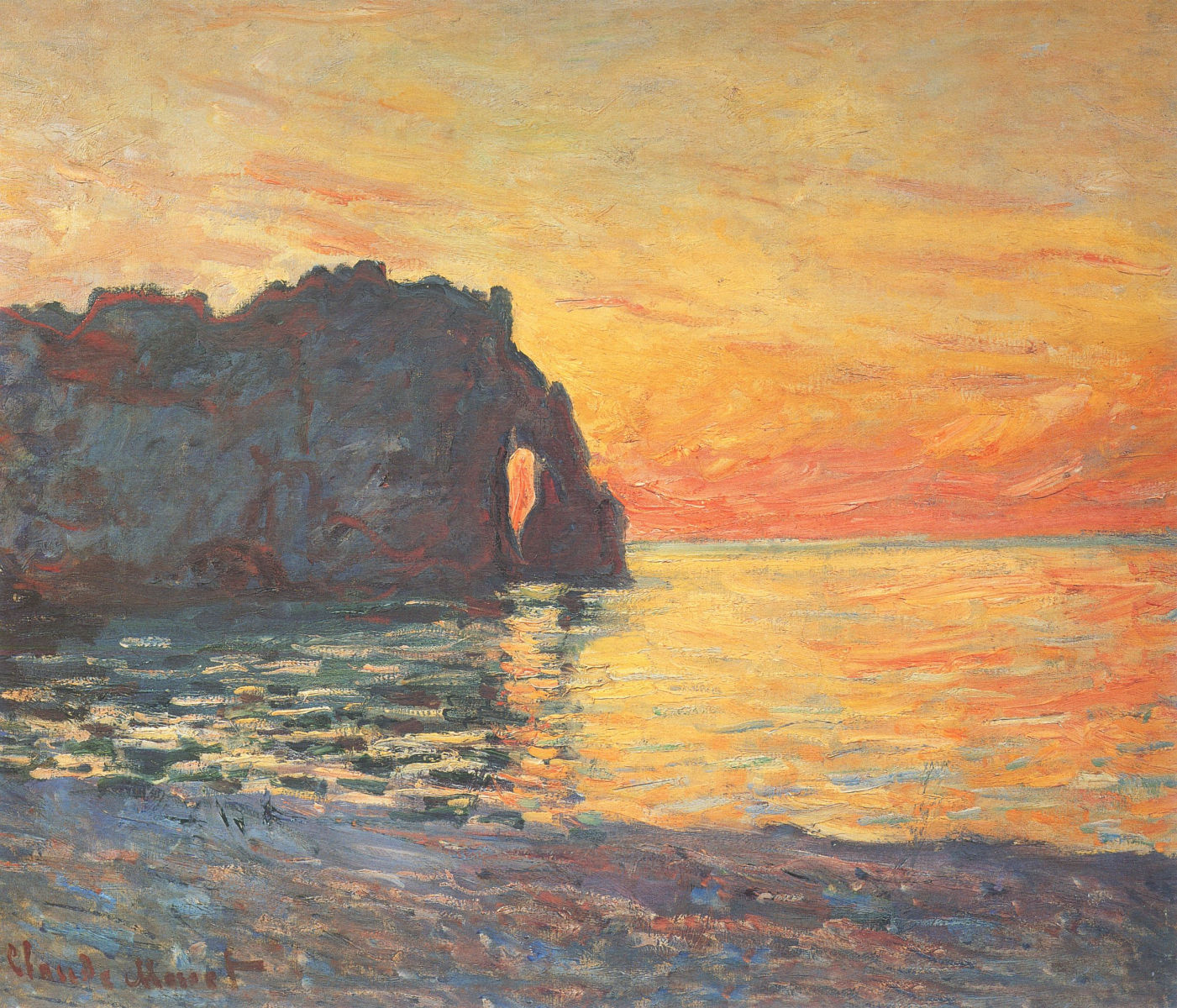
Experimentation makes for perfect art.  A brief study with one of Claude Monet’s artworks is most useful in explaining this.  I’ve chosen The Cliff of Aval, Etretat or La Falaise d’Étretat as a study herewith.

Three appealing versions of his composition is shown below:
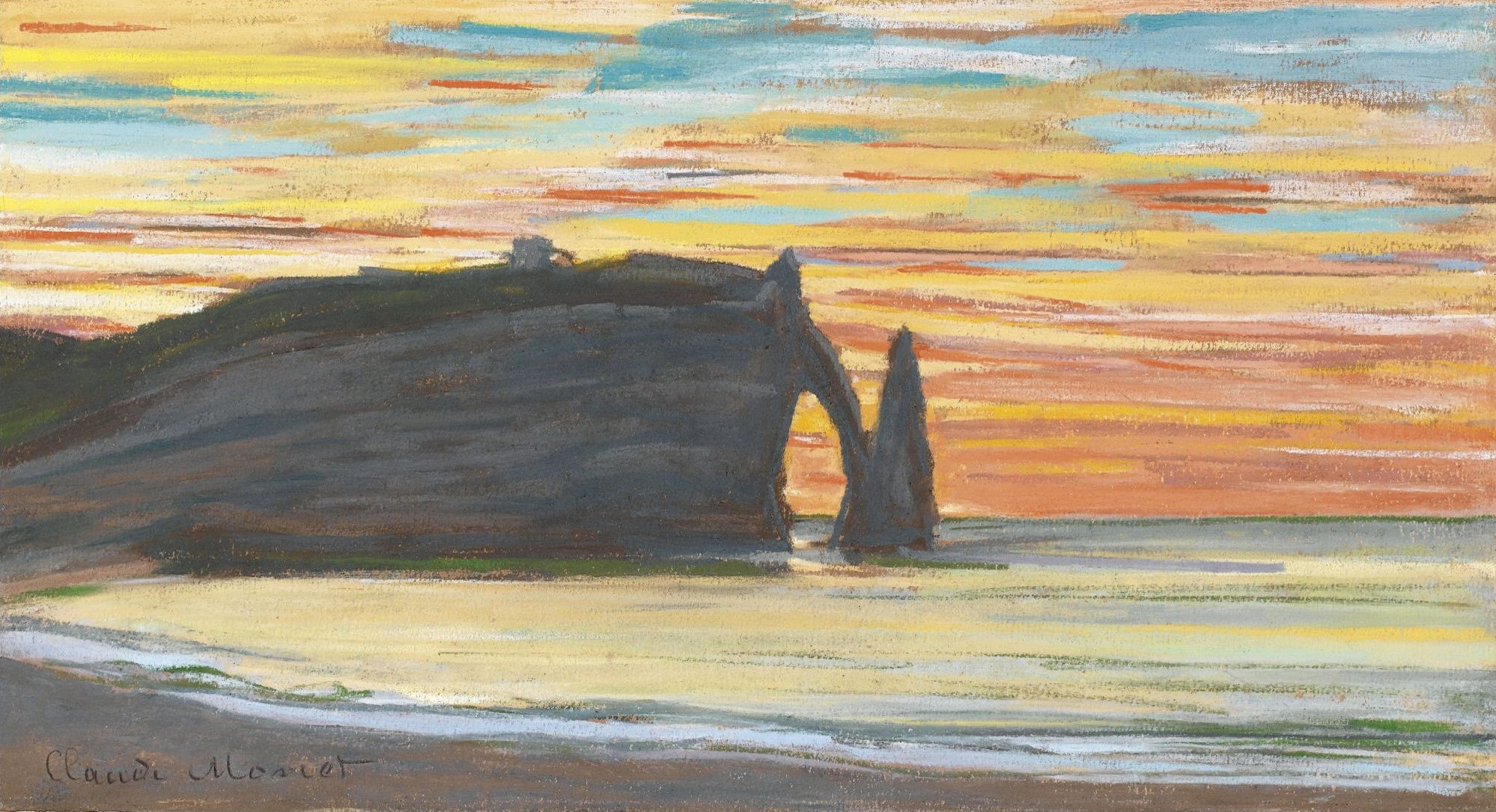
Etretat 1885 in pastel on paper
Etretat 1885 in pastel on paper


The Manneport - Etretat in the Rain oil on canvas 1885/6
The Manneport – Etretat in the Rain oil on canvas 1885/6


Etretat, la Porte d'Aval 1885 - sunset

Etretat, la Porte d’Aval 1885 – Sunset

“Color is my day-long obsession, joy and torment.” said Monet.

Feeling is the most important element within these versions.  Value is derived from emotion, personal perception, general interest, measurable qualities and artist marketability – latterly in monetary terms.

Every artist knows how to feed this insatiable hunger.

Painting a sense of feeling that shines through.
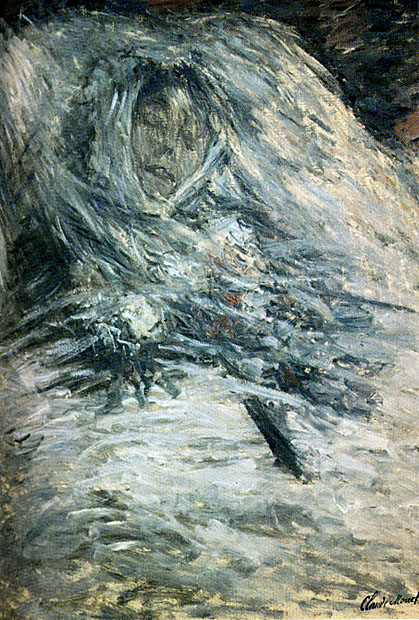
Camille Monet On Her Deathbed - 1879

Camille Monet On Her Deathbed – 1879

To this I ask – has anyone seen any artist whose individual paintings are all valued equal?  By experimentation the eyes of the Artist hone earthenware into a cascading masterpiece full of hues, form and ideas to dazzle and excite your senses.

I love this enviable challenge within every art version I create.  It invigorates me the same as well-known singing musicians enjoy changing pitch, or tone or key from a beloved song.  Art is a feeling.  A story we are compelled to share.

Monet practiced.  Obsessively.  One day I was looking through a large book of Monet artworks.  Every single painting is a masterpiece.  I hope you are inspired by Monet’s sense of painting perfection.

Sometimes perfection is immediate and sometimes it takes time.

For me love for art never dies.
Standard

Arcimboldo Assimilated

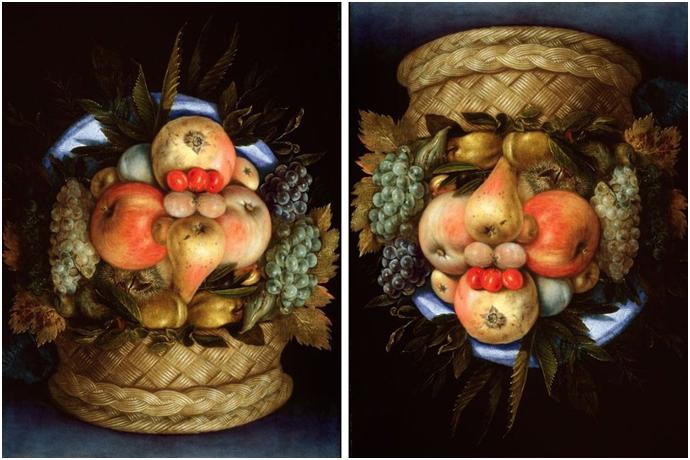
Pictured immediately below is a delicious basket of fruit with apples, grapes and pears ready for eating by Italian past Master Guiseppe Arcimboldo.

Auctioneers entitled the painting in sale lots as ‘A Reversible Anthropomorphic Portrait of a Man Composed of Fruit’.  It sold for $104,000 in 1999 and again a year later for $1.4 million through Sotheby’s.

Great art can be profitable and pleasurable to own.

The National Gallery of Art, The British Museum and New York Botanical Gardens have all paid homage to Guiseppe Arcimboldo in recent years.  Publicized acquisitions, exhibitions and events.

Arcimboldo like many Milanese artists was heavily influenced by Leonardo Da Vinci.  Whilst naturalistic drawings have been with us for millenia, artists like Da Vinci had begun to popularize nature in scientific terms of proportion, accuracy and physiology.

Da Vinci was by no means the first but we see a positive interest of intermingling man or woman with nature throughout Arcimboldo’s paintings.  This likewise influenced people to see their relationship with the natural world in a less religiously defined manner.  Not so frightening or mysterious to their superstitious sensibilities.

Did old world paintings contribute to a shift in how people viewed the mystery of life and our place in a mind-boggling Universe?  It would be fruitless to think otherwise.  Fruity wordplay huh.

The Unfathomable Artist poses amusingly in his mirror, raises his eyebrows up and smiles cheekily to himself.

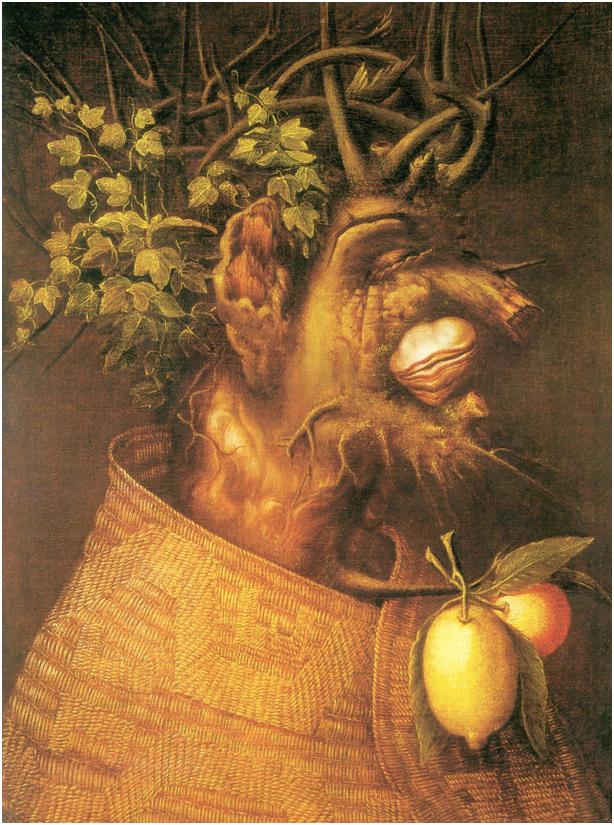
Speaking in musical terms we all appreciate that Antonio Vivaldi is famous for ‘The Four Seasons’.  Yet so too is Arcimboldo from a prior era.  Please take a look at ‘Winter: An anthropomorphic portrait of a man’ shown below:

Arcimboldo painted the seasons avidly. Perfecting and experimenting with compositions as all great artists do.  Looking at Winter version 3 above with lemons sprouting from the caricature’s neck one cannot help notice Guiseppe’s highly definitive textural style.  Equalled by art greats yet impossible to surpass.  Perfect is fit for purpose.  Rarely is perfection of itself.

Arcimboldo is to Wicker Baskets as Van Gogh is to Sunflowers.  Signed, sealed and delivered.  Owned.

Simile, reversible and object-orientated portraiture became his undoubted speciality from the 1560’s onwards especially following his appointment by Ferdinand I in 1562.

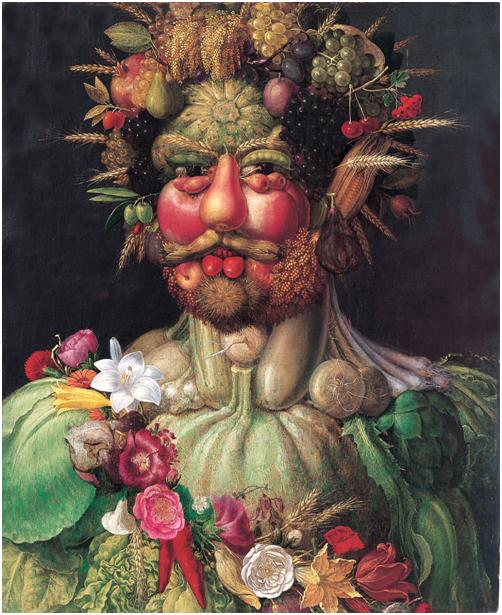
One of his most famous paintings, ‘Vertumnus’, painted for Rudolf II ‘Holy Roman Emperor’ is based on the Roman god of the seasons.  Shown below colourfully resplendent and might I say quite flattering when compared with some of his earlier portraits.

Rudolf II must have possessed a good sense of umor ad sanctimoniam affectans and respected Arcimboldo greatly to happily receive such a brilliant masterpiece.  It also shows the influential gravitas that well known paint artists held amongst royalty, aristocracy and the wealthy.  Historical diplomatic assignments by Sir Peter Paul Rubens dramatically attests.

Intellect, creativity and sensitivity.  We all have these qualities.

Portrait paint artists interact personably with people to fill a canvas.  What we see is what you get.  Honesty will always produce the best portrait in my opinion.  Every great portrait artist across any medium knows things about you whilst busily working away.

Oils become creative fruit juices swirling around our minds eager for the appropriate brush.

‘Vertumnus’ 1590/1.

Standard

Boundaries of Human Nature – Bosch

My last Blog invited Readers to be ready for some delicious fruit bowls.  However I must write this article first as I think it will lead very nicely into the aforesaid subject material.  Yes, yes I will explain in due course the thoughts that are floating around in my head as I write.

Hieronymous Bosch painted this triptych [of three interconnecting pieces], above, circa late 15th Century.  It is known as ‘The Garden of Earthly Delights’.  As titles go it’s pretty fantastic and rather apt wouldn’t you say?

As an online Art Blogger I find it almost too extraordinary that ‘The Garden of Earthly Delights’ was painted, using oils, during an art period where we see countless examples of staid portraiture and reverent religious depictions.  Okay so Michelangelo had some nude paintings censored from time to time, yet on the whole most famous artists might fear the public reaction from wantonly erotic art works such as this by Bosch.

Looking from left to right this artwork is clearly a story of temptation, natural human boundaries, moral chastity and corruption resulting in potentially degenerative consequences.

Bosch [signed bolch] creates a busy scene for us to decipher and attempt to understand.  Without doubt Bosch is spiritually learned and aware of hidden thought processes that might incline minds towards potentially malevolent interactions.  The artist is taking a world view as can be seen from the outer wings of his artwork here:

One cannot help but imagine those spherical glass scenes once very popular for being gently shook to create falling snow over a winter landscape whilst being held in the palm of our hand.  Bosch is inviting us to look at the effect upon this world scene by opening up his painted oak doors to the inner garden we subsequently see.

‘Hey, this is the beginning, the middle and its end’. Powerful allegory.

‘The Secret Garden’ and ‘The Lion, the Witch and the Wardrobe’ folded up as one.

Pastel tones and a cartoonish animated style make for an interesting masterpiece.  Especially when we consider that Bosch is able to mix his art style dependent upon the flavour required, his art Client or commission.  Most artists find their personal artistic style and stay with it.  Bosch was malleable to suit the desired concept or current art trend of his era.  It seems impossible that someone like Bosch would be anything other than prudish or reserved.

Continuing on from my previous Blog about Dali, it’s apparent that some artists border on the melancholy.  Whilst dark images or tales of woe may be necessary at times I certainly would not make it my subject material for too long.  I appreciate that some artists specialise in death, mutilation and the sadly grotesque.

Should every artist bring something uplifting to the artistic table?  Hopefully, even if dealing with macabre scenes.

This is where I believe Bosch has good balance in his work.  Despite the seriousness of this particular artwork it also uplifts our mood.  Happy colours and joyful merriment here:

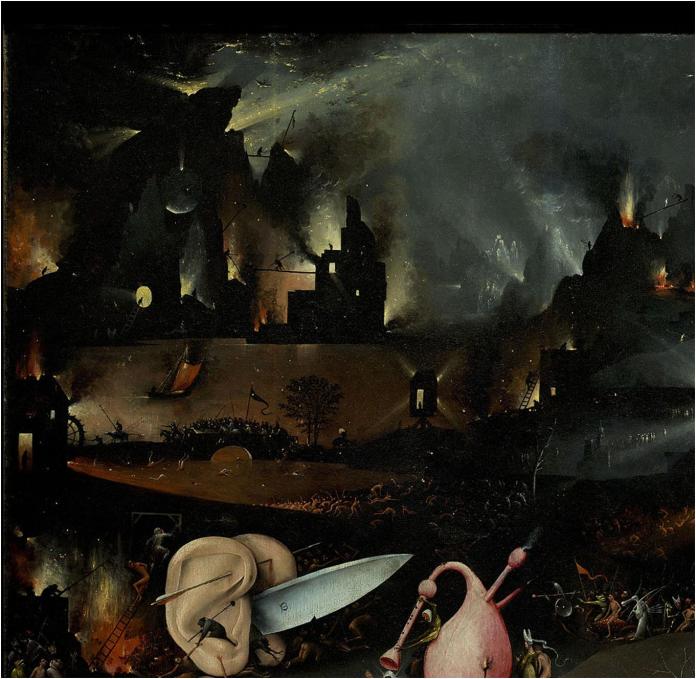
Darker conceptualisations here.  Not least some incredible handling of natural light:

It’s reasonable to suppose that Bosch was no stranger to that which blighted Van Gogh.  Take a good look at this image immediately above and then check out the philosophically grinning Cheshire Cat from Lewis Carroll’s Alice in Wonderland to see if you can find any interconnection.  Each work creatively brilliant of its own originality.  Paint and ink.

All this reminds me of a story by George Orwell and his compunction over ‘Shooting an Elephant’ that was clearly roguishly dangerous.  I digress.  Or perhaps I should say tigress?

Standard

Thoughts, Dreams & Inspirations

Salvador Dali (born 1904 / died 1989) is one of the most flamboyant personas of the modern era.

Undoubtedly one of my favourite painting and sculptural artists with regards to technique, quality, creative thinking and his truly engaging humour.

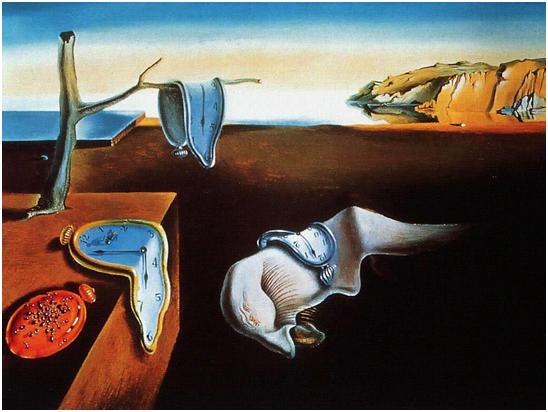
“The Persistence of Memory” is a visual decadence.  An onslaught of human fragility and scientific frailty.  Purely my own opinions here.  I believe Dali is contrasting scientific achievements against a natural barren backdrop.

Death. Uncertainty. The tree almost seems to hold out a branch, much like Oliver Twist’s imploring hands.  In an earlier Blog entitled ‘Botticelli’s Venus’ I mention that Dali gathered inspiration from Renaissance Art.  Oh how true.

The distorted biological organism depicted centrally in “The Persistence of Memory” parallels Botticelli’s shell from ‘The Birth of Venus’.

Is Dali speaking in divinely spiritual terms to us as regards Time?  Is it reflecting biological finality? Distortion is absolutely the overpowering word to describe this painting.  A distortion of Time because Dali was fascinated by science and brilliant thinking.

Surely he has made clever use of renowned artistic references to subtly amplify his work.  A shrewd patronage of past Art Masters to achieve recognition and acceptance in an art world that is highly perceptive of itself.  Concentric and publicly inviting all at once.

Art is personal.  It means something different from person to person.  We each grow in the pleasure we gain from art over time.

Dali enjoyed the dark things, the decaying greyness, cracked and strangely putrefied representations.  An ugly beauty painted with considerable insight, purpose and commentary.

This is Dali’s creative world.  It’s not all fruit bowls and silvery fish.  Dali possessed a deathly perception of the world despite his immense secular success.

Salvador was a marketing genius naturally gifted in influencing and persuading visually.  Dali is a character at the upper echelon of his personal craft because we remember him and his work.

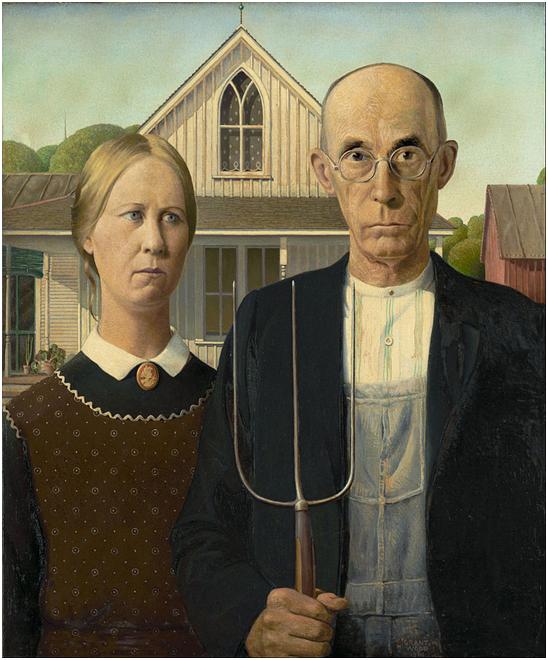
“American Gothic” completed in 1930 by Grant Wood is painted using oil on beaverboard.

It is probably representative of moderate mid-belt America with reverent white collars clearly depicted.  The pitchfork simile in the detailing of the man’s shirt succinctly implies he is the embodiment of his own pitchfork.

Is this what Grant Wood is saying to you?  A hard working farmer.

Their expressions are notably stern.  Kind of unfriendly. Uninviting.  A contrast of disinterest and attentiveness.  Wood has positioned the couple at a safe distance from their house.

Wood may have been expressing sympathy for Iowan farmers.  Reading newspapers of his day might help confirm the artists mindset prior to painting.

Wood used Nan Wood Graham as the model and a male dentist, Dr. Byron McKeeby, to expressively portray the characterisations.  Did Grant indeed provide artistic direction for their intensely emotional faces?

Sitting for an artist is exhausting let alone standing.  Try scowling for an hour and see how you get along.

Iowan residents were historically upset with the painting’s unfavourable stance.  Although one painting cannot possibly begin to explain the disposition of every person in an area covering 56,000 square miles.  Or for that matter America as a country – being as this is entitled the ‘American Gothic’.

Anyway, is this Gothic in architecture or nature?  It’s a worthwhile question to contemplate.  A possible viewpoint of this painting.  Is being Goth a dark romanticism of inanimate things or the personality of the individual(s) sewn into their psyche?

In some regards I feel that this painting could broad base represent most any country of the world.  A family.  A house.  An occupation.  A way of life.  Wood explicitly appreciated the importance of family and our instinctive need to protect the people and things around us.

Whilst some Iowans felt it was unfairly judgemental they can treasure that Grant gladly included his own sister in what has become his most famous painting.  This tells us that Wood is an intellectually considerate and honest man as far as our imperfections allow.  He emphatically stated that he wanted to get to know Iowa better.

I think Grant Wood genuinely had a close affinity with Iowa.

The brushwork detailing is stunning.  Brushwork is the subject of my next Blog article, so please get ready for some delicious fruit bowls.

Standard

Leonardo da Vinci

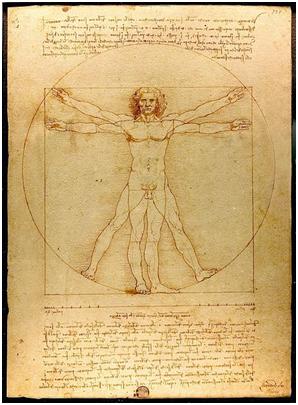
The Vitruvian Man (c. 1485) Accademia, Venice (photograph courtesy of Luc Viatour – www.lucnix.be)

Leonardo da Vinci almost needs no introduction.  You know of his famous artworks.  Even the youngest Readers of my Blogs will have seen da Vinci’s works referenced on television and in published articles.

Best-selling books such as ‘The Da Vinci Code’ by Dan Brown have further catapulted this great Painter and Inventor’s fame throughout the globe to a growing international audience.

The Vitruvian Man is undoubtedly a gifted composition especially when studying other Vitruvius inspired artworks depicting the human form in an architectural manner.  Da Vinci had a thirst for knowledge, learning and personal interpretation.

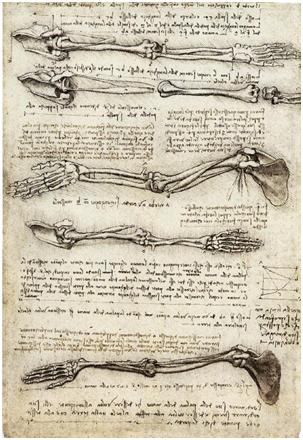
Please take a look at his scientific drawing of human anatomy here:

It is inconceivable that Charles Darwin and his Scientific contemporaries of the 19th Century would be unaware of such detailed representations of biological organisms and detailed architecture.

Looking back to the ancient Egyptians, Greeks and Romans it’s clear art and architecture are two crafts interlinked with each other.  Ancient Egyptian architecture is art and proceeding cultures literally built upon this past ingenuity, developing powerfully sculpted themes of their own much as we do today across various art genres.

In every perceptible way our minds are constantly acquiring information.

With regards to Leonardo da Vinci the most apt quotation I wish to reference within this Blog is that ‘The Eyes Are The Window To The Soul’.

We can see his thirst for knowledge and his personal interests within his paintings.

Over proceeding minutes I’m going to look at most every Leonardo art work and write with pen on paper using pure Hyper Intuition – detailing his personality as best I can, unedited.

You can call it a Sixth Sense if you prefer.  I quite like the description Hyper Intuition as the mind naturally collects data from as many senses as we are able to perceive and draws upon the information usefully.  Perhaps at the end of my Blog I will tell you a little story too.  Maybe it’s fiction, maybe it’s true.

Anyway here goes, completely unedited:

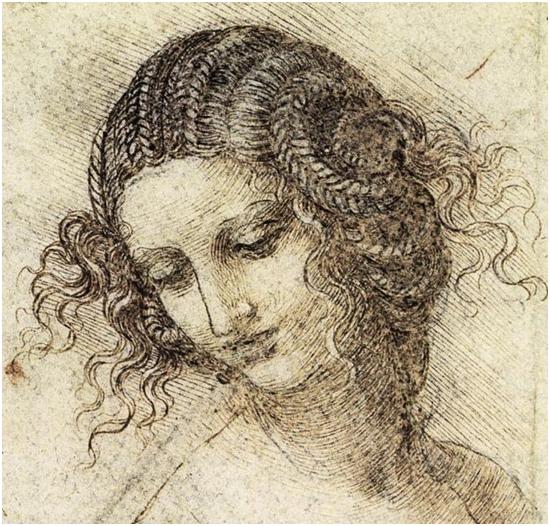
“Order, symmetry, higher-purpose, perfectionist, disparate, immensely technical, exceptionally organised, fragile, secretive, caring, awe-inspired, Head of Leda – most interesting, loved and loathed human nature, not flamboyant, reserved in habits.”

30 words. Doesn’t seem like 5 minutes of careful consideration however I was trying not to enjoy his beautiful work too much and focus on his sensibilities.  I actually laughed loudly when I quickly looked at the ‘Head of Leda’.  Hyper Intuition, what a glorious choice.

Quite the charming lady, wouldn’t you say?

I appreciate that my own personality chose this from other great art works by Leonardo.  Absolutely exquisite.  Hopefully I’m not the only person to have nearly fell off their chair whilst trying to concentrate.

Oh the story?  I will tell this best I can.

A well known railway station.  A certain man carries his much loved briefcase.  A gift.  Suddenly he is aware of eyes upon him, he knows not where except he absolutely does know.  He is looking above to where eyes are not, and yet eyes he perceives.  Cosseting his much loved briefcase closely; its unimportant contents of no concern.  After awhile he walks about taking in sights and sounds and the jostling of a multitudinous peoples.

Sitting relaxed at a retired strong boat and a famed bridge upon a river.  A certain man takes pictures of the sights opposite.  Architectural designs and shapes that are pleasing to his eyes.  He sits upon one of the benches perhaps to eat or rest from walking.

The bespectacled man appears and sits down.  Robust yet likeable of character.  He also has a briefcase.  What a wonderfully small world.  Politely a certain man smiles and says hello in forethought to relax the bespectacled man’s seemingly unknown interest and concentration.  The easy conversation works and all is very well.

Hyper Intuition.  Sometimes it’s best to pretend there are things that you don’t know.

Interestingly I once photographed three ducks in a gorgeous sunset.  Regrettably I no longer have this photo to share with you.  Thankfully I still have my much loved briefcase.

Standard

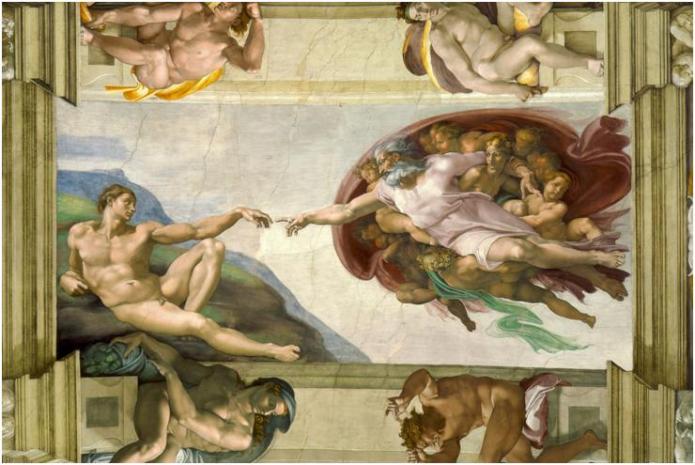
Creation of Adam – Michelangelo

Michelangelo di Lodovico Buonarroti Simoni was born on March 6th 1475 in Caprese, Italy.

“With my wet-nurse’s milk, I sucked in the hammer and chisels I use for my statues.”

Oh Michelangelo you beautiful man.  I read this quote from Michelangelo for the first time today.

Michelangelo you great poet, you architect of human thinking.  One day it would be very nice to shake your hand, say hello and share a meal.  Personally speaking I would call it a thank you.

Well, I share with Readers that I would sooner turn Andromeda upside down than change this, my own, Unfathomable thought around.

Michelangelo!  Michelangelo!  Wake up man.  Ah alas, he is in the dust from whence paint begins.

It will be a cold evening as Andromeda newly glides, her work of art stretching the span of light years at The Artist’s insistence.  My heart thoroughly delighting watching the stars perform their ineffable dance across the night sky.  Here whilst I lay at rest in the night and there also in her midst at my resting.

Hand touching hand.

Is it the human touch?  Is it the connecting with the Divine?  Is it that you can perhaps liken God to someone tangible?  You are a Reader, a person with shared intellectual capacity for thought and feeling beyond mere vessels.  Sinew.  Flesh.

Why is it that this particular Michelangelo fresco is so emotive to us as human beings?  Is it that we see Hope?  Or is it Peace?  Love.

Perhaps it is that we are required to look up to see the fresco itself?

Did Michelangelo know that this work would remain with us for centuries passed.  With us in memoriam.

I write.  Please, I am not boasting.  Whenever I write strange things I laugh to myself, now and then.

When a work of art is at its beginning it is the joy of finishing that is always in the heart.  Now, if not yet quite in the midst how much more joyous at the deep intake of breath arriving at the finish?

Beautiful art is breathtaking isn’t it.  It will surpass the life around it.

Verily more so joyous it will be even whilst I write seemingly indiscernible things with the fullest of joy upon me.

Millions of years can indeed pass to see a work of art.  Made ready for a new beginning.  Otherwise how else could we see Andromeda as she is now?

A glorious array.

Standard

John W Waterhouse & The Lady of Shalott

“A man may say full sooth in game and play” or modernly “Many a true word spoken in jest”.

"The Lady of Shalott" [1888] by John William Waterhouse, Oil on canvas, 183 cm × 230 cm (72 in × 91 in)

“The Lady of Shalott” [1888] by John William Waterhouse, Oil on canvas, 183 cm × 230 cm (72 in × 91 in)

I chose to open this Blog with quotes of jest and myth to journey back in time through legends of old.

I invite you to read the poetical ballad written originally in 1833 by Alfred Lord Tennyson that provided the inspiration for ‘The Lady of Shalott’ oil painting of 1888 by John William Waterhouse.  You can read the poem here:

http://d.lib.rochester.edu/camelot/text/tennyson-lady-of-shalott-1842

A masterful poem certainly deserves a masterful painting.

Having seen this very painting for myself at the Exhibition: JW Waterhouse – The Modern Pre-Raphaelite, the Royal Academy of Arts, London, [displayed] until September 13 2009 – I became a forever fan of his incredible art work.

The detail John W Waterhouse is able to conjure up as if by magic is truly sensational.

I walked about the Gallery and sat upon the comfortable seating arrangements provided by the Royal Academy of Arts for as long as I was able.  Studying his brush work and the subject material closely.  Often awe-struck with sheer delight – painting after painting.

Indeed Rothko is absolutely correct, people want quality.  Waterhouse delivers this with the ease and grace of gentle waterfalls.

I liken ‘The Lady of Shalott’ to the agricultural landscape painting style that dominated mainstream art up to 1970’s Britain.  Beautifully idyllic paintings by lesser known artists graced our own family house whilst we were growing up.

It seems apparent that Waterhouse loved to paint red haired maidens.

Perhaps it was perceived as exotic, interesting and spirited.  We cannot doubt the beauty of the lady envisaged in this painting along with her forlorn pose.  The foreground reeds look ready to be plucked from the water and wafted in the quieted breeze.

There is a weightiness to the boat structure thoroughly consistent within Waterhouse paintings of buildings, people and other solid objects.  Realist perspective at its every measurable height, depth and breadth.

Waterhouse sucks you in to his imagined world.  You feel that with hammer and chisel in hand you could almost chip away at stone works or call out to his painted throngs.

If ever Mary Poppins good friend Bert wanted to jump into a painting he could not step better than into a John W Waterhouse composition.  I say this because his story telling is pure art in itself.

The Lady of Shalott’s hair is light and wispy.  The natural surroundings offer a realist contrast to popular impressionist painters’ landscapes.  Creativity is the scene itself not the piecing together of abstract ideas and what they might represent in our minds.  Detail is definitive and the interpretation literal.

So why did I begin with a delightful quotation from English antiquity?

The opening quotation is taken from “The CanterburyTales” – ‘The Cook’s Tale’ by Geoffrey Chaucer from the late 14th Century.

And so it is with Tennyson’s ‘The Lady of Shalott’.  Tennyson himself inspired by earlier legends of King Arthur and the character Elaine of Astolat.

Elaine of White.  Legends reminiscent of Rumpelstiltskin.

The fable of Shalott is an echo afterwards of Sleeping Beauty (Perceforest of circa 1330) and similarly mindful within Persephone and Mina of Bram Stoker’s Dracula fame.

The accursed mirror, maiden and unrequited love theme re-crafted with its own unique originality, creative fervour and Shakespearean intellect.

Of course, I appreciate that Stoker’s novel masterpiece was inspired from a literary work by Joseph Thomas Sheridan Le Fanu entitled ‘Carmilla’.

We see painters and writers inspired by such superbly creative fables using their own imaginative flair.  Waterhouse paints the popular appetite for fables, myths and legends to an extraordinarily superior level to most.

As a fan of his work I would like to include two further Waterhouse paintings with concise commentary herewith:

Hylas and the Nymphs [1896]:

"Hylas and the Nymphs" [1896] by John William Waterhouse, 98.2 cm × 163.3 cm (38.7 in × 64.3 in)

“Hylas and the Nymphs” [1896] by John William Waterhouse, 98.2 cm × 163.3 cm (38.7 in × 64.3 in)

I wonder if this caused a few Victorian blushes and swoons!

The Favorites of the Emperor Honorius [1883]:

"The Favourites of the Emperor Honorius" [1883] by J W Waterhouse, Oil on canvas, height: 117 cm x width: 202 cm

“The Favourites of the Emperor Honorius” [1883] by J W Waterhouse, Oil on canvas, height: 117 cm x width: 202 cm

Waterhouse – perspective genius!  The stonework detail up close is realism at its remarkable best.

Standard

Botticelli’s Venus

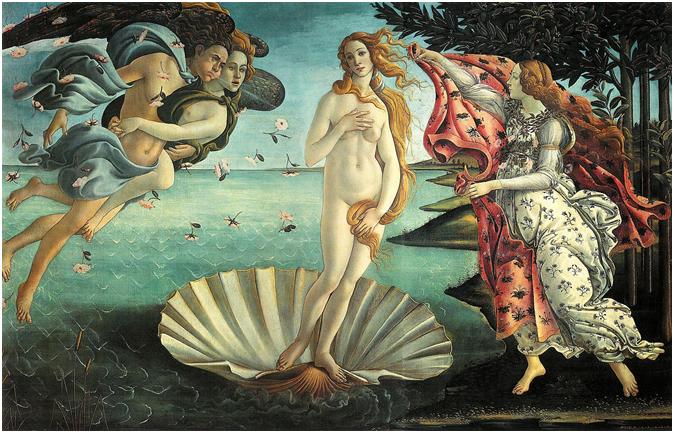
I promise two scintillating write-ups this week beginning with Sandro Botticelli’s ‘The Birth of Venus’.   Here is a picture of the painting in all its glorious colour:

It is clear looking at Botticelli’s work that he perfectly understood human beauty.  ‘The Birth of Venus’ is deliciously exciting on many levels to the imaginative eye.

Look at the central figure of Venus herself.  Her hair is attractively flowing in the wind much like the famous fan blown pictures and videos we see of Supermodels today.  Venus is depicted with unearthly long golden blonde hair.  The curve of her pose is sensuous and evocatively powerful yet vulnerable also.

Her fashionable porcelain skin is detailed in fine shadow contrast and her neck is seemingly divine in its sinewy length.  Venus’ expression appears loftily distant and regal in equal measure.  A maidservant is in the midst of throwing a highly decorated gown over Venus.  Its fabric caught up in the wind of shapes that mirror Venus herself.

Venus’ topless modesty is only partially covered to our sight to add to the allure.  The ends of her golden hair discreetly over her ‘intimacy’ is reminiscent of ancient sculptures of goddesses and numerous Church paintings of Eve.  Venus travels mystically upon a large seashell and various flowers provide us with a distinct air of romantic eroticism.  I am quite sure that even the leaves on the trees are styled to evoke sensuality.

‘The Birth of Venus’ – when viewing erotic art of antiquity we cannot deny that intellectual and aristocratic peoples of the 15th Century were no less oblivious to understanding natural sexual urges in sophisticated ways at least as well as we are today.  This painting is the very personification and literal meaning of ‘high brow art’?

Art to raise the eyebrows for a surety.

The Zephyrs, whose legs are entwined rather impossibly on the left, blow in a west wind that captures Venus’ gown and hair so splendidly. The pastel palette colours completely take my breath away along with Botticelli’s composition and use of space.

For me this linearly exacting Renaissance style is a precursor for inspiration to artists such as Dali.  The darker edging of this painting draws our eyes in like the old black and white silent movie fade-ins. Very clever visual treatment indeed.

In ‘The Birth of Venus’ Sandro Botticelli created one of my favourite paintings.

My next Blog will include one of my all time favourite of favourites.

Standard

Egyptian Art in Dubai

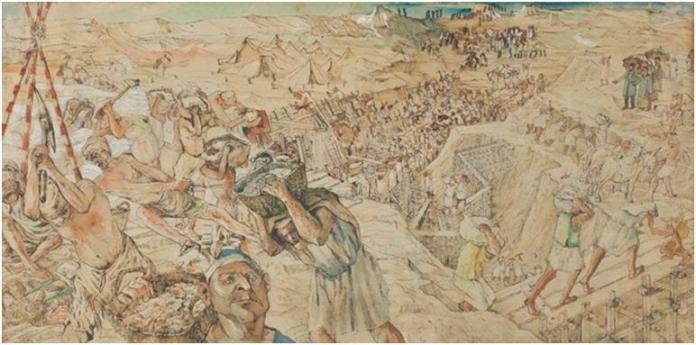
I would like to review ‘Construction of the Suez Canal’ by Abdul Hadi El-Gazzar.  It was acquired for $1.02m through Christie’s Dubai.  A new auction record for the artist.

Today my interest is in discussing this artwork, its historical reverberation and artistic value.

Quite some time ago I remember reading a specific story about a group of ancient Egyptian workers at Deir el Medina under Ramses III in the 12th Century BCE.

It intrigued me greatly.  The workers threw down their tools in protest due to a woeful lack of rations and peacefully complained to their Chief of Police.  Their complaint duly noted and directly quoted from an unedited English translation reads:

“The prospect of hunger and thirst has driven us to this; there is no clothing, there is no , there is no fish, there are no vegetables. Send to Pharaoh, our good lord, about it, and send to the vizier, our superior, that we may be supplied with provisions.”

Looking at El-Gazzar’s painting, shown above, we see the struggle of hard work.  An overseeing. Order. Logical procession. Monotony. Tented dwellings, perhaps for the workers.  A complex scene with varying angles and perspectives for the artist to deal with artistically and consider.

Sesostris, the Persian King Darius I, Ptoemy II and Napoleon Bonaparte have all been linked in historicity with the Suez Canal and the ancient waterways interconnecting the Red Sea and Mediterranean.

A flowing of water that spans some 4,000 years between these men respectively.

I cannot help wondering if El-Gazzar inadvertently placed himself in his own painting.  Overseeing.

Did you know that Rembrandt evolved and refined his art signature?  Will I use the same initialled signature my art teacher from school remarked upon favourably or will an artist grow and light upon a recognisable identity in good time.  My apologies, I digress momentarily.  Thoughts are sometimes like the dancing of butterflies.

Some painters are positively narcissistic, and it speaks much of their personal boldness and extrovert nature.  I feel El-Gazzar is somewhat subtle in his commentary within this painting.  Although he is exquisitely bold in most of his other artworks.

Construction of the Suez Canal is honest, warm and empathic.  An historical masterpiece.  El-Gazzar is a highly skilful painter, an artisan from ancient generations, happily gaining modern inspiration from Dali and Picasso with masterful creativity in his own right.

– Matt, The Unfathomable Artist

Standard

Art Dubai on March 18 – 21, 2015

Art Dubai Announces Dates For its Ninth Edition.

This Blog is brought to you by The Unfathomable Artist to highlight a Press Release from Art Dubai for their forthcoming Art Fair taking place in 2015.

Further details, including gallery pictures and Visitor information to Madinat Jumeirah can be found here:  http://artdubai.ae/.

A very relaxing and entertaining video from a previous Art Dubai fair can be viewed here:  http://vimeo.com/58004478.

Art Dubai 2015 will take place in the third week of March alongside a plethora of art, design and cultural events across the UAE and beyond.

Art Dubai, the leading international art fair in the Middle East and South Asia, announced today that its ninth edition will take place March 18 – 21, 2015, at Madinat Jumeirah in Dubai, United Arab Emirates.

Held under the patronage of His Highness Sheikh Mohammed bin Rashid Al Maktoum, Vice President and Prime Minister of the UAE and Ruler of Dubai, Art Dubai has become a cornerstone of the region’s booming contemporary art scene, both reflecting and acting as a catalyst in its extraordinary international growth over the past decade.

Art Dubai is recognised as one of the most globalised of meeting points in the art world today; the fair places an emphasis on maintaining an intimate, human scale while foregrounding quality and diversity.  The fair’s 85 galleries hail from 34 countries, and together present the work of around 500 artists.

Carefully selected, curated and presented through three distinct programmes – Contemporary, Modern and Marker – the galleries range from world – renowned dealers to upcoming artspaces.

In March 2014, 25,500 visitors attended the eighth edition of Art Dubai, including 70 museum groups and more than 400 curators and institutional representatives, confirming Art Dubai’s role as the meeting point in the Middle East and South Asia, and the global fair of choice for the art world.

The 2015 edition of the fair will run alongside Design Days Dubai – the world’s most diverse fair dedicated to limited collectible design – plus a myriad of other art – related events, exhibitions and cultural happenings in the UAE and across the region.

Next year’s Art Dubai will also coincide with Sharjah Biennial; the 12th edition of the renowned biennial, directed by Sheikha Hoor Al Qasimi and curated by Eungie Joo, also opens in March 2015.

“Building on the success of a phenomenal Art Dubai 2014, we’re thrilled to be working with our partners, galleries, artists, patrons and colleagues to present the ninth edition of the fair in March 2015,” said Antonia Carver, Fair Director, Art Dubai.

“Art Dubai has carved out a unique place for itself in an increasingly crowded artworld calendar and spring 2015 will be a particular time of celebration, given the strength of the programming at the fair and throughout the UAE and beyond.”

Standard