Momentary Weakness – A Poem

“Momentary weakness is the passing of the night, the full Moon that rides quietly by, it’s the Swans for gliding forever high, on the waves made by our Sun’s rapturous roaring flight, in a mustering up of energy ready for the invisible fight, a gathering of thoughts to win out with last breaths might, as I’ve said before ‘You cannot contain my spirit’ quite, when with all I stand unequalled in this mind, that is ever thirsting for the Light.”

Words for you to picture.

Matt, The Unfathomable Artist – Copyright © 24th May 2015

Standard

Songwriting Mood With Added Swings, Dali-cious

Inspiration is often like the dances of butterflies.  Pretty and irrevocably beautiful.  Whilst I’m eager to paint soon, creating new song ideas and musical compositions has been lots of fun.

Most songwriters enjoy various layers of thought to their songs and I’m definitely no exception.  As a boy of three years of age I was, I’m told, a fan of Abba and Queen’s ‘Bohemian Rhapsody’.  I know this to be true.

Working out everything with reference to the latter lyrics was extremely satisfying, especially when my thoughts were rightly confirmed quite some time afterwards.

I recall a famous guitarist from another rock band stating that there was no way their lead singer could possibly have much meaningful sense or reason to some of the lyrics he had jotted in a mere matter of minutes.

I dissect whatever seems reasonable to gain an understanding of individual people.  Really though, can anyone know you better than yourself?

The strangest new chorus came to my mind the other day:

‘Have you seen the Cannibal?
Lurkin’ wanton inside your skull,
It’s kind of grey and alien!
Feedin’ on bloods limitation

Don’t get caught, don’t get scared
Cos when its hungry it don’t care
It’ll-sweep-you-off-the-floor, with.. your.. bones,
Its gaze turns your body putrefied Auld,
Like Seventy Nine to the Power of Ten’

Matt, The Unfathomable Artist – Copyright © 10th April 2015

Standard

Titian – A Commanding Master

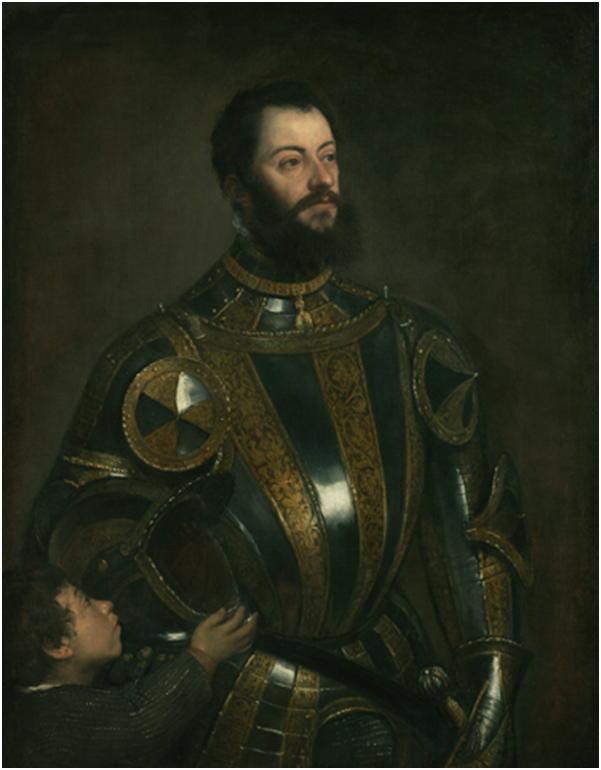
“Portrait of Alfonso d’Avalos, Marquis of Vasto in Armor with a Page” was acquired for $70m in 2003 by the Getty’s for their beautiful Getty Museum and Villa. A single painting valued at $96.57m today if we allow only for inflation. Please take a look at d’Avalos portrait here:

Painted by Tiziano or more widely known as Titian in English, this unequivocally represents his powers of fine portrait excellence. Always commanding a dignified presence for his subjects, mastery of light and exquisite detailing of textures. Titian’s ability to mirror textures is so awe-inspiring that I am quick to place him amongst my favourite past Masters even before we talk about his natural artistic flair.

Interestingly Titian shares the 16th Century world of art with yet another famous Italian artist of favoured significance to me. I will name unsaid artist in my Blog at a future convenient time. Certainly they are both commensurate textural geniuses applauded for their fine art paint work. I often marvel at the painting time their work required for this level of miniscule brush work.

Most accomplished past Masters like Titian retained skilled understudies to happily assist in their workshops. Art students eager to learn the art trade from their famed tutors. Titian himself hailed from the Venetian school system years prior. A great apprentice in the making. Past Masters commissions could include travel by ships that regularly graced the seas with the strength of the wind in order to visit clients through amenable oceans.

Returning to the portrait for the purpose of my Blog – instantly we see solid substance and grandeur in this d’Avalos pose. The inclusion of a page boy enforces the idea that Alfonso d’Avalos is a physically mighty man in stature held in high military regard. His armour is painted strong in every sense with the metal reflecting white light in a robust manner and with remarkable perceptible depth.

His facial expression gives me the idea that he is looking toward a future battle in distant lands. Concentrated awareness is in his eyes. A glimpse into his mind. A mind fixed upon ensuring he will provide Tiziano with the precise way that he would like to be known and remembered in this portrait.

From notable Spanish-Italian origin Alfonso d’Avalos was made Knight of the Order of the Golden Fleece in 1531. His titles included 1st Prince of Francavilla, 2nd Marquis de Vasto, Marquis di Pescara and General & Governor of Milan. In 1538 he served as Ambassador to Spain and commanded the Imperial Army during the Italian War of 1542.


“Titian has therefore produced a portrait of considerable importance to Spanish-Italian history. The workmanship of which is at least equal to other leading art compatriots of his day. Furthermore it provides us with an insight into the function of leading portrait artists as established pictorial historians.”


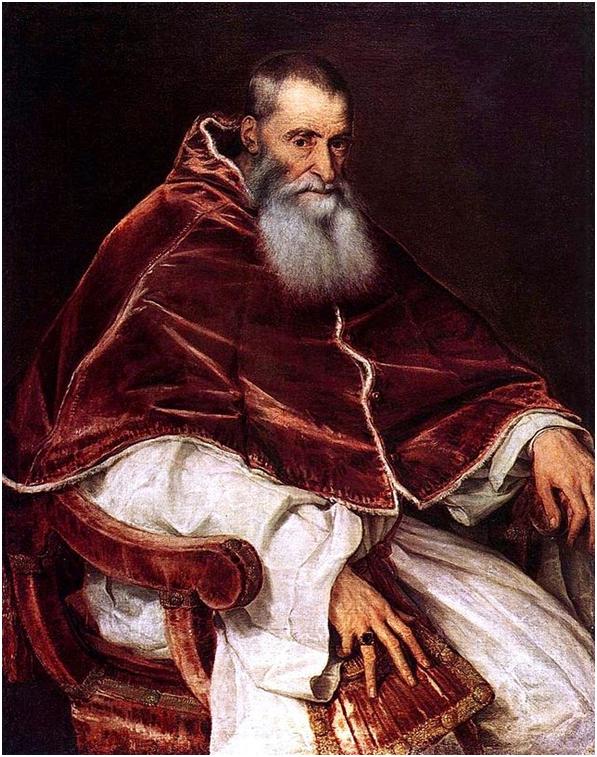
Please also take a look at his portrait of Pope Paul III (1543) below to further see why Titian’s work is highly prized by wealthy collectors, Art Galleries and Museums:

The palette contrast between these two paintings shows that Titian intelligently chose specific colour schemes to highlight the purposeful reasoning behind each portrait. Be it solemn, serious or joyful in its portrayal.

I myself happily study Titian and his work and hope you have enjoyed this blog article.

– Matt, The Unfathomable Artist

Standard

Rubens – Massacre of the Innocents

When we look at the most expensive paintings in history it is little wonder that we find Peter Paul Rubens in the list more than once.  Living in a very religious world during the 1600’s it is also unsurprising that there is at least one religious artwork Rubens has listed.

Sold for $76.7 million in July 2002 “Massacre of the Innocents” would be worth $108.89 million today if only allowing for inflationary price adjustments.  That does not even take into account auction buyers scrambling to acquire the painting should it become available for the high end art market.

Let us take a look at it here:

Dramatic and gruesome isn’t it?

So harrowing the scene that I really must present a more jolly looking artwork for my next blog!  The Scream followed by Massacre of the Innocents requires the interest of Readers who are connoisseurs of art history.

This very theme is inspired from the Gospel of Matthew in which Herod orders the mass infanticide of young Jewish children in an attempt to kill the newborn Jesus of Nazareth.  It is clear throughout history that artists have been inspired by mythology, Biblical stories and fables of old from classical literature.

The quality of realism and artistic genius is always at its height within Peter Paul Rubens works. I cannot imagine anyone surpassing the composition for this scene.  The style is fashionable of its time with its handling of perspective and distant faded glimpses of buildings, landscape and sky.

Yet it is the arrangement of persons in the foreground, their bodily positions and contorted expressions of violent purpose or their victims absolute horror that does not require us to imagine the events.  Body, muscle and skin is replete with empowered motion or helplessness.  Clothing drapery is resplendent in shadow and careful management of the lights direction.

Mid-centre-left a sword is drawn and the victim is being silenced by both of the assailants hands.  The victims efforts at defence quashed.  The image leaves no trace for signs of a reprieve.  There is great sorrow shown far-right of the painting with parents pleading for a change of heart.  An act of violence is fully envisioned upon an infant being swung with great force.

To our natural sensibilities this paintings subject material provokes a sense of extreme injustice and disgust.  Exactly as Rubens purposed in composing his masterpiece of storytelling.

I invite you to read my latest blog over the next few days.

Standard