
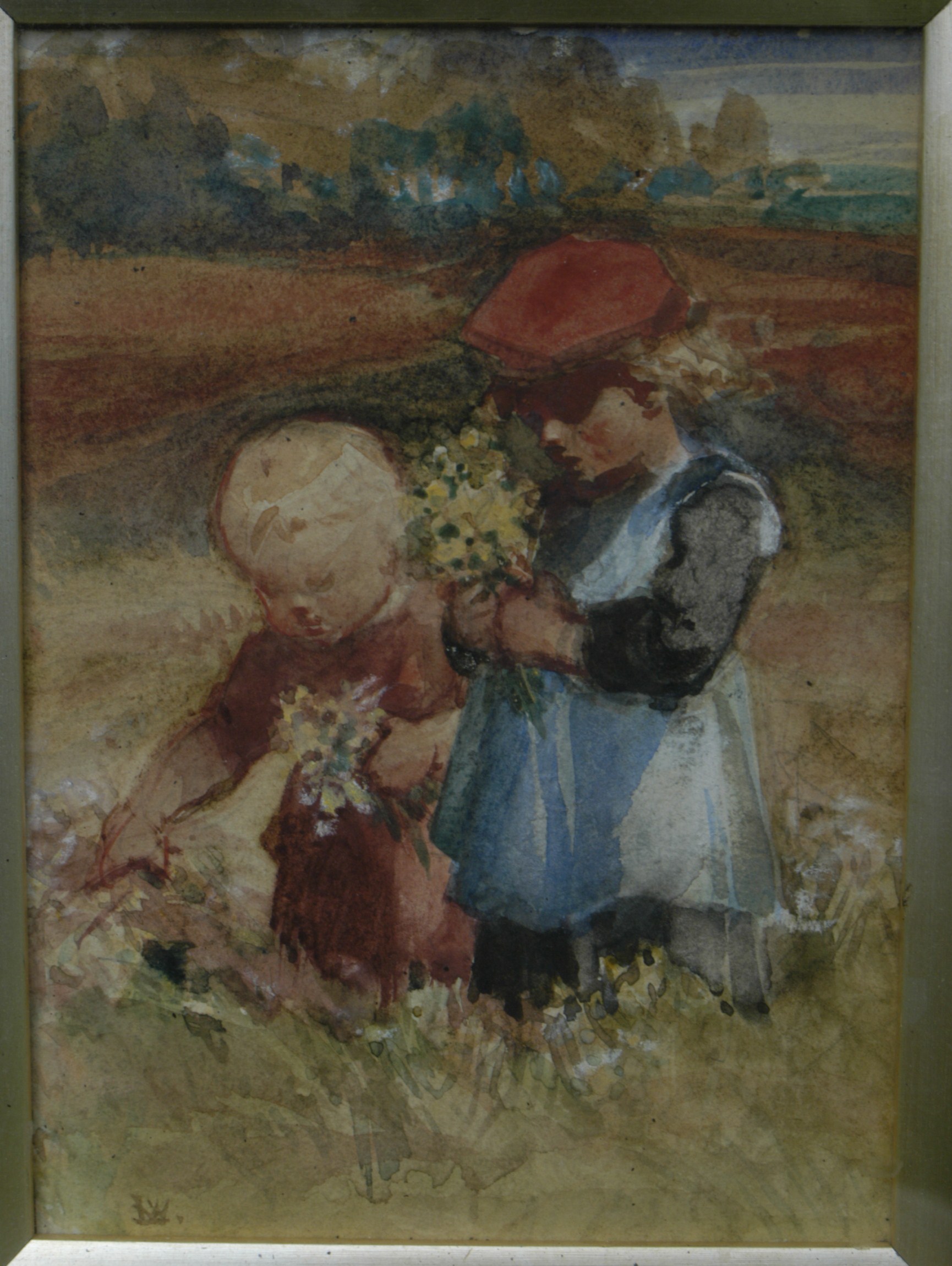
‘Two Children Picking Flowers’ [pre 1861] by Louisa Beresford, Lady Waterford, watercolour, 8ins x 5.5ins.
Link to the Artworks of Louisa Anne, Marchioness of Waterford [courtesy of Wikipedia]
‘Two Children Picking Flowers’ [pre 1861] by Louisa Beresford, Lady Waterford, watercolour, 8ins x 5.5ins.
Link to the Artworks of Louisa Anne, Marchioness of Waterford [courtesy of Wikipedia]
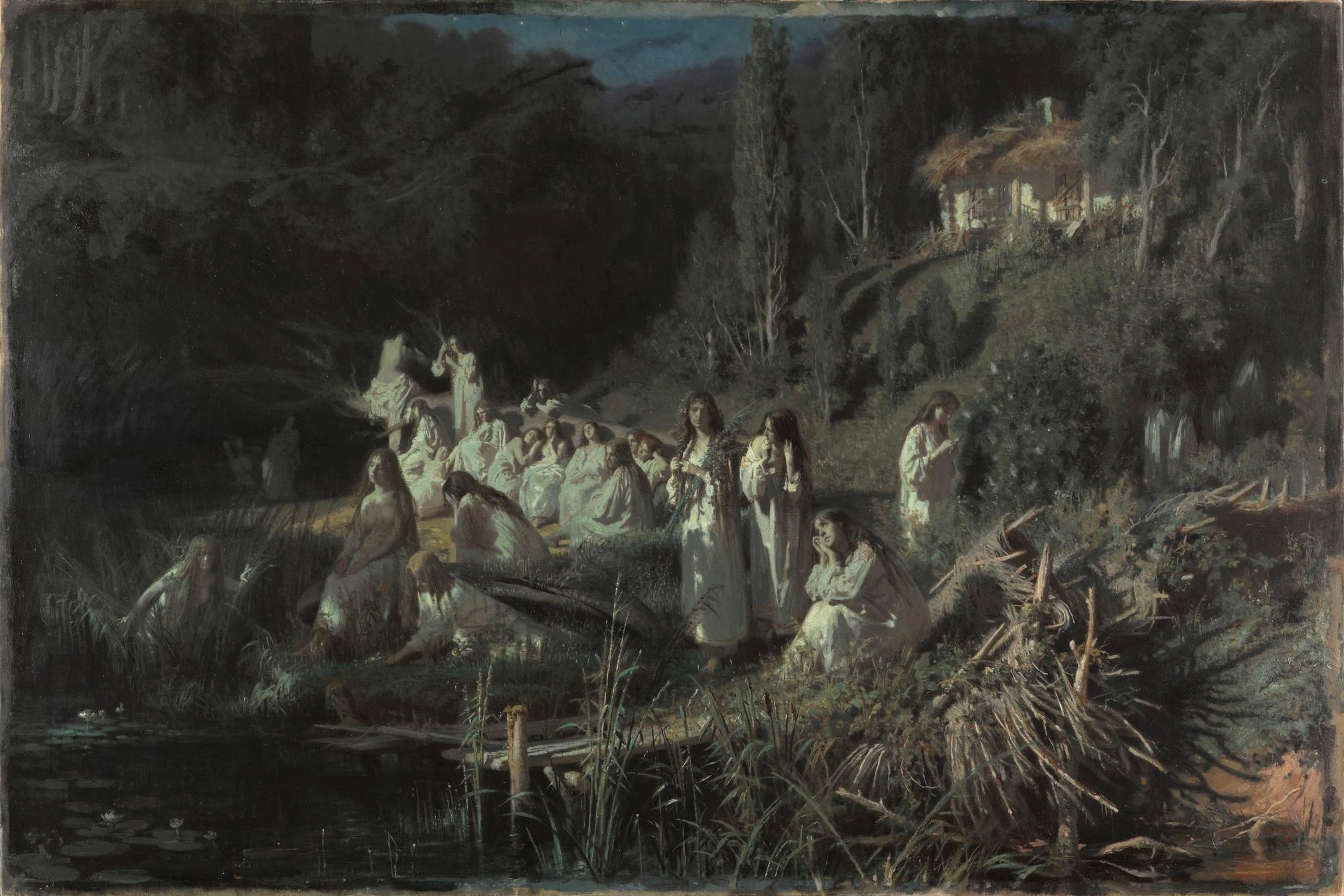
‘The Mermaids‘ [1871] by Ivan Nikolaevich Kramskoi, Oil on canvas, 88 cm (34.6 in) height x 132 cm (51.9 in) width.
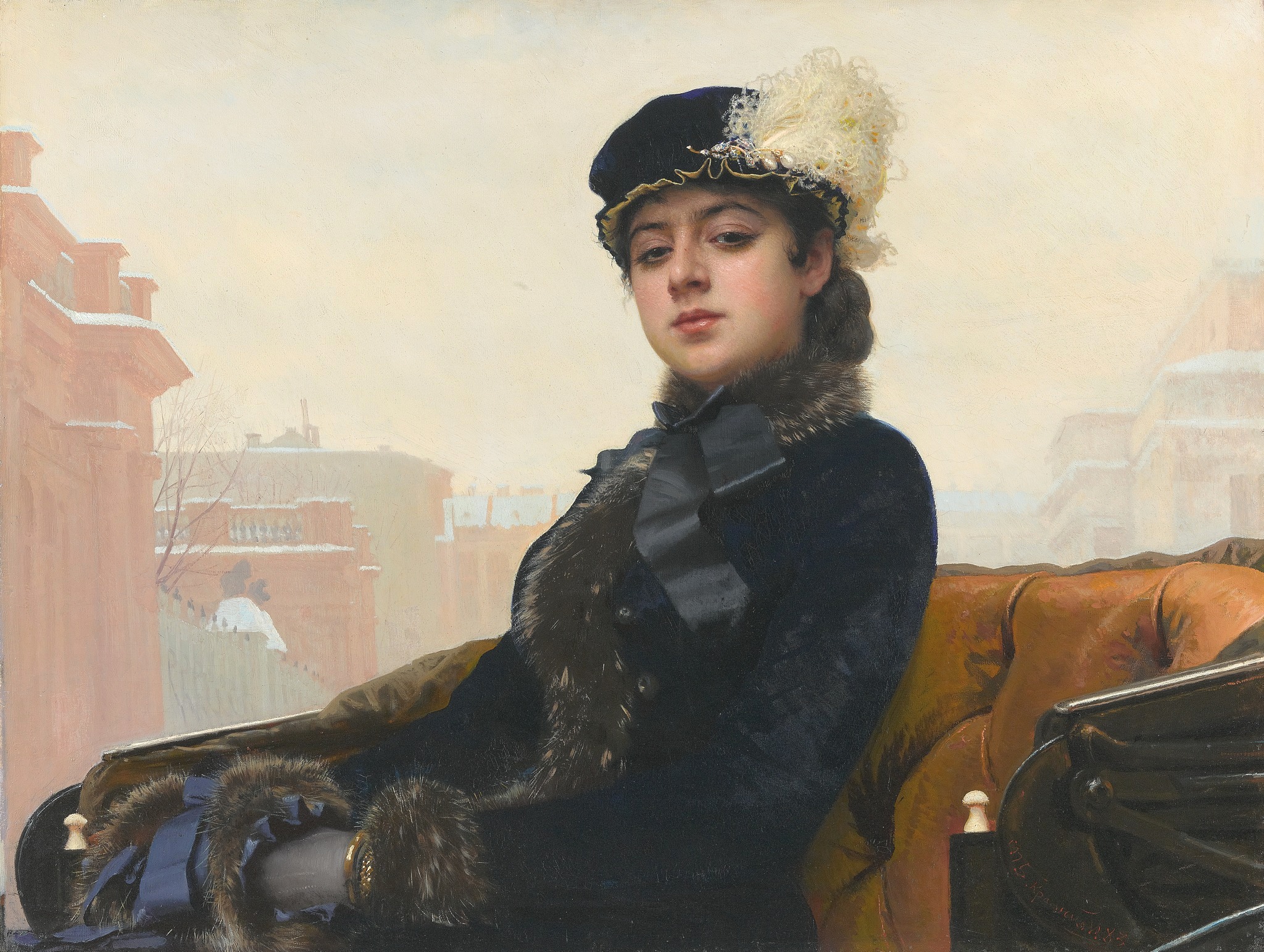
‘Portrait of an Unknown Woman‘ [1883] by Ivan Nikolaevich Kramskoi, Oil on canvas, 75.5 cm (29.7 in) height x 99 cm (38.9 in) width.
“Finally, I thank my dear family. Truly this degree and thesis belong to them as much as it does to me.
Any success I have had is due to the amazing support and sacrifice of my incredible wife, as well the smiles and giggles of my baby boy.”
You can read all about it by Trenton B. Olsen from the Department of Visual Arts, Brigham Young University and his scholarly article here:
URL link: Fallen Womanhood and Modernity in Ivan Kramskoi’s Unknown Woman (1883)
and in PDF format: Scholarly article by Trenton B Olsen (publicly published).
You can download either of these same-said links for further research at your own leisure.

‘Christ in the Wilderness‘ [1872] by Ivan Nikolaevich Kramskoi, Oil on canvas, 180cm × 210cm.
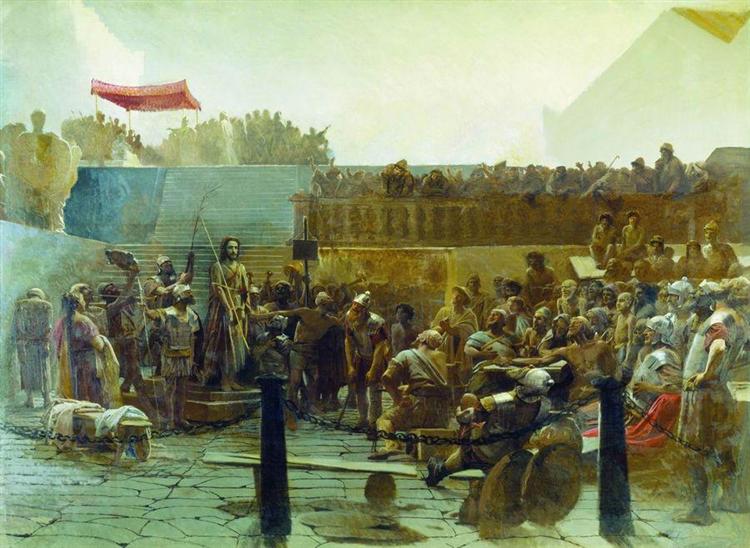
‘Laughter! Hail, King of the Jews‘ [1877-82] by Ivan Nikolaevich Kramskoi, Oil on canvas, The Depth vs The Height.“Imagine, really: there is a guy who says – only I know where salvation is. Well … fine, let’s dress him up as a jester-king … and seeing this show, everyone, everyone who was there roared with laughter … ” quotation by Kramskoi himself.
“I used to cry in the most Northern Place of My People. They would see me and they would cry heavily with me in their hearts. My People are in the East and the South Places too. I have My People in the Islands throughout the Divers Places and in the Western Places where the Elk calls out like the Angel that made them strong.”
The Unfathomable Artist holds no specific political or religious affiliation other than with persons retaining the utmost moral regard for life.
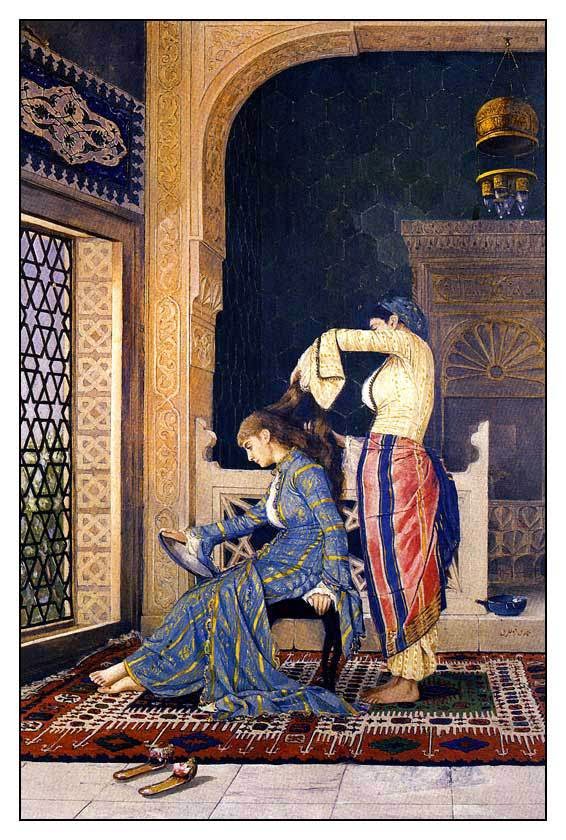
“The Lady Who Has Her Hair Combed” [Saçlarını Tarayan Kız] by Osman Hamdi Bey
Osman Hamdi Bey was born 30th December 1842 in Constantinople, modern day Istanbul Turkey, during the Ottoman Empire.
Wikipedia states that Osman Hamdi Bey was “an Ottoman administrator, intellectual, art expert and also a prominent and pioneering painter. He was also an accomplished archaeologist, and is regarded as the pioneer of the museum curator’s profession in Turkey.
He was the founder of Istanbul Archaeology Museums and of Istanbul Academy of Fine Arts (Sanayi-i Nefise Mektebi in Turkish), known today as the Mimar Sinan University of Fine Arts.”
‘Lady Having Her Hair Combed by a Servant’ shown above is an exquisite artwork worthy of its historical value and tender delicacy. I believe The Dolmabahçe Palace may still be exhibiting ‘Lady Having Her Hair Combed by a Servant’.
For the Wikipedia link, visit The Dolmabahçe Palace.

‘Lady In Yellow Dress Arranging Flowers In A Vase’ by Osman Hamdi Bey
The lady reaches outwards, extending her left foot to attend to her wholesome duty. There is artistic evaluation within her head posing, wholly reflecting the creative nature of her pretty decorative arrangement.

Pierre-Auguste Renoir meets Osman Hamdi Bey.
The realist quality, colour composition, masterful use of canvas, glorious shading, far-ground Renaissance trees’ styling and sense of feeling throughout encapsulates the phrase Beyond Words, perfectly.
Perfection to the amplification of millions.
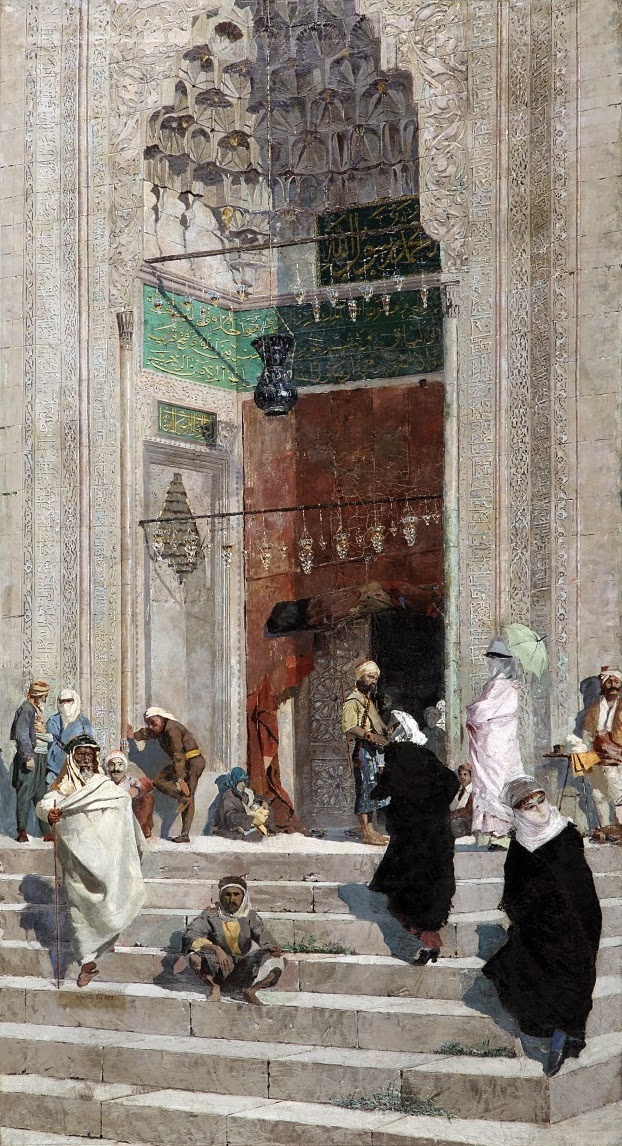
‘At The Mosque Entrance’ by Osman Hamdi Bey, shown immediately above.
John William Waterhouse meets Osman Hamdi Bey in ‘At The Mosque Entrance’.
With the incredibly high prices certain art pieces attain – the ‘Salvator Mundi’ by Da Vinci being the existing summa omnium temporum – I believe this particular artwork also has spiritual merit.
Click the link to view the ‘Salvator Mundi’ by Da Vinci.
Click this link here Osman Hamdi Bey‘s to see their Wikipedia page:
 The Unfathomable Artist